
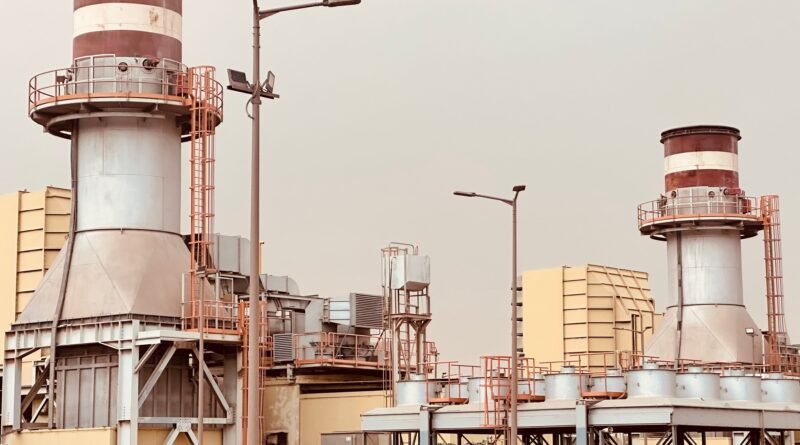
How Saudi Arabia’s Crude Oil Companies Work: A Simple Guide to the Global Oil Business
By NYFT Business Desk
September 16, 2026
When crude oil prices move sharply, one country is almost always part of the conversation: Saudi Arabia.
Saudi Arabia is one of the world’s most important oil-producing countries. Its oil business affects more than just the country’s economy. Changes in Saudi oil production, exports and investment can influence crude prices, gasoline costs, inflation and financial markets around the world.
But how does a Saudi oil company actually work?
The answer is much bigger than simply taking oil out of the ground.
A modern oil company may be involved in finding oil, drilling wells, producing crude, processing it, moving it through pipelines, storing it, refining it into fuels, making chemicals and selling energy products to customers around the world.
At the center of Saudi Arabia’s oil industry is Saudi Aramco.
Here is the full process in simple terms.
Where Does Saudi Arabia’s Oil Come From?
Crude oil is found underground in geological formations called reservoirs.
The oil company first has to find these reservoirs.
That process is called exploration.
Companies use geological studies, seismic surveys and other technology to study what is below the ground.
The goal is to answer three basic questions:
- Where is the oil?
- How much oil may be there?
- Can the oil be produced commercially?
Finding a possible oil reservoir does not automatically mean that a company can make money from it.
Exploration can be expensive, and there is always some uncertainty.
That is why oil production starts long before the first barrel is sold.
Step 1: Finding the Oil
Exploration teams study underground rock formations.
Seismic surveys are one of the important tools used by the oil industry. In simple terms, seismic technology helps create a picture of underground rock structures.
If the results suggest that an area could contain oil or natural gas, the company may drill an exploration well.
This is the first major test.
If the well confirms commercially useful hydrocarbons, the company can move toward development and production.
Step 2: Drilling an Oil Well
Once an oil reservoir is identified, the company drills a well.
An oil well is not simply a hole in the ground.
Drilling may pass through many layers of rock. Companies use steel casing, cement and pressure-control equipment to keep the well stable and safe.
The well is then connected to production equipment.
When the well is ready, crude oil can begin moving from the underground reservoir toward the surface.
But there is an important point:
What comes out of an oil well is not always just oil.
It can contain crude oil, natural gas, water and other materials.
That is why the next step is processing.
Step 3: Producing the Crude Oil
The production stage is where the company begins bringing crude oil to the surface on a regular basis.
Some wells can produce oil because of natural pressure inside the reservoir.
Over time, reservoir pressure can change. Oil companies use reservoir-management techniques to help maintain production.
The exact method depends on the reservoir.
This is one reason experienced oil companies spend a lot of money on technology and reservoir management.
The goal is not simply to produce oil today.
The goal is to manage the reservoir over many years.
Step 4: Separating Oil, Gas and Water
Once crude reaches the surface, it usually goes to a processing facility.
The facility separates different parts of the production stream.
For example:
Crude oil → Natural gas → Water
These materials can then be handled separately.
The crude is prepared for transportation.
Natural gas can be processed and used for energy and industrial purposes.
Produced water is treated and managed according to the required operating and environmental standards.
This processing stage is an important part of the oil business because raw production is not yet ready to become a finished fuel or an export cargo.
Step 5: Moving the Oil Through Pipelines
After processing, crude oil needs to move to the next location.
Pipelines are one of the main ways to transport large volumes of crude.
A pipeline can connect:
Oil Field → Processing Facility → Storage → Refinery or Export Terminal
For a country producing millions of barrels of oil, this infrastructure is extremely important.
Pipelines reduce the need to move every barrel by truck and allow large volumes of crude to move continuously.
But pipelines also require regular maintenance, monitoring and security.
Step 6: Storing the Crude Oil
Crude oil may be stored before it goes to a refinery or an export terminal.
Large storage facilities provide flexibility.
For example, production may continue even when a tanker is not ready to load.
A refinery may also change how much crude it needs.
Storage helps the company manage these differences between production, transportation and demand.
Think of an oil storage terminal as a giant warehouse for crude.
Step 7: Refining the Crude Oil
This is where crude oil becomes products people recognize.
Crude oil is a mixture of many hydrocarbons.
A refinery processes that crude into different products.
These can include:
This is why crude oil and gasoline should not be treated as the same thing.
Crude is the raw material.
Gasoline and diesel are finished or intermediate products made from crude through refining.
Step 8: Petrochemicals Add Another Business
Saudi Arabia’s oil industry is not only about gasoline and diesel.
Oil and natural gas can also provide feedstocks for the petrochemical industry.
Petrochemical products are used to make many materials used in modern life.
Examples include:
- Plastics
- Packaging materials
- Industrial chemicals
- Synthetic materials
- Manufacturing inputs
This gives an integrated energy company another way to create value from oil and gas.
Instead of selling every barrel only as crude, part of the resource can move further down the value chain.
Step 9: Exporting Crude Oil
Saudi Arabia also sells crude oil to international customers.
After crude is processed and prepared for export, it can be moved through pipelines to export terminals.
At the terminal, crude is loaded onto large tankers.
The basic journey looks like this:
Saudi Oil Field
↓
Oil Well
↓
Processing
↓
Pipeline
↓
Storage
↓
Export Terminal
↓
Oil Tanker
↓
International Customer
The tanker then carries the crude to a refinery or another destination.
What Does Saudi Aramco Do?
Saudi Aramco is Saudi Arabia’s major integrated energy company.
Its operations cover multiple parts of the energy value chain.
The easiest way to understand the business is to divide it into two broad areas.
Upstream
Upstream includes:
Exploration → Drilling → Oil and Gas Production
Downstream
Downstream includes areas such as:
Refining → Chemicals → Products → Marketing
This integrated structure means the company can participate in several stages of the journey from underground resources to finished products.
How Does an Oil Company Make Money?
The basic business idea is simple:
Revenue = Price × Volume
If a company sells more barrels, its revenue can increase.
If the price per barrel rises, revenue can also increase, assuming the sales volume does not change.
For example, if a company sells 1 million barrels at $80 per barrel:
1 million × $80 = $80 million in gross sales value
If the price rises to $100:
1 million × $100 = $100 million in gross sales value
That is an additional $20 million in gross sales value.
But this is not the same as profit.
The company still has operating expenses and other costs.
What Does It Cost to Produce Oil?
Oil companies spend money on many parts of the business.
Costs can include:
- Exploration
- Drilling
- Well maintenance
- Production equipment
- Processing facilities
- Pipelines
- Storage
- Refineries
- Workers
- Technology
- Shipping
- Major infrastructure projects
So a higher oil price can increase revenue, but the final financial result depends on costs, production levels and other factors.
This is why investors look at more than just the price of crude oil.
They also watch production volumes, cash flow, capital spending and company earnings.
Why Is Saudi Oil So Important to the World?
Saudi Arabia produces oil on a very large scale.
The U.S. Energy Information Administration estimated Saudi crude oil production, including lease condensate, at about 9.6 million barrels per day in 2025. EIA estimated Saudi Arabia’s effective production capacity at about 11.6 million barrels per day in 2025.
The difference between production and capacity is important.
Production is what the country is actually producing.
Capacity is the amount it can potentially produce under relevant operating conditions.
These numbers are not the same.
Why Does Saudi Production Affect Oil Prices?
The global oil market is driven by supply and demand.
If the market expects less oil to be available while demand remains strong, prices can face upward pressure.
If supply grows faster than demand, prices can face downward pressure.
Saudi Arabia is important because of its large production base and its role in OPEC+.
However, Saudi Arabia does not control the global oil price by itself.
Other major producers and consumers matter too.
These include:
- United States
- Russia
- Canada
- Brazil
- Iran
- China
- Europe
- Other OPEC+ members
Global inventories and shipping conditions also matter.
What Is OPEC+?
OPEC+ is a group of major oil-producing countries that coordinates oil-market policies and production adjustments.
Saudi Arabia is a major member of the group.
When OPEC+ countries announce production changes, traders and investors watch closely because the decisions can change expectations about future oil supply.
But the actual market response depends on many other factors.
For example, if OPEC+ reduces production while global demand is weakening, the price effect may be different than it would be during strong economic growth.
What Happens When Oil Goes Above $100?
A $100 crude price attracts attention because energy costs are important to the global economy.
For an oil producer, a higher price can increase revenue per barrel if production and sales remain stable.
For an oil-consuming economy, however, higher crude prices can increase costs.
The chain can look like this:
Crude Oil Prices Rise
↓
Fuel Costs May Rise
↓
Transportation Costs May Rise
↓
Business Costs May Rise
↓
Consumer Prices May Face Pressure
This does not happen in exactly the same way every time.
Gasoline prices also depend on refinery costs, inventories, seasonal demand, taxes, distribution costs and local market conditions.
How Can Saudi Oil Affect Americans?
An American driver does not buy Saudi crude directly.
But the global oil market is connected.
Crude oil is an important input in the production of gasoline and other petroleum products.
When global crude prices rise sharply, U.S. fuel markets can feel the impact.
That can affect:
- Drivers
- Trucking companies
- Airlines
- Manufacturers
- Delivery companies
- Farmers
- Retail businesses
Higher transportation costs can eventually affect the prices of other goods and services.
This is why oil is watched closely by economists and investors.
Oil and Inflation
One of the biggest questions for financial markets is whether an oil-price increase is temporary or lasts long enough to create broader inflation pressure.
The basic relationship is:
Oil ↑
↓
Energy Costs ↑
↓
Transportation and Production Costs ↑
↓
Inflation Pressure
If inflation remains high, central banks may have less room to lower interest rates quickly.
That can influence bond markets.
And changes in bond yields can affect stock valuations.
Oil and Bond Yields
This is where the oil market connects with Wall Street.
Suppose crude oil prices rise sharply.
Investors may become more concerned about future inflation.
If inflation expectations increase, markets may adjust their expectations for interest rates.
Bond yields can then move as investors reassess the outlook.
A simplified chain is:
Oil Prices ↑
↓
Inflation Expectations ↑
↓
Interest-Rate Expectations Change
↓
Bond Yields May Move
↓
Stock Valuations May React
This is a market relationship, not a guaranteed one.
Bond yields are also affected by economic growth, government borrowing, central-bank policy and demand for government bonds.
Why Can Oil Be Good for Some Stocks and Bad for Others?
Oil prices do not affect every company in the same way.
For energy producers, higher crude prices can support revenue and cash flow.
For airlines, higher fuel prices can increase costs.
For transportation companies, diesel and gasoline costs matter.
For manufacturers, energy and shipping costs can affect profit margins.
For consumers, higher fuel costs can leave less money for other purchases.
So when oil rises, the stock market does not necessarily move in one uniform direction.
Different companies face different effects.
What Happens If Oil Prices Fall?
The same process works in reverse.
If crude prices fall substantially, oil producers may receive less revenue per barrel.
Oil-importing economies may benefit from lower energy costs.
Consumers may spend less on gasoline and heating.
Businesses may also see lower transportation and energy expenses.
But a sharp oil-price decline can create problems for oil-producing companies and countries.
Again, the effect depends on why oil prices are falling.
If prices fall because global supply increases, the economic impact may be different from a fall caused by a major slowdown in global demand.
Saudi Arabia Has Another Challenge: Economic Diversification
Oil remains extremely important to Saudi Arabia, but the country has also been working to expand economic activity beyond oil.
The reason is straightforward.
Oil prices can move sharply.
A country that depends heavily on one commodity can face large changes in revenue when that commodity’s price changes.
Economic diversification can help reduce that dependence over time.
That is why Saudi Arabia has been investing in areas outside traditional crude production.
Why Saudi Oil Infrastructure Matters
When people hear “Saudi oil,” they may imagine only oil wells.
The actual system is much larger.
It includes:
- Oil fields
- Wells
- Processing plants
- Natural gas facilities
- Pipelines
- Storage terminals
- Refineries
- Petrochemical facilities
- Export terminals
- Tanker-loading facilities
Every part has a job.
A problem at one important point in the system can affect the movement of oil through the larger network.
That is why energy investors pay attention to infrastructure as well as production numbers.
The Complete Saudi Oil Journey
Here is the entire process in simple language:
1. Explore
Find possible oil and gas reservoirs.
2. Drill
Build wells into the reservoir.
3. Produce
Bring crude oil to the surface.
4. Process
Separate oil, gas and water.
5. Transport
Move crude through pipelines.
6. Store
Keep crude in storage when needed.
7. Refine
Turn crude into gasoline, diesel, jet fuel and other products.
8. Make Chemicals
Use oil and gas feedstocks to make petrochemical products.
9. Export
Load crude or refined products onto tankers.
10. Sell
Supply international customers and markets.
This is the basic business chain behind Saudi Arabia’s oil industry.
Saudi Oil Business: Key Numbers
| Item | Figure |
|---|---|
| Saudi crude production, including lease condensate, 2025 | About 9.6 million barrels/day |
| Saudi effective production capacity, 2025 | About 11.6 million barrels/day |
| Aramco hydrocarbon reserves at end-2025 | About 247.2 billion barrels of oil equivalent |
| Aramco downstream crude utilization in 2025 | About 53% of company crude production |
| Aramco petrochemical production capacity in 2025 | About 59.3 million tonnes/year |
Saudi Oil Business: Key Numbers and Global Market Role
The production and capacity figures come from the U.S. EIA. Aramco’s company figures come from its 2025 reporting.
What Investors Should Watch
Anyone following Saudi oil or global crude prices should watch several things at the same time.
Oil Production
How much crude is actually being produced?
Spare Capacity
How much additional production capacity is available?
OPEC+ Decisions
Are producers increasing or reducing supply?
Global Demand
Are major economies using more or less oil?
Inventories
Are oil stocks rising or falling?
Geopolitical Risk
Are conflicts or shipping disruptions threatening supply?
Refinery Demand
Are refineries buying more crude?
U.S. Production
Is American oil production rising or falling?
Looking at all of these factors gives a much clearer picture than looking at the oil price alone.
Final Takeaway
Saudi Arabia’s crude oil business is much more than drilling wells.
It is a complete system that starts with finding underground oil and ends with crude oil, fuels, chemicals and other energy products reaching customers around the world.
The basic journey is:
Explore → Drill → Produce → Process → Transport → Store → Refine → Export → Sell
Saudi Aramco operates across many parts of this value chain, while Saudi Arabia’s production decisions are closely watched because of the country’s important position in the global oil market.
For American households, the connection can eventually show up at the gas pump.
For businesses, it can appear in transportation and energy costs.
For investors, it can show up in inflation expectations, bond yields and stock-market movements.
That is why a change in Saudi oil production can become a global financial story.
The oil may start thousands of feet underground in Saudi Arabia, but its economic impact can travel all the way to a gas station, factory, airline or investment account in the United States.
Sources
- Saudi Aramco — Annual Reports: https://www.aramco.com/en/investors/annual-report
- Saudi Aramco — Reports and Presentations: https://www.aramco.com/en/investors/reports-and-presentations
- Saudi Aramco — Business Model: https://www.aramco.com/en/investors/annual-report/business-model
- Saudi Aramco — Strategy: https://www.aramco.com/en/investors/annual-report/strategy
- Saudi Aramco — About the Company: https://www.aramco.com/en/about-us
- U.S. Energy Information Administration — Saudi Arabia Country Analysis: https://www.eia.gov/international/analysis/country/SAU
- U.S. Energy Information Administration — Saudi Arabia Energy Overview: https://www.eia.gov/international/overview/country/sau
