
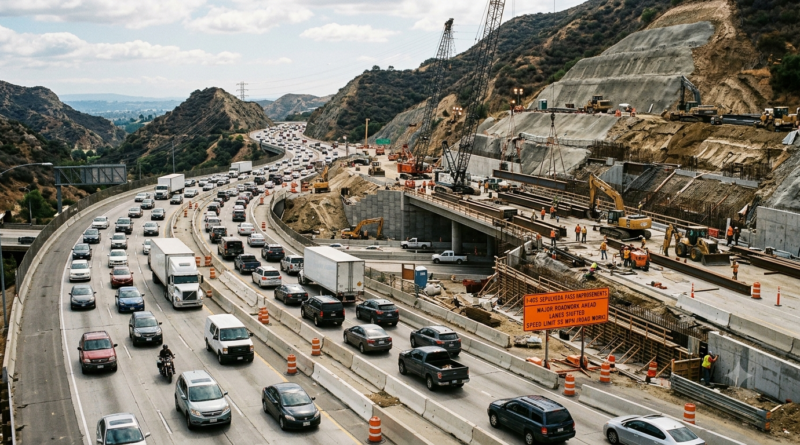
405 Freeway Construction Continues Through Sepulveda Pass: What Los Angeles Drivers Need to Know
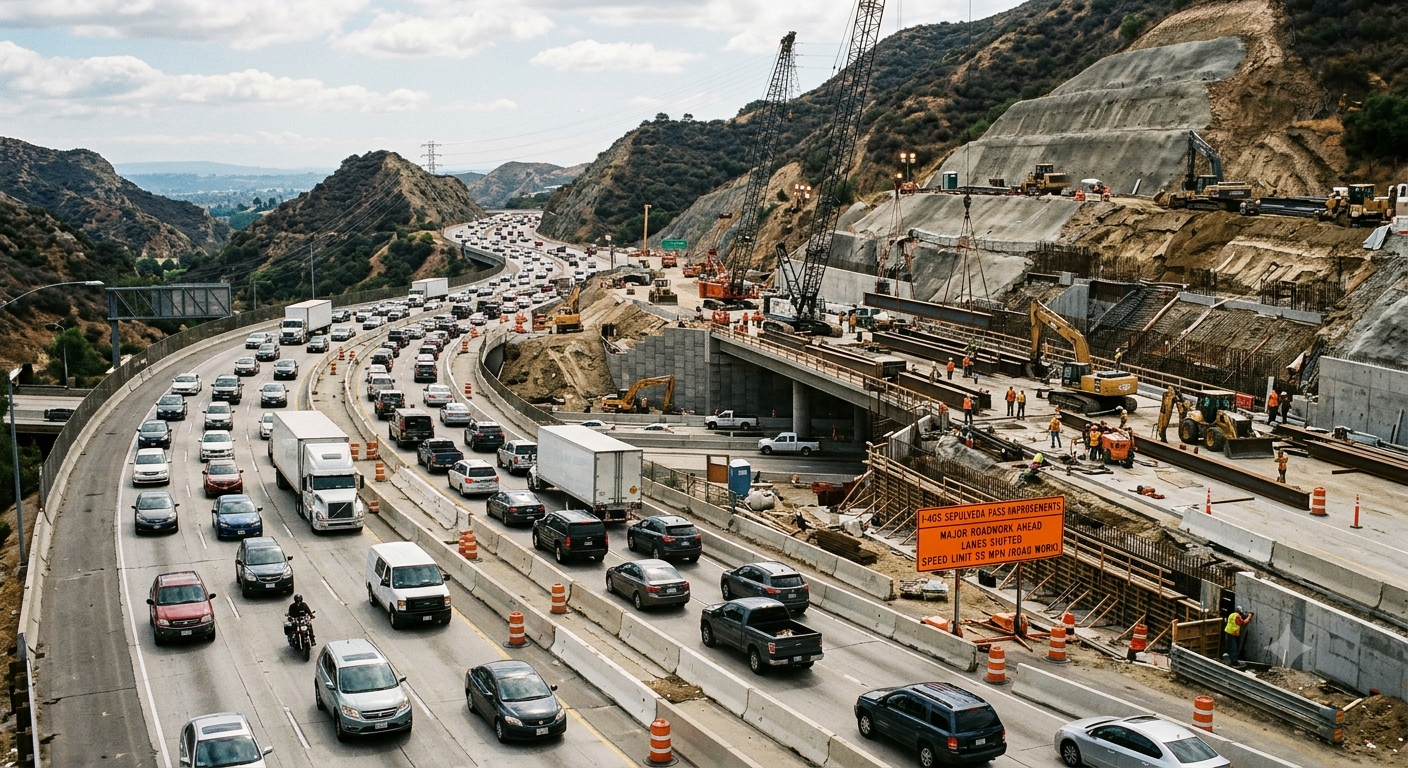
LOS ANGELES, California — Drivers traveling through the Sepulveda Pass on Interstate 405 should prepare for continued construction, lane reductions and occasional ramp closures as California transportation officials carry out a major pavement rehabilitation project.
The work is taking place along one of Los Angeles County’s most heavily traveled freeway corridors, connecting the San Fernando Valley with West Los Angeles. For commuters, the project means changing traffic patterns, construction activity and possible delays as crews move from one section of the freeway to another.
According to the California Department of Transportation, commonly known as Caltrans, the rehabilitation program covers approximately 10.2 miles of I-405, extending from Victory Boulevard in the San Fernando Valley to Wilshire Boulevard in West Los Angeles. The overall project is estimated to cost approximately $143.7 million.
The project is focused primarily on repairing and replacing existing freeway infrastructure. It is not a freeway-widening project under this particular rehabilitation program.
Why Is Caltrans Working on the 405?
The 405 is one of the most important transportation routes in the Los Angeles region. It carries large volumes of commuter, commercial and local traffic every day and connects communities across the San Fernando Valley, the Sepulveda Pass and West Los Angeles.
Years of heavy traffic and exposure to weather can place significant stress on freeway pavement. The current project is designed to restore deteriorated sections of roadway and extend the useful life of the existing infrastructure.
Caltrans says portions of two lanes in each direction between Victory Boulevard and Mulholland Drive will be replaced, while other sections of the freeway will receive pavement repairs.
Across the project limits, nearly 92 lane miles are expected to be restored or rehabilitated.
For drivers, that means construction will not look exactly the same every day. Work zones can shift as crews progress through different parts of the corridor.
What Is Being Repaired or Upgraded?
The project involves more than simply resurfacing the freeway.
According to Caltrans, the work includes pavement rehabilitation as well as several safety and infrastructure improvements.
The project includes:
- Replacement and repair of freeway pavement
- Upgrades to approximately 6,400 feet of metal beam guardrail
- Replacement of 98 roadside sign panels
- Replacement of two overhead sign structures
- Improvements to 10 ADA-compliant curb ramps
- Repairs to bridge approach and departure slabs
- Improvements to culverts
- Upgrades to portions of the freeway’s fiber-optic communications system
- New maintenance vehicle pullouts designed to improve worker safety
These improvements are intended to address both the condition of the roadway and supporting infrastructure along the corridor.
What Does the Construction Mean for Drivers?
For people who use the 405 regularly, the most noticeable effect will be changes in traffic patterns.
Drivers may encounter:
- Reduced lanes
- Temporary lane shifts
- Overnight construction
- Ramp closures
- Construction vehicles and workers
- Uneven pavement
- Reduced speeds in construction areas
- Slower traffic during major work periods
The exact impact can change depending on where crews are working.
A lane that is open during one trip may be restricted during another, which is why drivers should check current traffic information before starting a trip through the construction zone.
Weekend Construction Can Bring Larger Traffic Impacts
Caltrans has scheduled extended construction periods during 2026, including weekend work.
For example, during the scheduled September 25–28, 2026 work period, southbound I-405 was planned to be reduced to three lanes between Ventura Boulevard and Mulholland Drive, with several nearby ramps also scheduled for closure.
These types of extended work periods can create additional congestion because crews have more time to complete pavement work and other construction activities.
Schedules can change because of weather, field conditions and operational requirements. Drivers should therefore check the latest information from Caltrans before traveling.
A Temporary 55 MPH Speed Limit
Another important issue for drivers is speed.
Certain construction sections of the Sepulveda Pass have temporary speed reductions while paving and related work is underway.
Caltrans says some construction areas have a temporary 55 mph speed limit.
The reduced speed limit is intended to provide a safer environment for both motorists and construction workers while crews are operating near active traffic lanes.
Drivers may also encounter sudden changes in lane alignment or pavement conditions.
For commuters familiar with the 405, the construction zone can therefore require more attention than normal freeway driving.
Why Drivers Should Slow Down in the Work Zone
Construction workers often operate only a few feet away from moving traffic.
A lane reduction can also leave drivers with less room to react to stopped vehicles, construction equipment or changing traffic patterns.
For that reason, drivers traveling through the project area should follow posted speed limits, pay attention to temporary signs and avoid sudden lane changes.
The most important point is that traffic conditions can change quickly as construction progresses.
Is the 405 Freeway Being Widened?
Not as part of this particular rehabilitation project.
The current program is primarily focused on repairing and replacing existing infrastructure.
That distinction is important because drivers may see major construction activity and assume that the freeway is being expanded.
Instead, the project is centered on pavement rehabilitation, safety improvements and repairs to existing freeway infrastructure.
The objective is to improve the condition and useful life of the roadway rather than add a major new freeway corridor.
Why the Sepulveda Pass Matters to Los Angeles
The Sepulveda Pass is an important connection between the San Fernando Valley and the Westside of Los Angeles.
The 405 provides a major north-south route for people traveling between residential neighborhoods, employment centers, universities, businesses and other destinations throughout the region.
Because of that role, construction in the pass can have effects beyond the immediate work zone.
A lane reduction or ramp closure can cause traffic to build up and may affect nearby surface streets as drivers look for alternative routes.
For commuters, even a relatively short construction activity can therefore translate into additional travel time.
What Los Angeles Drivers Can Do
Drivers do not necessarily need to avoid the 405 altogether, but planning ahead can help reduce surprises.
Before leaving, motorists can:
- Check current traffic conditions.
- Look for scheduled Caltrans construction activities.
- Allow extra travel time during major work periods.
- Watch for temporary speed-limit signs.
- Follow lane markings and construction-zone signs.
- Be prepared for ramp closures.
- Avoid distractions while driving through work zones.
- Give construction workers and maintenance vehicles additional space.
Commuters who travel through the Sepulveda Pass regularly may also want to check conditions before each trip rather than relying on the traffic pattern from the previous day.
405 Freeway Project at a Glance
| Item | Details |
|---|---|
| Location | I-405, Sepulveda Pass, Los Angeles |
| Project length | Approximately 10.2 miles |
| Corridor | Victory Boulevard to Wilshire Boulevard |
| Estimated cost | Approximately $143.7 million |
| Main work | Pavement rehabilitation and safety improvements |
| Lane rehabilitation | Nearly 92 lane miles |
| Guardrail upgrades | Approximately 6,400 feet |
| Roadside sign panels | 98 |
| Overhead sign structures | 2 |
| ADA curb ramps | 10 |
| Traffic impact | Lane reductions and periodic ramp closures |
| Temporary speed limit | 55 mph in certain construction areas |
What Should Drivers Watch for Next?
The biggest issue for motorists will be the changing nature of the construction schedule.
Because the work is being completed across a long stretch of freeway, traffic restrictions may vary by location and date.
Drivers should pay particular attention to extended weekend construction periods, overnight work and ramp closures.
Weather and field conditions can also affect the timing of construction.
That means a previously announced closure should not automatically be assumed to be in effect without checking the latest official information.
The Bigger Picture for Los Angeles Infrastructure
The 405 project is part of the broader challenge of maintaining transportation infrastructure in a region where millions of people depend on roads and freeways every day.
Freeway pavement does not last indefinitely. Heavy traffic, temperature changes, water and normal wear can gradually damage road surfaces and supporting infrastructure.
Regular rehabilitation allows transportation agencies to address those problems before they become more serious.
For drivers, however, the short-term inconvenience of construction is unavoidable.
Lane closures and slower traffic are part of the process of completing the work safely.
Bottom Line
The 405 Freeway through the Sepulveda Pass is undergoing a major rehabilitation program, with work covering approximately 10.2 miles between Victory Boulevard and Wilshire Boulevard.
The project includes pavement replacement and repairs, guardrail improvements, sign replacements, ADA-related improvements, bridge approach repairs, culvert work and upgrades to portions of the freeway’s communications infrastructure.
For Los Angeles drivers, the most important issue is changing traffic conditions.
Motorists should expect lane reductions, ramp closures, construction activity and temporary speed limits in affected sections.
The project is primarily a rehabilitation effort rather than a freeway-widening program. Its goal is to improve the condition and safety of the existing 405 corridor and extend the useful life of the roadway.
For anyone driving through the Sepulveda Pass, checking current conditions before leaving, allowing additional travel time and following posted construction-zone instructions can help make the trip safer and more predictable.
Source: California Department of Transportation (Caltrans)
