
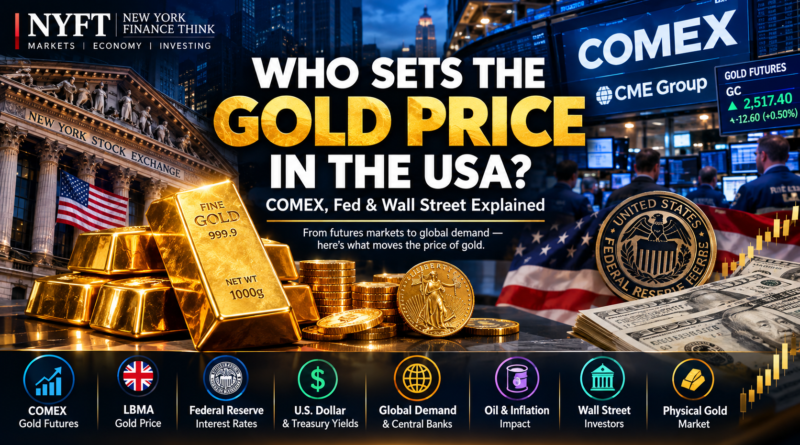
COMEX EXPLAINED: HISTORY, LOCATION, GOLD TRADING, PROFIT AND LOSS 2026
WHAT IS COMEX?
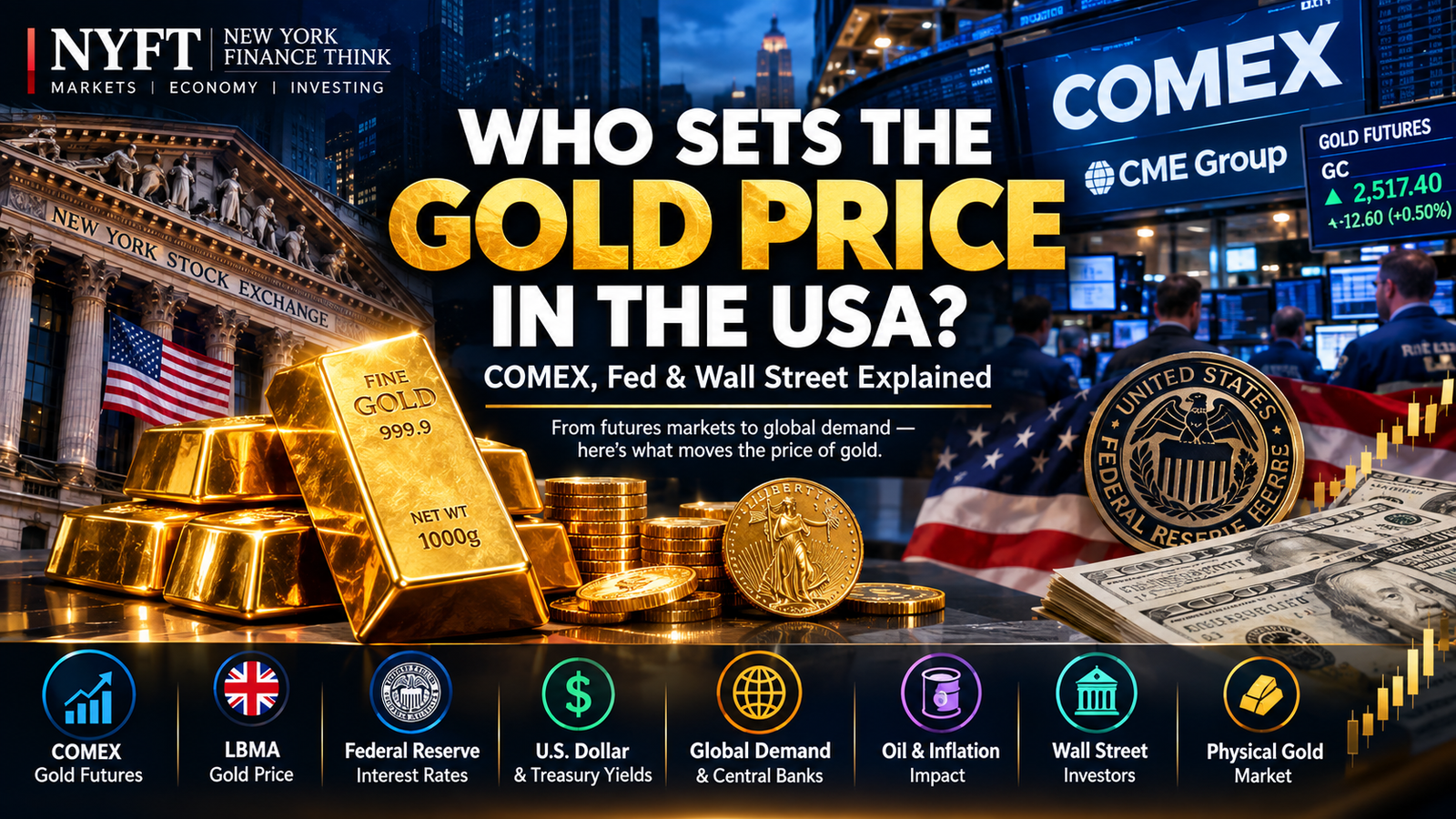
COMEX stands for the Commodity Exchange.
It is a major U.S. derivatives exchange specializing in metals such as:
Today, COMEX is part of CME Group and operates as a designated contract market under CME Group. CME says COMEX offers benchmark metals products subject to its rules and regulations.
For the gold market, COMEX is especially important because its gold futures contract is one of the world’s major benchmark futures contracts and provides an important source of price discovery.
COMEX HISTORY
COMEX has a long history in the American commodities market.
The exchange was founded in 1933 through the combination of several existing commodity exchanges, including the National Metal Exchange and other specialized markets.
The history of COMEX is closely connected to the development of the modern U.S. metals market.
Over time, the exchange became an important center for trading futures and options on precious and industrial metals.
IMPORTANT COMEX TIMELINE
| YEAR | EVENT |
|---|---|
| 1933 | COMEX was founded |
| 1974 | COMEX Gold Futures began trading |
| 1982 | Gold options were introduced |
| 1994 | NYMEX acquired COMEX |
| 2000 | NYMEX completed its merger and demutualization |
| 2008 | NYMEX and COMEX became part of CME Group |
SOURCE: CME Group Historical First Trade Dates | CME Group COMEX
CME’s historical records list the first trade date for COMEX Gold Futures as December 31, 1974, while CME’s corporate history records the later integration of COMEX with NYMEX and CME Group.
WHERE IS COMEX LOCATED?
COMEX is associated with the New York financial market and is operated as one of the four designated contract markets within CME Group.
CME Group’s exchange structure consists of:
CME Group is headquartered in Chicago, while COMEX’s history and identity are strongly connected with New York’s financial and commodities markets.
COMEX GEOGRAPHY
The easiest way to understand the geography is:
COMEX → New York commodities market
CME Group → Chicago-based parent company
Trading infrastructure → Global electronic marketplace
This means a trader sitting in the United States, Europe, Asia or another region can participate electronically in COMEX-linked markets.
WHY WAS COMEX CREATED?
The basic purpose of a futures exchange is to provide an organized marketplace where buyers and sellers can trade standardized contracts.
Before modern futures markets, producers and merchants faced substantial uncertainty about future commodity prices.
A futures exchange provides a mechanism for:
- Price discovery
- Risk management
- Hedging
- Speculation
- Liquidity
- Standardized contracts
This became particularly important for metals because producers, manufacturers, financial institutions and investors all have exposure to changing prices.
WHEN DID COMEX START GOLD FUTURES?
One of the biggest milestones in COMEX history was the introduction of Gold Futures in 1974.
CME states that its Gold Futures contract launched in 1974 and remains a 100-troy-ounce contract.
This was a major development because it gave market participants a standardized exchange-traded way to gain exposure to future gold prices.
WHAT IS A GOLD FUTURES CONTRACT?
A gold futures contract is an agreement involving a standardized quantity of gold at a specified price and future delivery period.
The trader does not necessarily have to walk into a warehouse and take physical gold.
Many futures traders close their positions before expiration.
The contract therefore provides financial exposure to changes in gold prices.
THE STANDARD COMEX GOLD CONTRACT
The traditional COMEX Gold Futures contract is identified by the symbol:
GC
According to CME, one standard COMEX Gold Futures contract represents 100 troy ounces of gold. CME also lists a minimum tick price of $10 per contract for the standard contract.
That means a relatively small movement in the quoted gold price can produce a large dollar change in the value of a full contract.
SIMPLE GOLD PROFIT EXAMPLE
Suppose a trader buys one standard COMEX Gold Futures contract at:
$3,500 per troy ounce
The contract represents:
100 troy ounces
The notional value is therefore:
$3,500 × 100 = $350,000
Now suppose gold rises to:
$3,510
The increase is:
$10 per ounce
For 100 ounces:
$10 × 100 = $1,000
The trader’s gross profit would therefore be:
$1,000
before commissions, fees and other trading costs.
SIMPLE GOLD LOSS EXAMPLE
Now suppose the trader buys at:
$3,500 per ounce
But gold falls to:
$3,490
The decline is:
$10 per ounce
For a 100-ounce contract:
$10 × 100 = $1,000
The trader would have a:
$1,000 gross loss
before trading costs.
This is why futures trading can create large gains and large losses very quickly.
WHY MARGIN MAKES FUTURES RISKY
One of the most important concepts in futures trading is margin.
A trader generally does not have to deposit the entire notional value of a futures contract to establish a position.
Instead, the trader posts a margin amount.
This creates leverage.
For example, if a contract has a notional value of $350,000, the trader may be required to post substantially less than $350,000 as initial margin, depending on the current exchange and broker requirements.
This can make futures trading capital-efficient.
But it also makes losses potentially large relative to the capital posted.
WHAT IS LEVERAGE?
Leverage means controlling a relatively large market position with a smaller amount of capital.
Imagine:
The trader is controlling a position ten times larger than the margin amount.
If gold moves favorably, the return on the deposited capital can be large.
But if gold moves against the trader, losses can also consume the margin quickly.
Leverage works in both directions.
SMALLER COMEX GOLD CONTRACTS
COMEX also offers smaller gold contracts.
One example is the E-mini Gold Futures contract.
CME states that the E-mini Gold contract represents 50 troy ounces. CME also offers an E-micro Gold Futures contract representing 10 troy ounces.
These smaller contracts allow market participants to obtain gold futures exposure with a smaller contract size than the standard 100-ounce contract.
1-OUNCE GOLD FUTURES
CME also offers a 1-Ounce Gold Futures product.
CME says this contract is measured in one troy ounce and has a minimum price movement of $0.25.
This is important for understanding how the gold futures market has expanded beyond the traditional 100-ounce contract.
Smaller contracts can make futures exposure more accessible, although futures remain leveraged instruments and can involve substantial risk.
WHO TRADES COMEX GOLD?
COMEX is not only for one type of investor.
Different participants use the market for different reasons.
1. HEDGE FUNDS
Hedge funds may use gold futures to speculate on price movements or manage portfolio risk.
2. BANKS
Banks and financial institutions participate in commodities markets for market-making, client activity, hedging and other purposes.
3. GOLD MINING COMPANIES
Mining companies may use futures to manage exposure to future gold prices.
4. JEWELRY AND INDUSTRIAL BUSINESSES
Businesses exposed to gold prices can use derivatives to manage price risk.
5. INSTITUTIONAL INVESTORS
Large funds may use gold futures as part of portfolio allocation or risk management.
6. PROFESSIONAL TRADERS
Short-term traders may attempt to profit from intraday price movements.
7. INDIVIDUAL TRADERS
Retail traders can also access certain futures products through futures brokers, subject to account requirements and broker rules.
HOW DOES COMEX HELP SET GOLD PRICES?
This is where COMEX becomes extremely important.
COMEX does not simply announce:
Instead, buyers and sellers continuously submit orders.
Suppose buyers become more aggressive.
Demand rises.
The market price can move higher.
Suppose sellers become more aggressive.
Selling pressure rises.
The market price can move lower.
This process is called:
PRICE DISCOVERY
CME describes its gold futures as a major benchmark and emphasizes their role in global price discovery.
COMEX VS. PHYSICAL GOLD
COMEX primarily provides a futures market.
A person buying a gold coin from a local dealer is participating in a different part of the market.
The two markets are connected.
For example:
COMEX Gold Futures
↓
Global gold price expectations
↓
Wholesale gold pricing
↓
Dealer pricing
↓
Retail gold price
But the final retail price can include dealer premiums, fabrication costs, transportation, insurance, taxes and other costs.
COMEX VS. LBMA
COMEX and LBMA are extremely important, but they are not the same thing.
COMEX
Mainly associated with exchange-traded futures and options in New York.
LBMA
A major global precious-metals market and the administrator/venue framework around the LBMA Gold Price benchmark in London.
In simple terms:
COMEX = major U.S. futures price-discovery center
LBMA = major London/global bullion benchmark
The global gold market connects these markets.
HOW GOLD PRICE MOVES THROUGH THE GLOBAL MARKET
Gold is traded internationally.
Major financial centers include:
A major economic event in Asia can affect gold before New York opens.
A Federal Reserve announcement can affect gold globally.
A geopolitical crisis can move gold futures, spot prices and physical-market demand simultaneously.
WHAT MAKES COMEX GOLD GO UP?
Several forces can push gold futures higher.
LOWER INTEREST-RATE EXPECTATIONS
If traders expect interest rates to fall, gold can become more attractive.
WEAKER U.S. DOLLAR
A weaker dollar can support dollar-denominated gold prices.
INFLATION FEARS
Investors may buy gold when they are concerned about purchasing-power erosion.
GEOPOLITICAL RISK
Wars and geopolitical instability can increase safe-haven demand.
CENTRAL-BANK BUYING
Large official-sector purchases can support physical demand.
STRONG INVESTMENT DEMAND
Increased demand for gold ETFs, futures and physical gold can support prices.
WHAT MAKES COMEX GOLD FALL?
Gold can also decline.
Common factors include:
- Stronger U.S. dollar
- Higher Treasury yields
- Higher interest-rate expectations
- Lower inflation expectations
- Reduced safe-haven demand
- Profit-taking
- Weak investment demand
- Large speculative selling
The relationship is never guaranteed.
Markets can react differently depending on the circumstances.
COMEX PROFIT AND LOSS
Here is a simple example.
| GOLD PRICE MOVE | 100-OZ CONTRACT | GROSS P&L |
|---|---|---|
| +$1 | 100 oz | +$100 |
| +$5 | 100 oz | +$500 |
| +$10 | 100 oz | +$1,000 |
| +$25 | 100 oz | +$2,500 |
| +$50 | 100 oz | +$5,000 |
| -$10 | 100 oz | -$1,000 |
| -$25 | 100 oz | -$2,500 |
| -$50 | 100 oz | -$5,000 |
| -$100 | 100 oz | -$10,000 |
TABLE CAPTION: Illustrative profit-and-loss examples for a standard 100-troy-ounce COMEX Gold Futures contract. Actual results depend on entry price, exit price, contract specifications, fees, commissions and margin requirements.
THE MOST IMPORTANT FORMULA
For a simple futures position:
PROFIT OR LOSS = PRICE CHANGE × CONTRACT SIZE
For the standard 100-ounce gold contract:
$10 PRICE MOVE × 100 OUNCES = $1,000
This formula explains why gold futures can become extremely volatile for traders using leverage.
CME’s educational material explains that futures P&L is calculated from the price movement and contract size.
EXAMPLE: A TRADER MAKES MONEY
Suppose:
BUY: $3,500
SELL: $3,550
Price increase:
$50
Contract size:
100 ounces
Gross profit:
$50 × 100 = $5,000
The trader makes $5,000 before fees and other costs.
EXAMPLE: A TRADER LOSES MONEY
Suppose:
BUY: $3,500
SELL: $3,450
Price decline:
$50
Contract size:
100 ounces
Gross loss:
$50 × 100 = $5,000
The trader loses $5,000 before fees and other costs.
WHY A SMALL PRICE MOVE CAN BECOME A BIG LOSS
Suppose someone has only $20,000 available in a futures account.
They establish a position with a much larger notional value.
If gold moves sharply against them, their account can lose a large percentage of its available capital.
If losses exceed available margin, the broker may require additional funds or liquidate the position.
This is one of the biggest differences between buying physical gold and trading leveraged gold futures.
COMEX GOLD: PROFIT OPPORTUNITY VS. RISK
| FEATURE | POTENTIAL ADVANTAGE | POTENTIAL RISK |
|---|---|---|
| Leverage | Larger exposure with less upfront capital | Losses can be amplified |
| Liquidity | Easier entry and exit in a liquid market | Prices can move rapidly |
| Short Selling | Can potentially profit from falling prices | Losses can be substantial |
| 24-Hour Access | Global trading opportunities | Markets can move while you sleep |
| Price Discovery | Transparent exchange trading | Volatility can be high |
| Hedging | Can reduce price risk | Hedge may not work perfectly |
| Small Contracts | More flexible position sizing | Still leveraged |
| Global Market | Many participants | Global events can cause sharp moves |
WHO REGULATES COMEX?
COMEX operates under U.S. futures-market rules.
CME Group identifies COMEX as a Designated Contract Market and says its products operate under COMEX rules and regulations.
The broader U.S. derivatives market is overseen by the Commodity Futures Trading Commission (CFTC).
This regulatory structure is important because futures trading involves significant financial risk.
| PRICE MOVE IN GOLD FUTURES | STANDARD COMEX CONTRACT | GROSS PROFIT / LOSS | MARKET IMPACT |
|---|---|---|---|
| +$1 PER OZ | 100 TROY OUNCES | +$100 | SMALL PROFIT |
| +$5 PER OZ | 100 TROY OUNCES | +$500 | PROFIT |
| +$10 PER OZ | 100 TROY OUNCES | +$1,000 | PROFIT |
| +$25 PER OZ | 100 TROY OUNCES | +$2,500 | LARGER PROFIT |
| +$50 PER OZ | 100 TROY OUNCES | +$5,000 | HIGHER PROFIT |
| -$10 PER OZ | 100 TROY OUNCES | -$1,000 | LOSS |
| -$25 PER OZ | 100 TROY OUNCES | -$2,500 | LARGER LOSS |
| -$50 PER OZ | 100 TROY OUNCES | -$5,000 | HIGHER LOSS |
| -$100 PER OZ | 100 TROY OUNCES | -$10,000 | MAJOR LOSS |
PRICE MOVE IN GOLD FUTURES
STANDARD COMEX CONTRACT
GROSS PROFIT / LOSS
MARKET IMPACT
+$1 PER OZ
100 TROY OUNCES
+$100
SMALL PROFIT
+$5 PER OZ
100 TROY OUNCES
+$500
PROFIT
+$10 PER OZ
100 TROY OUNCES
+$1,000
PROFIT
+$25 PER OZ
100 TROY OUNCES
+$2,500
LARGER PROFIT
+$50 PER OZ
100 TROY OUNCES
+$5,000
HIGHER PROFIT
-$10 PER OZ
100 TROY OUNCES
-$1,000
LOSS
-$25 PER OZ
100 TROY OUNCES
-$2,500
LARGER LOSS
-$50 PER OZ
100 TROY OUNCES
-$5,000
HIGHER LOSS
-$100 PER OZ
100 TROY OUNCES
-$10,000
MAJOR LOSS
TABLE CAPTION: COMEX GOLD FUTURES CAN CREATE SIGNIFICANT PROFIT OR LOSS FROM RELATIVELY SMALL CHANGES IN THE GOLD PRICE.
FORMULA:
PROFIT OR LOSS = GOLD PRICE CHANGE × CONTRACT SIZE
EXAMPLE:
A $50 PER OUNCE move in a standard 100-ounce COMEX Gold Futures contract equals a $5,000 GROSS PROFIT OR LOSS, before commissions, fees and other trading costs.
IMPORTANT: COMEX futures use margin and leverage, so traders can control a large contract with less cash than the full contract value. This can magnify both gains and losses.
Available next action: Create a downloadable PDF file here in this chat containing the findings and recommendations above
WHY COMEX MATTERS TO ORDINARY AMERICANS
You may never trade a COMEX futures contract.
You may never buy a gold bar.
But COMEX can still matter to you.
Gold prices influence:
- Jewelry prices
- Gold coins
- Gold bars
- Gold ETFs
- Mining stocks
- Precious-metals businesses
- Investor portfolios
When COMEX gold prices move sharply, other parts of the gold market often react.
COMEX AND WALL STREET
COMEX is not the stock market.
It is a derivatives marketplace.
Wall Street investors can participate in the gold market through futures, options, ETFs, mining companies and other instruments.
This creates a connection between:
COMEX → Gold → Dollar → Treasury Yields → Federal Reserve → Stocks → Investor Sentiment
A major change in one part of this system can affect the others.
COMEX AND THE FEDERAL RESERVE
The Federal Reserve does not set the COMEX gold price.
But Fed policy can strongly influence gold.
For example:
Fed becomes more hawkish
→ Interest-rate expectations rise
→ Treasury yields may rise
→ Dollar may strengthen
→ Gold can come under pressure
The opposite can also happen when markets expect easier monetary policy.
However, this is not a guaranteed formula.
Gold responds to many forces simultaneously.
COMEX AND INFLATION
Gold is often associated with inflation protection.
But inflation alone does not determine gold prices.
Investors must also consider:
- Real interest rates
- Treasury yields
- Dollar strength
- Fed policy
- Economic growth
- Geopolitical risk
- Investor positioning
That is why professional gold-market analysis looks at several indicators instead of one inflation number.
COMEX AND OIL
Oil and gold are both major commodities, but they behave differently.
Higher oil prices can increase inflation pressure.
Higher inflation can affect Federal Reserve policy expectations.
Those rate expectations can influence Treasury yields and the dollar.
The chain can therefore look like:
OIL ↑
→ FED RATE EXPECTATIONS CHANGE
This is one reason commodity traders watch oil and gold together.
THE BIGGEST BENEFIT OF COMEX
The biggest benefit is price discovery and liquidity.
CME says its gold futures market provides global price discovery and has substantial liquidity.
This allows different market participants to:
- Buy
- Sell
- Hedge
- Speculate
- Manage risk
- Adjust positions quickly
THE BIGGEST RISK OF COMEX
The biggest risk for an individual trader is leverage.
A trader can control a large notional position with a smaller amount of capital.
That can increase potential returns.
But it can also increase potential losses.
LEVERAGE DOES NOT CREATE FREE PROFIT.
It magnifies the financial impact of price movements.
COMEX: THE BIG PICTURE
The easiest way to understand COMEX is to think of it as a major financial marketplace where participants trade standardized futures and options on metals.
For gold:
GLOBAL GOLD MARKET
↓
LONDON / ASIA / NEW YORK
↓
COMEX GOLD FUTURES
↓
PRICE DISCOVERY
↓
WHOLESALE GOLD MARKET
↓
DEALERS / ETFs / INVESTORS / JEWELRY MARKET
This is why COMEX is so important to the American gold market.
FINAL VERDICT
COMEX is much more than a place where traders buy and sell gold futures.
It is a major part of the modern global gold-price discovery system.
Its history goes back to 1933, while COMEX Gold Futures began trading in 1974. Today, COMEX is part of CME Group and provides benchmark metals contracts under its exchange rules.
For investors, the most important lesson is simple:
COMEX DOES NOT “OWN” THE GOLD PRICE. IT IS ONE OF THE MOST IMPORTANT MARKETS WHERE GOLD PRICES ARE DISCOVERED THROUGH BUYING AND SELLING.
Gold prices are also influenced by London benchmarks, global spot markets, the U.S. dollar, Canada–U.S. Economic Relations, 2000–2015 Treasury yields, Federal Reserve policy, inflation, central-bank purchases, mining supply and geopolitical events.
And for traders, the most important warning is equally simple:
COMEX GOLD FUTURES CAN PRODUCE LARGE PROFITS, BUT THE SAME LEVERAGE CAN PRODUCE LARGE LOSSES.
This is why understanding contract size, margin, tick value and risk is essential before trading futures.
OFFICIAL SOURCES
CME Group — COMEX
https://www.cmegroup.com/company/comex.html
CME Group — Gold Futures
https://www.cmegroup.com/markets/metals/precious/gold.html
CME Group — Gold Product Overview
https://www.cmegroup.com/education/lessons/product-gold
CME Group — Historical First Trade Dates
https://www.cmegroup.com/media-room/historical-first-trade-dates.html
CME Group — Introduction to Futures
https://www.cmegroup.com/education/courses/introduction-to-futures
CME Group — Futures Profit and Loss
https://www.cmegroup.com/education/courses/introduction-to-futures/calculating-futures-contract-profit-or-loss
CFTC — Commodity Futures Trading Commission
https://www.cftc.gov/
LBMA — Gold Price
https://www.lbma.org.uk/prices-and-data/lbma-gold-price
World Gold Council
https://www.gold.org/
INVESTOR DISCLAIMER
This article is for educational and informational purposes only. Futures trading involves substantial risk and is not suitable for every investor. Leverage can magnify both gains and losses. Examples in this article are illustrative and do not represent guaranteed trading results. Always review current exchange specifications, margin requirements, fees and broker requirements before trading.
