
Global Tech Stocks Face Sharp Selloff as Investors Question the AI Spending Boom
Published: October 23, 2026Category: Business | Technology | Artificial Intelligence | Global Markets The artificial intelligence boom has transformed the
Read More
Your Trusted Source for U.S. Finance, Markets & Economic News
Global Environment & Climate 2026 is defined by a changing climate, rising environmental pressures, extreme weather, biodiversity loss, pollution, water stress and the growing need for investment in climate adaptation and environmental protection.
The year 2026 is also an important period for measuring whether governments, businesses and communities are moving quickly enough to address climate and environmental risks.
The World Meteorological Organization’s Global Annual to Decadal Climate Update 2026–2035 says global average temperatures are likely to remain at or near record levels during the next five years. The WMO estimates an 86% chance that at least one year between 2026 and 2030 will be warmer than 2024, which had previously been the warmest year on record. It also estimates a 91% chance that at least one year during 2026–2030 will temporarily exceed 1.5°C above the 1850–1900 average.
The environmental challenge extends beyond temperature.
The United Nations Environment Programme’s Global Environment Outlook 7, released in December 2025, brought together 287 multidisciplinary scientists from 82 countries. The assessment examines interconnected crises involving climate change, biodiversity loss, land degradation, pollution and waste.
For 2026, the central environmental question is no longer simply whether the planet is changing. The question is how governments, companies and communities respond to those changes.
The global environment includes the atmosphere, oceans, forests, rivers, freshwater systems, soil, wildlife, biodiversity and the natural resources that support human societies.
Climate refers to long-term patterns in temperature, rainfall, winds and other atmospheric conditions.
These systems are connected.
Changes in temperature can affect rainfall.
Changes in rainfall can affect agriculture.
Changes in agriculture can affect food prices.
Changes in land use can affect biodiversity.
Changes in ocean temperature can affect marine ecosystems.
Air pollution can affect human health.
This interconnected structure means environmental problems rarely remain isolated.
The climate outlook for 2026 remains challenging.
The WMO’s 2026–2035 update projects annual global mean near-surface temperatures between 1.3°C and 1.9°C above the 1850–1900 average during 2026–2030.
The WMO also says Arctic temperatures are expected to remain higher than the global average.
This does not mean every location will experience the same temperature increase.
Climate change produces regional differences.
Some areas may experience more intense heatwaves. Others may face heavier rainfall, drought, changing snowfall or increased wildfire risk.
The 1.5°C figure is an important reference point in international climate policy.
It refers to the long-term temperature increase above the pre-industrial baseline associated with the Paris Agreement’s temperature goal.
A single year temporarily exceeding 1.5°C is not the same as permanently exceeding the long-term Paris temperature goal.
The distinction matters because climate scientists use different time periods and statistical methods to assess warming.
The WMO nevertheless considers the increasing probability of temporary annual exceedance an important warning about the changing climate system.
The WMO’s State of the Global Climate 2025 report, published in March 2026, confirmed that 2015–2025 were the hottest 11 years on record. It also reported that Earth’s energy imbalance was at its highest level in the 65-year observational record used in the assessment.
Earth’s energy imbalance describes the difference between energy entering the climate system and energy leaving it.
When more energy is retained than released, the climate system warms.
The ocean absorbs much of this additional heat, making ocean temperatures an important indicator of climate change.
Global warming is primarily driven by the accumulation of greenhouse gases in the atmosphere.
Carbon dioxide, methane, nitrous oxide and other greenhouse gases trap heat.
Human activities, including fossil-fuel combustion, industrial processes, agriculture and land-use change, have increased atmospheric greenhouse-gas concentrations.
The resulting warming affects both natural systems and human societies.
Reducing greenhouse-gas emissions remains one of the central goals of climate policy.
Major sources include:
Different countries have different emissions profiles.
Some economies depend heavily on coal.
Others have significant oil and gas production.
Some have rapidly expanding renewable-energy systems.
The transition therefore requires different policies in different regions.
Renewable energy is increasingly important to global climate policy.
Solar power, wind power, hydropower, geothermal energy and other renewable technologies can reduce dependence on fossil fuels when deployed effectively.
Solar and wind costs have fallen significantly over the past decade in many markets.
However, renewable energy also requires transmission infrastructure, storage, land, financing and reliable electricity-grid management.
The energy transition is therefore not simply about replacing one power source with another.
It requires changes throughout the energy system.
Solar energy has become one of the fastest-growing renewable technologies.
Large solar farms can generate electricity at utility scale, while rooftop systems can provide electricity directly to homes and businesses.
Solar manufacturing is also an important global industry.
The sector involves mining, manufacturing, shipping, installation and recycling.
This means the growth of solar power has implications for international trade and industrial policy.
Wind power remains another major source of renewable electricity.
Large wind farms can generate significant amounts of electricity, particularly in regions with strong and consistent winds.
Offshore wind offers additional opportunities but can involve higher construction, financing and maintenance costs.
The industry also depends on specialized ships, turbines, cables and port infrastructure.
Renewable energy production can vary depending on weather conditions.
Energy storage can help balance electricity supply and demand.
Battery storage is expanding rapidly, while pumped hydro and other technologies remain important in some markets.
Long-duration storage is also attracting attention because electricity systems increasingly require flexibility.
The transition to clean energy requires stronger electricity grids.
Solar farms may be located far from major cities.
Wind resources may be concentrated in different regions.
Electric vehicles and data centers can increase electricity demand.
Grid modernization is therefore becoming a major infrastructure issue.
Climate mitigation aims to reduce greenhouse-gas emissions.
Climate adaptation focuses on preparing for climate impacts that are already occurring or expected.
Adaptation can include:
Adaptation is particularly important for vulnerable communities.
Extreme heat is one of the most direct consequences of a warming climate.
Heat can affect human health, agriculture, electricity demand and transportation infrastructure.
Cities can be particularly vulnerable because buildings, roads and other structures retain heat.
Urban trees, green spaces, reflective surfaces and improved building design can help reduce heat exposure.
Climate change can influence the intensity and frequency of some heavy precipitation events.
Flood risk is also affected by land use, drainage systems, river management and urban development.
Effective flood protection therefore requires both climate planning and better infrastructure.
Drought can reduce agricultural production and place pressure on water supplies.
Long periods of low rainfall can affect reservoirs, rivers, groundwater and soil moisture.
Farmers may respond by changing crops, improving irrigation efficiency or adopting drought-resistant varieties.
Governments may also introduce water-management restrictions during severe drought.
Wildfires are influenced by several factors, including temperature, vegetation, drought, wind and human activity.
Hot and dry conditions can increase the risk of severe fires in vulnerable regions.
Wildfire smoke can travel long distances and affect air quality far from the original fire.
This makes wildfire management both a local and regional environmental issue.
The oceans are central to the climate system.
They absorb heat and carbon dioxide and influence global weather patterns.
Ocean warming can affect marine ecosystems, fisheries and coral reefs.
Changes in ocean conditions can also influence coastal communities.
The health of oceans is therefore directly connected to climate policy.
Sea levels are rising because warming causes seawater to expand and land ice to melt.
Coastal communities face increasing risks from flooding, erosion and storm surges.
Some cities are investing in seawalls, wetlands, drainage improvements and other forms of coastal protection.
Long-term planning is increasingly important because infrastructure built today may remain in place for decades.
Coral reefs are among the ecosystems most sensitive to warming oceans.
Marine heatwaves can cause coral bleaching.
Repeated or severe bleaching can reduce reef health and affect marine biodiversity.
Coral reefs also support fisheries, tourism and coastal protection.
Protecting reefs therefore has ecological and economic benefits.
Climate change is only one part of the environmental crisis.
Biodiversity loss is another major concern.
Species are affected by habitat destruction, pollution, invasive species, overexploitation and climate change.
The UNEP GEO-7 assessment identifies climate change, biodiversity loss, land degradation and pollution as interconnected environmental crises.
Protecting biodiversity requires action across forests, oceans, grasslands, wetlands and agricultural landscapes.
Forests store carbon, regulate water cycles and provide habitats for wildlife.
They also support millions of people through agriculture, forestry and other economic activities.
Deforestation can release carbon while destroying habitats.
Forest restoration can improve biodiversity and help protect watersheds.
The Amazon is one of the world’s most important tropical forest systems.
It stores large amounts of carbon and supports exceptional biodiversity.
Deforestation, fires, agricultural expansion and climate pressures create risks for the ecosystem.
Protecting the Amazon requires cooperation between governments, local communities, Indigenous Peoples and businesses.
The Congo Basin contains another major tropical forest system.
Its forests provide habitat for wildlife, store carbon and support local communities.
International conservation programs increasingly focus on protecting forests while supporting sustainable economic development.
Agriculture depends on biodiversity.
Pollinators help crops reproduce.
Healthy soils support plant growth.
Natural predators can help control pests.
Diverse ecosystems can improve resilience.
Agricultural practices that protect soil, water and biodiversity can therefore provide both environmental and economic benefits.
Freshwater is one of the most important environmental resources.
People need water for drinking, sanitation, agriculture, energy and industry.
Climate change can alter rainfall patterns and increase pressure on water supplies.
Water security therefore requires conservation, efficient infrastructure and long-term planning.
Groundwater supplies drinking water and supports agriculture in many parts of the world.
Overuse can cause groundwater levels to decline.
Pollution can make underground water difficult or expensive to treat.
Sustainable groundwater management is therefore essential for long-term water security.
Air pollution remains one of the world’s major environmental and public-health challenges.
Pollutants can come from vehicles, industry, power generation, agriculture, construction and household fuel use.
Reducing air pollution can provide immediate health benefits while some measures also reduce greenhouse-gas emissions.
Plastic pollution affects land, rivers and oceans.
Large quantities of plastic waste enter the environment each year.
Microplastics can be found in water, soil, air and living organisms.
Governments and companies are working on recycling, waste reduction, alternative materials and improved product design.
Waste management is a major environmental issue as global populations and consumption increase.
Landfills can create methane and other environmental concerns.
Poorly managed waste can pollute waterways and communities.
A circular economy seeks to reduce waste by keeping materials in use for longer through reuse, repair, recycling and better product design.
A circular economy moves away from the traditional model of producing, using and discarding products.
Instead, products and materials are designed to remain useful for as long as possible.
This can reduce resource consumption and waste.
UNEP’s GEO-7 assessment emphasizes systems transformation across areas including finance, energy, food and waste.
Climate action requires large amounts of investment.
Governments, banks, companies and investors all play roles in financing renewable energy, resilient infrastructure, clean transportation and environmental protection.
UNEP’s State of Finance for Nature 2026 highlights the continuing imbalance between finance supporting activities that damage nature and finance directed toward nature-positive outcomes.
This financial gap is an important issue for governments and investors.
Green investment includes financing for:
Investment decisions can influence the speed of environmental transition.
Climate change can create physical and financial risks for companies.
Physical risks include floods, storms, heat and drought.
Transition risks can arise from changes in regulations, consumer preferences, energy systems and technology.
Companies therefore increasingly include environmental risks in long-term planning.
Insurance markets are particularly sensitive to climate-related disasters.
When floods, hurricanes, wildfires or other hazards cause repeated losses, insurance costs can rise.
In some high-risk locations, coverage may become more difficult to obtain.
This creates an economic link between climate change, housing markets, infrastructure and household finances.
Agriculture is highly sensitive to temperature, rainfall and extreme weather.
Climate change can alter growing seasons and increase pressure from heat, drought, floods and pests.
Farmers are adapting through improved irrigation, crop diversification, new agricultural technologies and changes in planting schedules.
Food security remains closely connected to climate resilience.
Food production also contributes to environmental pressures.
Agriculture uses land and water and can generate greenhouse-gas emissions.
Improving food systems can therefore provide multiple benefits.
Possible approaches include reducing food waste, improving soil health, increasing water efficiency and supporting sustainable farming.
Cities contain most of the world’s population and economic activity.
Urban areas are therefore central to climate policy.
Cities can reduce emissions through public transportation, clean electricity, efficient buildings and compact development.
They can also adapt through cooling systems, green infrastructure, flood protection and emergency planning.
Electric vehicles are an important part of transportation policy.
EVs can reduce direct tailpipe emissions compared with conventional gasoline or diesel vehicles.
Their overall environmental impact depends partly on electricity generation, battery production and manufacturing.
The transition also creates new demand for batteries, charging infrastructure and critical minerals.
Clean-energy technologies require minerals such as lithium, copper, nickel and other materials.
Demand for these resources is expected to remain important as countries expand electricity networks, batteries and renewable-energy technologies.
Mining can create environmental impacts.
This creates a challenge: the energy transition itself requires careful management of natural resources.
Climate technology includes many different fields.
Examples include:
Technology alone cannot solve environmental problems, but it can provide tools for reducing emissions and improving resilience.
Artificial intelligence has both environmental costs and potential benefits.
AI data centers require electricity and cooling.
At the same time, AI can help analyze weather patterns, optimize electricity grids, improve agricultural forecasting and monitor environmental changes.
The environmental impact of AI will depend on how efficiently computing systems use energy and how quickly clean electricity expands.
Governments use regulations, taxes, subsidies, standards and public investment to address environmental problems.
Effective policy needs reliable scientific information.
UNEP’s GEO process is designed to connect scientific assessment with policy decisions and evaluate both environmental trends and policy responses.
Climate change crosses national borders.
Greenhouse gases released in one country affect the global atmosphere.
Ocean warming affects countries across regions.
Extreme weather can disrupt international supply chains.
International cooperation is therefore essential.
The Paris Agreement remains the central global framework for international climate cooperation.
Developing countries can face significant climate risks while having fewer financial resources for adaptation.
Floods, droughts, heat and storms can damage infrastructure and affect livelihoods.
Climate finance and technology transfer therefore remain important international policy issues.
Climate justice focuses on the unequal distribution of climate risks and responsibilities.
Countries differ in historical emissions, economic resources and vulnerability.
The issue is particularly important in international climate negotiations.
Indigenous Peoples and local communities hold extensive knowledge about ecosystems and environmental management.
UNEP’s GEO-7 process incorporated Indigenous and traditional knowledge through dedicated dialogues.
This reflects growing recognition that environmental policy can benefit from both scientific research and local experience.
Environmental conditions directly influence human health.
Air pollution, unsafe water, extreme heat and environmental contamination can increase health risks.
Climate change can also influence the geographic distribution of some diseases and increase pressure on health systems.
Protecting the environment can therefore be viewed as an investment in public health.
Environmental degradation can impose substantial economic costs.
Pollution can increase healthcare expenses.
Floods can damage infrastructure.
Drought can reduce agricultural output.
Biodiversity loss can affect fisheries and tourism.
Environmental protection can therefore have economic benefits beyond conservation.
Environmental policy can also create economic opportunities.
Renewable energy creates new industries.
Energy efficiency can reduce operating costs.
Clean transportation creates manufacturing and infrastructure demand.
Environmental restoration can create employment.
UNEP’s GEO-7 assessment says that transforming major systems toward sustainability could produce substantial economic and social benefits, with modeled annual benefits reaching about US$20 trillion by 2070 under the report’s pathways.
Financial markets increasingly consider environmental risks.
Investors may examine companies’ exposure to carbon regulation, extreme weather, water shortages and supply-chain disruptions.
Banks may also consider climate risks when evaluating loans.
However, environmental investing requires careful analysis because labels and investment strategies can vary significantly.
Many companies have announced emissions-reduction or net-zero targets.
The credibility of such targets depends on measurable plans, transparent reporting and progress over time.
Investors and consumers increasingly want to know whether corporate climate commitments are backed by actual investment and operational changes.
Reliable environmental data is essential.
Scientists use satellites, weather stations, ocean sensors, aircraft, ground measurements and computer models to monitor the planet.
Long-term datasets help researchers distinguish short-term weather fluctuations from longer-term climate trends.
Climate forecasts help governments and businesses prepare.
Agricultural planners can use seasonal forecasts.
Water managers can prepare for drought conditions.
Cities can improve heat planning.
Energy companies can plan for changing demand.
Insurance companies can evaluate risk.
Forecasting does not eliminate uncertainty, but it can improve preparedness.
The WMO’s current five-year outlook is particularly important for the remainder of the decade.
The organization estimates an 86% probability that at least one year from 2026 to 2030 will exceed the current record warm year of 2024.
It also estimates a 70% probability that the five-year average for 2026–2030 will exceed 1.5°C above the 1850–1900 average.
These are probabilities, not guarantees.
They indicate the increasing likelihood of very warm conditions over the coming years.
Governments around the world are monitoring:
Environmental policy is increasingly connected to national economic planning.
Companies should consider environmental risk as part of long-term business strategy.
Important issues include:
Businesses that understand these changes may be better positioned to manage future risks.
Individuals cannot solve climate change alone, but consumer decisions can influence markets.
Consumers can reduce waste, improve energy efficiency, use public transportation where practical, conserve water and support durable products.
More importantly, citizens can participate in local and national discussions about environmental policy.
Cities can make practical changes quickly.
Urban governments can improve public transportation, expand green spaces, improve waste management, strengthen flood protection and increase building efficiency.
Because cities concentrate people and infrastructure, successful urban climate policies can have significant benefits.
The environmental outlook is serious, but it is not a story without solutions.
UNEP’s GEO-7 assessment describes major environmental risks while also identifying pathways for transformation. It concludes that action on climate, nature, land, pollution and resource use can produce significant economic and social benefits.
The challenge is speed.
Environmental systems respond over years and decades, while political and business decisions often operate on shorter timelines.
That creates a need for long-term planning.
Global Environment & Climate 2026 is about a planet undergoing rapid environmental change and a world deciding how to respond.
The latest WMO assessment indicates that global temperatures are likely to remain at historically high levels through the coming years. The organization estimates a high probability that at least one year between 2026 and 2030 will be warmer than the current record year and that at least one year will temporarily exceed 1.5°C above the pre-industrial reference level.
At the same time, UNEP’s GEO-7 assessment shows that climate change is part of a wider environmental challenge involving biodiversity loss, land degradation, pollution and waste.
The response will require more than one solution.
Clean energy, stronger electricity grids, efficient transportation, sustainable agriculture, forest protection, biodiversity conservation, better water management, pollution reduction and climate-resilient infrastructure all have roles to play.
Finance will also be critical.
Governments need to create effective policies. Businesses need to manage environmental risks. Investors need reliable information. Communities need stronger resilience. Scientists need continued monitoring and research.
The global environmental transition is therefore both a challenge and an economic opportunity.
The decisions made during 2026 and the years that follow will influence energy systems, cities, agriculture, financial markets, natural ecosystems and human health for decades.
For readers, the most important issue is understanding the difference between short-term environmental events and long-term climate trends.
For businesses, the priority is preparing for physical and regulatory risks.
For governments, the challenge is combining economic development with environmental protection.
For investors, climate and environmental risks are increasingly part of long-term financial analysis.
For communities, adaptation and resilience can help reduce the impact of extreme weather.
The future of the global environment will ultimately depend on decisions made across all of these areas.
The WMO expects global temperatures to remain at or near record levels. Its 2026–2035 update estimates an 86% chance that at least one year from 2026 to 2030 will be warmer than 2024.
It is not possible to say with certainty in advance. The WMO’s forecast indicates a high probability that at least one year between 2026 and 2030 will surpass the current record warm year, 2024.
It is the temperature goal referenced in the Paris Agreement. A temporary annual exceedance is not identical to exceeding the long-term temperature goal over a multi-decade period.
Major challenges include climate change, biodiversity loss, land degradation, pollution, waste, water stress and ecosystem degradation. UNEP’s GEO-7 treats these problems as interconnected environmental crises.
Biodiversity supports ecosystems that provide food, clean water, pollination, soil health, coastal protection and other services essential to human societies.
Oceans absorb heat and carbon dioxide and influence global climate patterns. Ocean warming can affect marine ecosystems, fisheries and coastal communities.
Climate adaptation means preparing infrastructure, communities, businesses and ecosystems for climate impacts such as heat, drought, flooding and sea-level rise.
Climate mitigation means reducing or preventing greenhouse-gas emissions and increasing the removal or storage of carbon.
Businesses can assess physical climate risks, diversify supply chains, improve energy efficiency, strengthen infrastructure and monitor changing environmental regulations.
Renewable energy can reduce dependence on fossil fuels and lower greenhouse-gas emissions from electricity generation when combined with appropriate grid and storage infrastructure.
GEO-7 is the seventh edition of UNEP’s Global Environment Outlook. It was produced by 287 multidisciplinary scientists from 82 countries and examines climate change, biodiversity, land degradation, pollution and pathways for environmental transformation.
Focus Keyword: Global Environment and Climate 2026
SEO Title: Global Environment & Climate 2026: Climate Change and Future Outlook
Meta Description: Global Environment & Climate 2026 covers climate change, global warming, extreme weather, biodiversity, oceans, renewable energy, pollution and climate risks.
URL Slug: global-environment-climate-2026
Category: Global Environment & Climate
Tags: Global Environment 2026, Climate Change 2026, Global Climate 2026, Environment News 2026, Global Warming, Climate Outlook 2026, Biodiversity, Renewable Energy, Extreme Weather, Oceans, Pollution, Climate Finance, Sustainability, Environmental News
Suggested Image Alt Text: Global Environment and Climate 2026 showing Earth, climate change, renewable energy, forests, oceans and environmental protection
Image Title: Global Environment & Climate 2026
Caption: Global environmental and climate developments shaping the planet in 2026.
Image Description: A global environmental illustration representing climate change, rising temperatures, renewable energy, forests, oceans, biodiversity and the worldwide transition toward a more sustainable future.
Published: October 23, 2026Category: Business | Technology | Artificial Intelligence | Global Markets The artificial intelligence boom has transformed the
Read More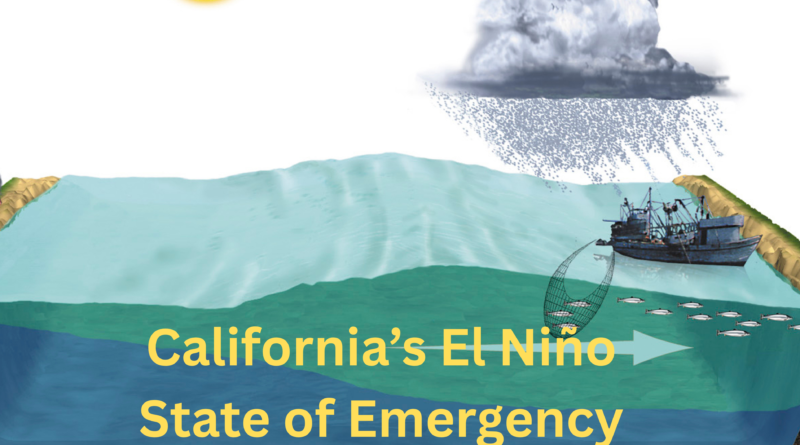
California’s El Niño State of Emergency By Emily CarterCalifornia Energy & Climate Correspondent | New York Finance Think |Sarah Mitchell
Read More
September 12, 2026 Executive Summary Oil prices have once again moved to the center of the U.S. economic story. Brent
Read More
By New York Finance Think Newsroom Gold is one of the most closely watched financial assets in America. Investors follow
Read MorePublished: September 3, 2026Market: United StatesFocus: S&P 500, Federal Reserve, Treasury Yields, Oil, Technology Stocks and U.S. Economy The S&P
Read More