Why Is Crude Oil Above $100? What It Means for the U.S. Economy
For U.S. Investors: Oil, Inflation, Interest Rates and the Stock Market
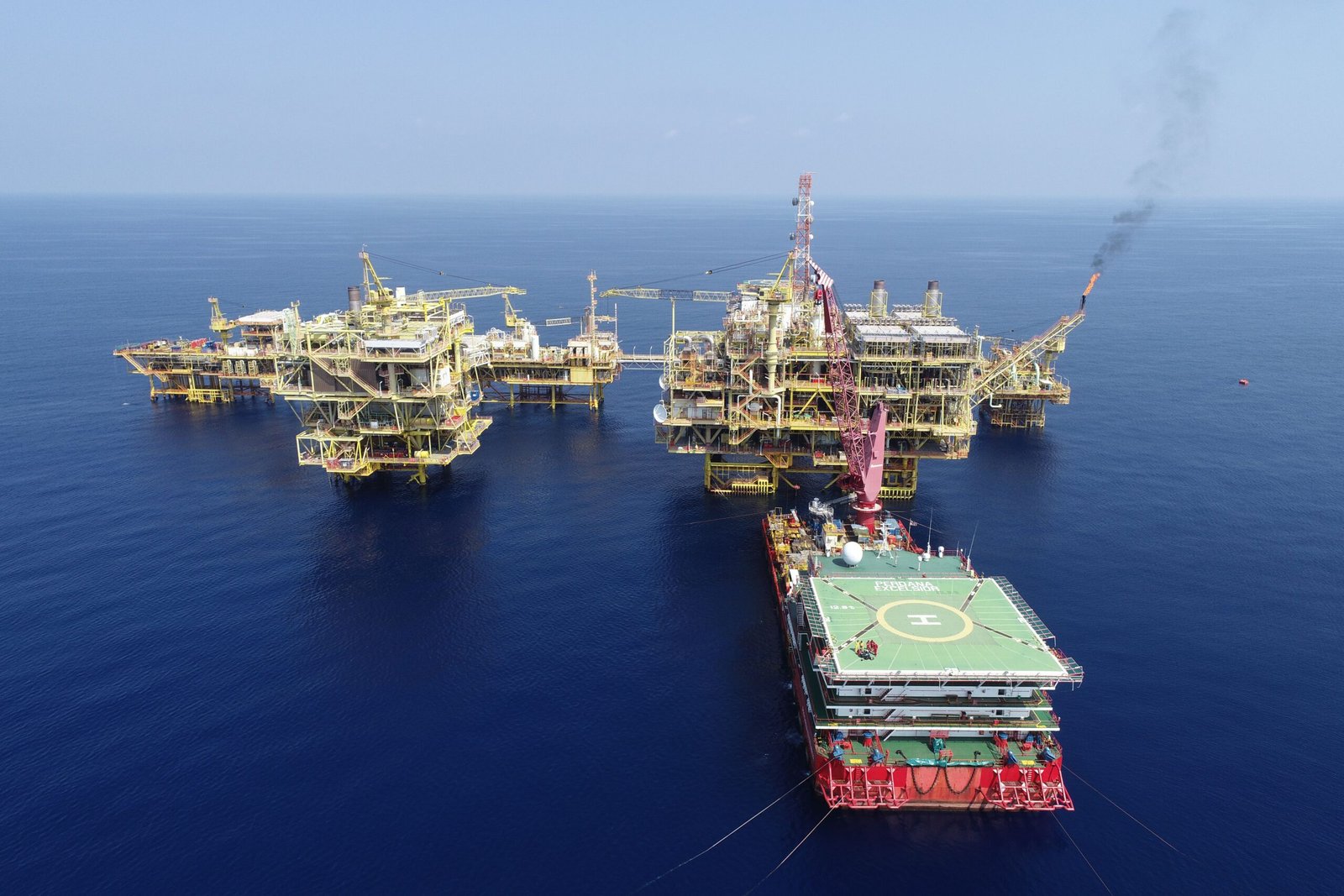
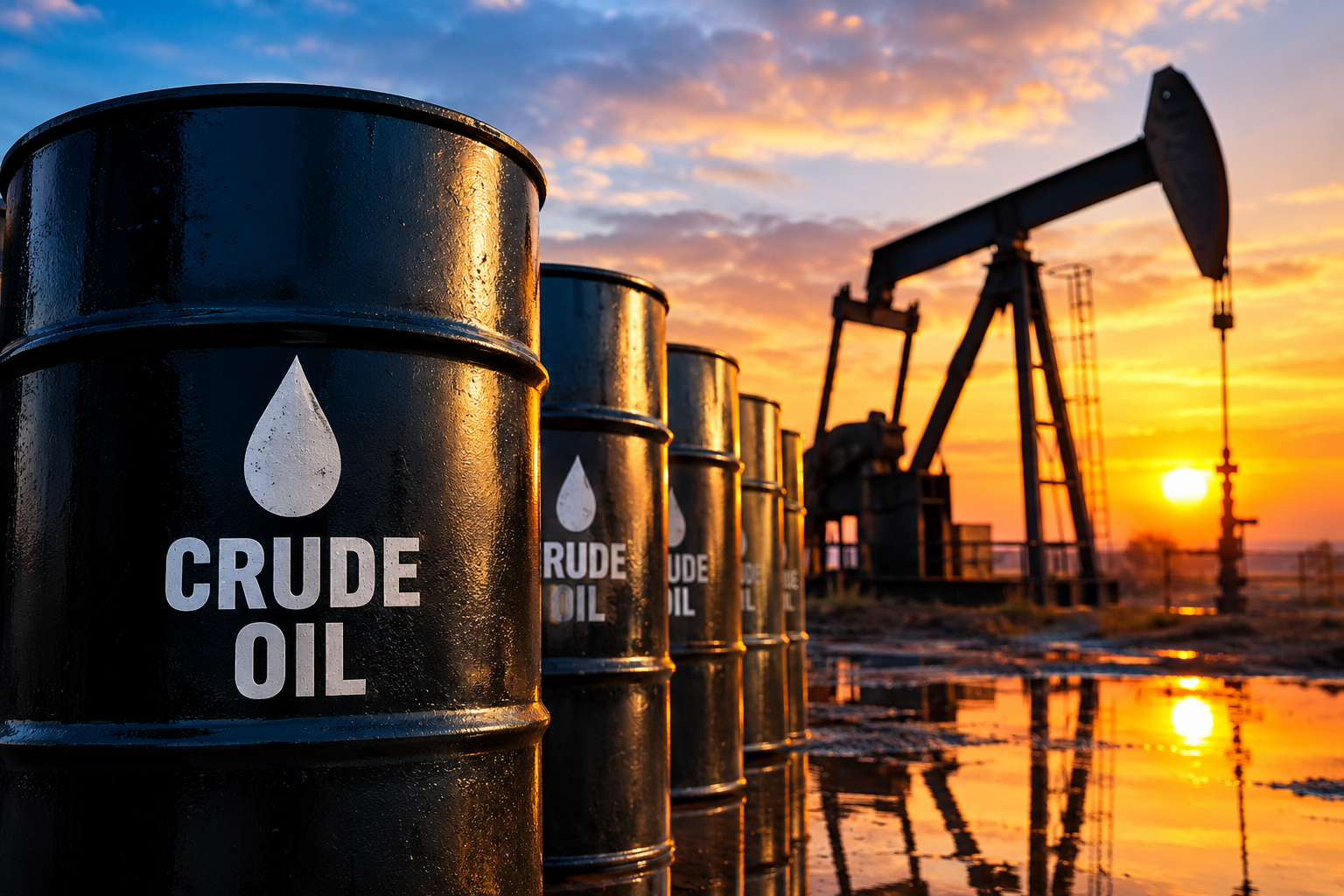
Crude oil has moved back above the $100-a-barrel level, putting energy prices at the center of the U.S. economic and financial-market conversation.
As of September 16, 2026, Brent crude was around $107.91 per barrel, while recent trading has kept both Brent and U.S. WTI crude above the psychologically important $100 level.
For investors, the important question is not simply whether oil is expensive.
The bigger question is:
What happens to inflation, interest rates, corporate profits and U.S. consumers if oil stays above $100 for several weeks or months?
Why Is Crude Oil Above $100?
The current oil rally is being driven primarily by supply and geopolitical risks, rather than simply by exceptionally strong global economic demand.
Recent disruptions and security concerns around major Middle Eastern oil routes have increased fears that global crude supplies could remain tight.
Reuters reported that Brent moved above $100 amid escalating Middle East conflict and disruptions around the Strait of Hormuz, an extremely important route for global oil transportation.
More recently, Saudi Arabia’s East-West pipeline has also faced disruption. Reuters reported that the pipeline normally carries roughly 4 million barrels per day, or about 4% of global supply, although officials expected flows to resume.
That distinction matters.
Oil can rise even when economic growth is slowing if the market believes available supply is becoming more difficult to obtain.
The basic equation
Supply disruption + limited spare capacity + geopolitical risk = higher oil-price risk premium
That risk premium can remain in crude prices until the market becomes confident that supply routes and production are returning to normal.
Why $100 Oil Matters to America
The United States produces a large amount of oil domestically, so it is tempting to assume that higher crude prices are automatically good for the U.S. economy.
It is more complicated.
Higher oil prices have different effects on different parts of the economy.
| Area | Possible effect of $100+ oil |
|---|---|
| Gasoline | Higher fuel costs |
| Diesel | Higher transportation costs |
| Airlines | Higher operating expenses |
| Trucking | Higher fuel expenses |
| Manufacturing | Higher energy/input costs |
| Consumers | Less money available for other spending |
| Oil producers | Potentially higher revenue |
| Refiners | Margins can vary |
| Inflation | Potential upward pressure |
| Treasury yields | Can rise if inflation expectations increase |
| Rate-sensitive stocks | Higher borrowing costs can create pressure |
The Federal Reserve has previously documented how oil-price shocks can reduce real incomes and tighten broader financial conditions.
The Gasoline Problem
Oil prices eventually feed into the cost of gasoline and other petroleum products.
The EIA says crude oil is the largest factor in determining U.S. retail gasoline prices.
That creates an important economic transmission mechanism:
Crude oil ↑ → Crude oil ↑ → transportation costs ↑ → business costs ↑ → consumer prices ↑
Higher gasoline prices also affect household spending.
If a family has to spend more on fuel, it has less money available for restaurants, entertainment, retail purchases and other discretionary spending.
That is why investors should watch consumer spending alongside the oil price.
Oil and U.S. Inflation
Oil does not affect inflation only through gasoline.
Energy is an input into transportation, manufacturing, agriculture, chemicals, logistics and many other industries.
The Federal Reserve’s research has found that oil-price shocks can affect U.S. inflation, although the size and persistence of the effect depend on the nature of the shock and broader economic conditions.
This creates a difficult situation for monetary policy.
If oil rises because of a supply shock, the economy can experience:
Higher prices + weaker economic activity
That combination is particularly important for investors because the Federal Reserve must consider both inflation and economic growth.
Why Bond Investors Are Watching Oil
Oil prices can influence inflation expectations.
If investors believe higher energy prices will keep inflation elevated, Treasury yields can come under upward pressure.
Higher Treasury yields matter for the entire financial system because they influence borrowing costs and valuation models.
For example:
Higher Treasury yields → higher financing costs → greater pressure on rate-sensitive assets
This can affect:
- Homebuilders
- Real estate
- Small-cap companies
- Highly leveraged businesses
- Growth stocks
- Consumer companies dependent on borrowing
The recent oil surge has already coincided with higher U.S. Treasury yields and renewed inflation concerns.
What About the Federal Reserve?
This is one of the most important issues for U.S. investors.
A sustained oil-price increase can make the inflation outlook more complicated.
The Federal Reserve cannot directly control the global price of crude oil.
It can, however, influence financial conditions through monetary policy.
If higher energy prices cause inflation to remain elevated, markets may adjust their expectations for future interest rates.
That can affect:
Treasury yields → mortgage rates → corporate borrowing → stock valuations
Therefore, investors should not watch crude oil in isolation.
They should watch oil + inflation + Treasury yields + Fed expectations together.
Is $100 Oil Automatically Bad for the U.S. Economy?
No.
The impact is mixed.
The United States has a large domestic energy industry. Higher crude prices can increase revenues and cash flows for some oil and gas producers.
Energy-producing regions can also benefit from increased industry activity.
At the same time, consumers, transportation companies and energy-intensive businesses can face higher costs.
So the economic impact depends on who receives the additional oil revenue and who pays the higher energy bill.
Recent analysis from JPMorgan Private Bank also argues that U.S. households may be better positioned to absorb higher gasoline costs than during some previous oil shocks, although inflation and fuel prices remain important risks.
What Does $100+ Oil Mean for U.S. Stocks?
The stock market does not respond uniformly to higher oil prices.
Different sectors have different exposure.
Potential beneficiaries
Energy producers
Higher crude prices can improve revenue and cash-flow conditions for companies producing oil and gas, assuming production costs and other factors remain controlled.
Potential pressure points
Airlines
Jet fuel is a major operating cost.
Transportation
Trucking and logistics companies can face higher fuel expenses.
Consumer discretionary
Higher gasoline prices can reduce household spending capacity.
Highly leveraged companies
If inflation contributes to higher interest rates, financing becomes more expensive.
Growth stocks
Higher discount rates can put pressure on valuations, particularly when valuations depend heavily on future earnings.
This is why investors should avoid treating “oil above $100” as a simple bullish or bearish signal for the entire stock market.
The Most Important Investor Question: How Long Does Oil Stay Above $100?
The duration may matter more than the headline price.
A temporary spike can be absorbed differently from a prolonged oil-price shock.
Scenario 1: Oil quickly falls below $100
If supply disruptions are resolved and geopolitical risk declines, the inflation impact could become less persistent.
Markets could then shift their attention back toward earnings and economic growth.
Scenario 2: Oil remains around $100–$110
This would create a more complicated environment.
Investors would need to monitor gasoline prices, inflation data, Treasury yields and consumer spending closely.
Scenario 3: Oil moves substantially higher
A much larger and sustained oil shock could create stronger pressure on inflation and economic activity.
That would make the interaction between energy prices and Federal Reserve policy even more important.
These are scenarios, not forecasts.
What U.S. Investors Should Watch Now
Instead of watching only the crude-oil headline, investors can monitor several indicators together.
1. Brent Crude
Brent is the key international benchmark.
Current levels are above $100, making geopolitical developments particularly important.
2. WTI Crude
WTI provides an important U.S. benchmark.
Recent WTI trading has also remained above $100.
3. U.S. Gasoline Prices
Watch whether higher crude prices continue passing through to consumers.
4. 10-Year Treasury Yield
If oil rises while Treasury yields also climb, markets may be pricing in greater inflation or tighter financial conditions.
5. CPI and PPI
Investors should monitor whether energy costs are appearing more strongly in consumer and producer inflation.
6. Consumer Spending
This helps show whether higher fuel costs are beginning to affect household demand.
7. Corporate Earnings
Watch companies with significant fuel, transportation or energy exposure.
The Investor Solution: Think in Exposure, Not Headlines
For U.S. investors, the practical approach is to identify where oil affects a portfolio.
Ask four questions:
Question 1
How much of my portfolio is directly exposed to energy?
Question 2
How much is exposed to higher interest rates?
Question 3
How much depends on strong consumer spending?
Question 4
What happens to my portfolio if oil remains above $100 for three months instead of three days?
This approach is more useful than simply trying to predict the next oil-price move.
A Simple U.S. Investor Watchlist
| Indicator | What to watch | Why it matters |
|---|---|---|
| Brent | $100+ persistence | Global supply risk |
| WTI | U.S. crude pricing | Domestic energy market |
| Gasoline | Retail fuel prices | Consumer purchasing power |
| CPI | Energy/inflation trend | Fed policy expectations |
| PPI | Producer costs | Corporate margin pressure |
| 10Y Treasury | Yield direction | Financial conditions |
| S&P 500 | Market reaction | Broad investor sentiment |
| Nasdaq | Rate sensitivity | Growth-stock valuation |
| Energy stocks | Earnings/cash flow | Oil-price exposure |
| Consumer stocks | Spending trends | Household pressure |
Bottom Line for U.S. Investors
Crude oil above $100 is not just an energy-market story.
It is an inflation story, interest-rate story, consumer story and corporate-profit story.
The current surge is being driven heavily by geopolitical and supply-disruption risks, including concerns surrounding major Middle Eastern oil routes.
For investors, the key issue is whether the oil shock remains temporary or becomes persistent.
If oil stays elevated, the most important signals to monitor are:
Crude oil → gasoline → inflation → Treasury yields → Fed expectations → corporate earnings → stock valuations
That chain provides a clearer framework for understanding what $100+ oil could mean for the U.S. economy.
Important: This article is for informational and educational purposes only. It is not individualized investment, financial, tax or legal advice. Investors should consider their own objectives, risk tolerance and time horizon and conduct independent research before making investment decisions.
Sources
- Reuters — Oil Prices and Middle East Supply Developments
Reuters — Oil Market Update - U.S. Energy Information Administration (EIA) — Factors Affecting Gasoline Prices
EIA — Factors Affecting Gasoline Prices - U.S. Energy Information Administration (EIA) — Global Oil Markets
EIA — Global Oil Markets - U.S. Energy Information Administration (EIA) — Petroleum Prices
EIA — Petroleum Prices - Federal Reserve — Oil Prices and Inflation
Federal Reserve — Oil Prices and Inflation - International Energy Agency (IEA) — Oil Market Report
IEA — Oil Market Report - OPEC — Monthly Oil Market Report
OPEC — Monthly Oil Market Report - Wall Street Journal — Oil Prices and Supply Concerns
Wall Street Journal — Oil Market Coverage - Deloitte — Impact of Higher Oil Prices on the U.S. Economy
Deloitte — U.S. Economy and Higher Oil Prices - Federal Reserve Bank of St. Louis — FRED Crude Oil Data
FRED — Federal Reserve Economic Data