
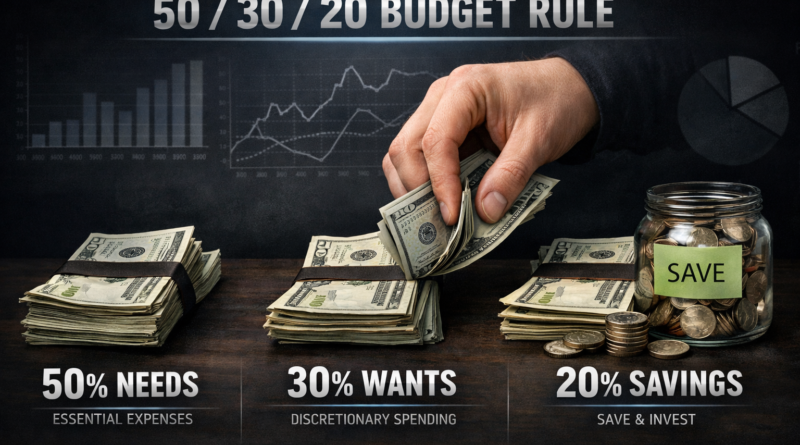
The 50/30/20 Budget Rule Explained: How to Manage Your Money, Save More, and Build Financial Security
Managing money can feel complicated, especially when everyday expenses compete with savings goals, debt payments, housing costs, and the desire to enjoy life. Whether you receive a regular salary, work independently, run a business, or earn money from multiple sources, knowing how to divide your income can make financial decisions easier.
One budgeting method that has gained widespread attention is the 50/30/20 budget rule. It offers a straightforward way to organize your take-home income into three categories: needs, wants, and savings or debt repayment.
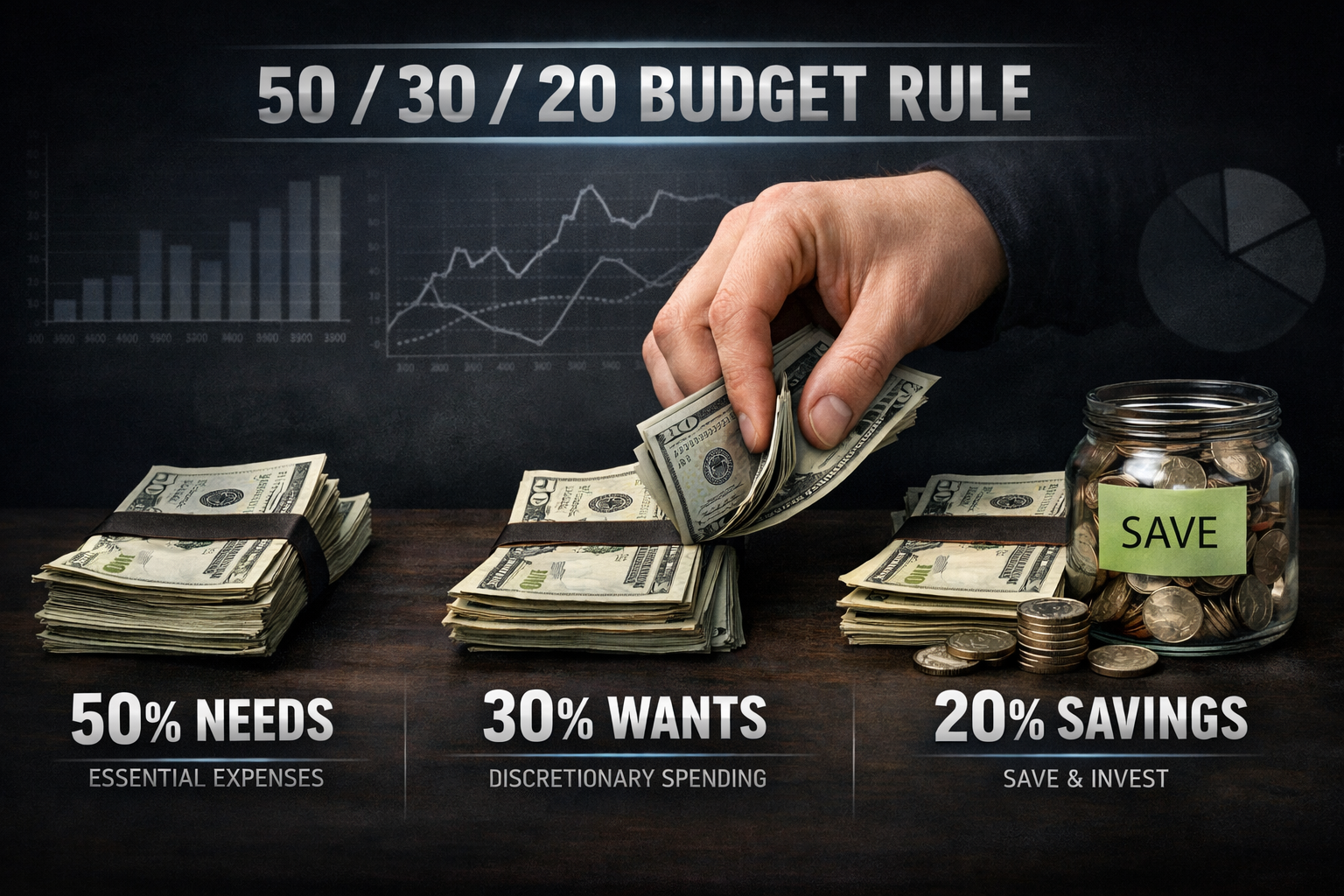
The idea is simple. Allocate approximately 50% of your after-tax income to essential expenses, 30% to discretionary spending, and 20% to savings and debt reduction.
However, applying this formula in real life requires more than dividing a paycheck into three numbers. Housing costs, family responsibilities, inflation, interest rates, income stability, and personal goals all influence how much money you can reasonably allocate to each category.
In this guide, you will learn how the 50/30/20 rule works, how to calculate your own budget, which expenses belong in each category, how to adapt the method to different income levels and countries, and how to use it to build better financial habits.
What Is the 50/30/20 Budget Rule?
The 50/30/20 budget rule is a personal finance framework that divides your after-tax income into three spending and saving categories.
The traditional allocation is:
- 50% for needs: Essential expenses required to maintain your household and meet important obligations.
- 30% for wants: Discretionary expenses that improve your lifestyle but are not essential for basic financial stability.
- 20% for savings and debt repayment: Money directed toward emergency savings, investments, retirement, and reducing debt beyond the minimum payments where appropriate.
The rule is designed to make budgeting easier without requiring you to track every purchase in dozens of separate categories.
For example, imagine your monthly take-home pay is $5,000. Under the traditional formula, you would allocate $2,500 to needs, $1,500 to wants, and $1,000 to savings and debt repayment.
These percentages are guidelines, not financial laws. Someone living in a high-cost city may spend more than 50% of their income on housing and essential bills. Another person with low living expenses may be able to save substantially more than 20%.
The Consumer Financial Protection Bureau (CFPB) explains the 50/30/20 approach as one possible budgeting rule while encouraging consumers to develop a spending plan suited to their individual circumstances.
Official resource: https://www.consumerfinance.gov/consumer-tools/educator-tools/youth-financial-education/teach/activities/analyzing-budgets/
Why the 50/30/20 Rule Matters
A budget is not simply a list of bills. It is a plan for making decisions about limited financial resources.
Without a clear plan, spending can gradually increase without you noticing. Small purchases, recurring subscriptions, delivery fees, transportation expenses, and unexpected bills can reduce the money available for savings.
The 50/30/20 rule helps establish boundaries before that happens.
1. It Makes Money Management Easier
Traditional budgeting can involve tracking dozens of individual expenses. Although detailed tracking works well for some people, it can feel overwhelming for beginners.
The 50/30/20 method starts with three broad categories. You can divide those categories into smaller groups whenever necessary.
2. It Encourages Consistent Saving
Saving becomes easier when it is part of your monthly plan rather than something you do only when money happens to remain.
Allocating a portion of income to savings helps establish a routine and makes financial goals more concrete.
3. It Creates Room for Enjoyment
A sustainable budget should not focus exclusively on cutting expenses. People also need room for entertainment, hobbies, travel, and other personal priorities.
The 30% category recognizes that enjoying your money can be part of a healthy financial plan, provided essential obligations and future goals remain manageable.
4. It Helps Reveal Financial Pressure
If essential expenses consume 70% of your take-home income, the problem may not be unnecessary shopping. Housing, childcare, healthcare, transportation, or debt payments may be consuming most of your available money.
Seeing these costs clearly helps you identify whether you need to adjust spending, increase income, seek lower-cost alternatives, or use a different budgeting framework.
Understanding the Three Categories
Category One: Spend 50% on Needs
Needs are expenses that support basic living requirements and important financial obligations.
Common examples include:
- Rent or mortgage payments
- Essential utilities
- Basic groceries
- Necessary transportation
- Health insurance and essential medical expenses
- Minimum required debt payments
- Basic household supplies
- Essential childcare
- Necessary insurance premiums
The exact classification depends on your circumstances. Transportation, for example, might mean a public transit pass in one city and a vehicle required for work in another.
Likewise, internet access may be essential for someone working remotely or studying online, while a premium entertainment subscription is generally discretionary.
The objective is to identify what you reasonably need to maintain your household, work, health, and essential responsibilities.
What if your needs exceed 50%?
This is common in expensive housing markets and during periods of high inflation.
Suppose you earn $3,500 per month after taxes and your essential expenses total $2,450. Your needs account for 70% of your take-home income.
That does not automatically mean you are managing money poorly. Your housing costs, location, household size, or income may make the traditional target unrealistic.
Start by examining whether any essential expense can be reduced without creating a larger problem. You might compare insurance premiums, review utility usage, consider less expensive transportation, or investigate whether your housing costs are sustainable.
Avoid making a major financial decision solely to achieve a percentage. Moving to a cheaper home, for example, may involve relocation costs, a longer commute, or other trade-offs.
If your essential expenses remain high, adjust the other percentages temporarily and revisit your budget when circumstances change.
Category Two: Spend 30% on Wants
Wants are expenses that make life more enjoyable but are not necessary for basic living or essential financial obligations.
Examples include:
- Restaurants and takeout beyond a basic food budget
- Streaming subscriptions
- Entertainment and hobbies
- Nonessential shopping
- Vacations
- Premium electronics
- Upgraded vehicles
- Optional memberships
- Luxury purchases
The difference between a need and a want is not always obvious.
A basic phone plan may be necessary for work and communication. An expensive plan with extra features may include discretionary spending.
Buying food is a need, but frequent restaurant meals may be partly a want. A vehicle needed to earn income is different from purchasing a more expensive model for comfort or status.
The goal is not to eliminate enjoyable spending. It is to decide how much of your income you want to devote to it.
How to manage wants without feeling restricted
Begin by identifying the discretionary purchases you value most.
You might prefer travel over expensive clothing, fitness classes over frequent restaurant meals, or family activities over entertainment subscriptions.
Use your available allowance intentionally rather than trying to reduce every category equally.
If you currently spend 40% of your income on wants, choose a realistic reduction target. Moving from 40% to 35% may be more sustainable than attempting to reach 30% immediately.
You can then direct the difference toward debt repayment, emergency savings, or another financial priority.
Category Three: Allocate 20% to Savings and Debt Repayment
The final category supports financial resilience and future goals.
Depending on your circumstances, it may include:
- Emergency savings
- Retirement contributions
- Long-term investment contributions
- Savings for a home deposit
- Education savings
- Additional payments toward high-interest debt
- Other planned financial goals
An emergency fund can reduce your dependence on borrowing when an unexpected expense occurs. Retirement savings can help support your future lifestyle, while additional debt payments can reduce interest costs.
However, not every financial goal should receive the same priority.
If you have expensive revolving debt and no emergency savings, your plan may need to balance a starter cash reserve with accelerated debt repayment. If your employer offers retirement matching contributions, the terms of that benefit may also influence your priorities.
The 20% category is a starting point for planning, not a requirement to divide the money equally among every possible goal.
How to Calculate the 50/30/20 Rule
The first step is determining your monthly take-home income.
For employees, this generally means the amount received after taxes and payroll deductions. If you earn money independently, estimate the amount available after setting aside money for taxes and necessary business expenses.
Do not use gross salary if your goal is to create a household spending plan based on the money actually available to you.
Once you have your monthly figure, multiply it by each percentage.
Needs calculation:
Monthly take-home income × 0.50
Wants calculation:
Monthly take-home income × 0.30
Savings and debt calculation:
Monthly take-home income × 0.20
For a take-home income of $4,000, the calculation would be:
- Needs: $4,000 × 0.50 = $2,000
- Wants: $4,000 × 0.30 = $1,200
- Savings and debt repayment: $4,000 × 0.20 = $800
These amounts establish your target allocations. Your actual spending may differ, and that difference is useful information when reviewing your budget.
50/30/20 Budget Examples for Different Income Levels
The formula works with different income amounts because it is based on percentages rather than a fixed dollar limit.
The following examples use illustrative monthly take-home income in U.S. dollars.
| Monthly take-home income | Needs: 50% | Wants: 30% | Savings and debt: 20% |
|---|---|---|---|
| $2,000 | $1,000 | $600 | $400 |
| $3,000 | $1,500 | $900 | $600 |
| $4,000 | $2,000 | $1,200 | $800 |
| $5,000 | $2,500 | $1,500 | $1,000 |
| $6,000 | $3,000 | $1,800 | $1,200 |
| $8,000 | $4,000 | $2,400 | $1,600 |
| $10,000 | $5,000 | $3,000 | $2,000 |
These examples show how the dollar amounts change as income rises. They do not imply that every household can maintain the same percentages.
A household earning $2,000 per month may have little room to reduce essential expenses. A household earning $10,000 may have greater flexibility, but housing, childcare, taxes, education, and debt obligations can still influence its budget.
The useful question is not whether your numbers match the table perfectly. It is whether your spending plan reflects your real circumstances and helps you make progress toward your goals.
How the 50/30/20 Rule Works in Real Life
Consider a household with monthly take-home income of $5,000.
Its initial target allocations are:
- $2,500 for needs
- $1,500 for wants
- $1,000 for savings and debt repayment
The household might allocate the needs category to housing, utilities, groceries, transportation, insurance, and required loan payments.
The wants category could cover dining out, entertainment, hobbies, shopping, and travel.
The remaining $1,000 might be divided among an emergency fund, retirement savings, and additional payments toward high-interest debt.
The exact split depends on existing savings, employer benefits, debt interest rates, and upcoming expenses.
If the household has no emergency savings, it may direct a larger portion of the $1,000 toward cash reserves initially. Once a suitable emergency fund has been established, more money could go toward retirement or other long-term goals.
This illustrates an important principle: the 50/30/20 rule determines broad boundaries, while your personal financial plan determines the priorities within those boundaries.
How to Build a 50/30/20 Budget Step by Step
Step 1: Calculate Your Reliable Monthly Income
List the income you can reasonably expect to receive.
Include take-home wages, regular business income available for personal use, and other dependable income sources.
If you receive irregular commissions, freelance payments, or seasonal earnings, avoid building essential spending commitments around your best month.
One approach is to use a conservative income estimate and direct unusually strong earnings toward taxes, savings, debt, and other planned priorities.
Step 2: Review Your Spending History
Examine bank statements, card transactions, bills, and receipts from the previous two or three months.
Look for expenses that are easy to overlook:
- Annual subscriptions
- Insurance renewals
- Vehicle maintenance
- Medical costs
- Gifts and celebrations
- School expenses
- Travel
- Household repairs
A budget based only on monthly bills may underestimate the true cost of living.
Convert irregular expenses into monthly amounts where practical. If an annual bill costs $600, setting aside $50 each month can help prepare for it.
Step 3: Separate Needs from Wants
Classify expenses according to their purpose rather than their label.
Ask three questions:
- Is this expense necessary for basic living, health, work, or an essential obligation?
- Is there a lower-cost alternative that would still meet the requirement?
- If I reduced or removed this expense, would it create a significant practical problem?
The answers will help you classify expenses more realistically.
Do not automatically treat every recurring payment as essential simply because it appears on your bank statement every month.
Step 4: Calculate Your Target Amounts
Multiply your monthly take-home income by 50%, 30%, and 20%.
Compare the resulting figures with your actual spending.
If your needs exceed the target, determine whether the difference is temporary or structural. If your wants exceed the target, identify which purchases matter most and where reductions are realistic.
If you are already saving more than 20%, you do not need to spend more merely to follow the formula.
Step 5: Set Clear Financial Goals
Savings are easier to manage when they have a purpose.
Possible goals include:
- Building an emergency fund
- Paying down credit card debt
- Saving for retirement
- Preparing for a home purchase
- Funding education
- Planning for a major family expense
Give each goal a target amount and, where appropriate, a deadline.
For example, if you want to save $3,000 over 12 months, you would need to set aside an average of $250 per month, assuming no interest or withdrawals.
Compare that amount with your budget before committing to it.
Step 6: Automate Where Appropriate
Automatic transfers can make saving more consistent.
You might schedule a transfer to a savings account after payday or automate payments for bills with predictable due dates.
Before automating payments, ensure that sufficient money will be available in the account. Overdraft fees or missed essential payments can undermine the benefits.
Step 7: Review the Budget Every Month
A budget is a working plan, not a permanent document.
Review your spending when you receive a pay increase, move home, change jobs, take on debt, have a child, or experience a major change in household expenses.
Small adjustments can help the plan remain useful as your circumstances evolve.
How to Build an Emergency Fund Using the 50/30/20 Rule
An emergency fund provides money for unexpected expenses that cannot easily be covered by regular income.
Examples include job loss, urgent medical expenses, necessary home repairs, or essential vehicle repairs.
The appropriate target depends on your essential expenses, income stability, household responsibilities, insurance coverage, and access to other reliable resources.
A common starting point is to establish a small reserve and then work toward several months of essential living expenses.
For example, if your essential expenses are $2,500 per month, three months of expenses would equal $7,500 and six months would equal $15,000.
If you allocate $500 per month to emergency savings, reaching $7,500 would take 15 months, assuming no withdrawals or interest.
You may not be able to build the entire fund immediately. Start with an achievable amount and increase contributions as your budget allows.
Keep emergency savings in a suitable, accessible account rather than relying on investments that can fluctuate in value.
For additional budgeting guidance, consult the Consumer Financial Protection Bureau at https://www.consumerfinance.gov/.
Should You Pay Off Debt or Save First?
The answer depends on the type of debt, interest rate, required payments, and your current financial cushion.
High-interest debt can become expensive when balances remain unpaid. At the same time, having no cash reserves can force you to borrow again when an unexpected bill arrives.
A balanced approach may involve:
- Keeping up with required debt payments.
- Establishing a starter emergency reserve.
- Directing additional money toward expensive debt.
- Expanding emergency savings as your financial position improves.
- Returning to long-term savings and investment goals according to your priorities.
For instance, someone carrying a credit card balance at a high interest rate may benefit from directing more money toward that balance rather than accumulating a large cash reserve immediately.
Someone whose income is unpredictable may need a larger cash cushion before making aggressive extra payments.
Review the interest rates, fees, repayment terms, and potential consequences of missed payments before deciding how to allocate additional funds.
Can the 50/30/20 Rule Help Improve Your Credit?
The budgeting rule is not a credit scoring formula, but it can help you manage the cash flow needed for responsible credit use.
A well-organized budget makes it easier to plan minimum payments, avoid late fees, monitor outstanding balances, and reduce debt over time.
If you use credit cards, include the full statement payment in your cash-flow plan where possible. Carrying a balance is not necessary to demonstrate responsible credit use.
Your credit score may depend on payment history, revolving credit utilization, account age, and other factors determined by the scoring model. Budgeting alone does not guarantee a particular score.
For U.S. consumers, reviewing credit reports and disputing genuine inaccuracies can also be useful steps toward maintaining a healthy credit history.
Adapting the 50/30/20 Rule to Different Countries
The formula can be applied in many economies, but living costs, tax systems, public services, housing arrangements, and financial products differ significantly.
Use the local currency and your actual take-home income when calculating allocations. Do not convert another country’s example mechanically and assume that its budget will fit your household.
United States
U.S. households may need to account for health insurance, medical expenses, student loans, retirement contributions, housing, transportation, and childcare.
Employer-sponsored benefits and payroll deductions also affect how take-home income should be calculated.
United Kingdom
UK households may need to consider council tax, housing costs, transport, energy bills, pension contributions, and other expenses that depend on individual circumstances.
Use local tax and pension information rather than applying U.S. payroll assumptions.
Canada
Canadian households may need to account for provincial differences in taxation, housing, childcare, transportation, and healthcare-related expenses.
The Financial Consumer Agency of Canada provides guidance and budgeting tools at https://www.canada.ca/en/financial-consumer-agency/services/make-budget.html.
Australia
Australian households may need to consider housing costs, transport, utilities, childcare, insurance, and retirement savings arrangements.
The MoneySmart website provides consumer guidance and budgeting resources at https://moneysmart.gov.au/.
Other economies
In other countries, household budgeting may need to reflect different inflation rates, employment arrangements, banking access, family obligations, and social benefits.
The central principle remains the same: allocate money according to actual income, essential expenses, discretionary priorities, and savings goals.
Is the 50/30/20 Rule Suitable for Low-Income Households?
The formula can be a useful starting point, but it may not be realistic for everyone.
When income is limited, housing, food, utilities, transport, and healthcare can consume most available money. Requiring such a household to keep needs below 50% may create an unrealistic standard.
In that situation, focus first on covering essential expenses and maintaining required payments.
Then look for realistic ways to improve cash flow, such as reviewing recurring bills, investigating eligible assistance programs, seeking more stable income where possible, or adjusting discretionary spending.
Even a small savings contribution can help establish the habit of setting money aside. However, do not sacrifice essential food, medication, safe housing, or required bills merely to meet a percentage target.
A budget should help you understand your situation and make informed choices. It should not become another source of financial stress.
How Higher-Income Households Can Use the Rule
Higher income can create greater flexibility, but it does not automatically produce financial security.
Housing upgrades, luxury vehicles, travel, and other lifestyle expenses can increase alongside earnings.
For households with greater financial flexibility, the 50/30/20 rule can serve as a baseline rather than a maximum savings target.
Someone whose essential expenses account for only 35% of take-home income may be able to direct more than 20% toward retirement, investments, debt reduction, or other long-term goals.
Before investing, consider emergency reserves, debt costs, investment risk, diversification, fees, taxes, and time horizon.
The goal is to use additional income intentionally rather than allowing spending to rise automatically with earnings.
Common Mistakes to Avoid
Treating the percentages as strict requirements
The rule is a guideline. Your budget should reflect actual costs and personal priorities.
Forgetting irregular expenses
Annual insurance bills, repairs, medical costs, and seasonal expenses can disrupt a budget that accounts only for regular monthly payments.
Using gross income instead of take-home income
The traditional formula is generally applied to after-tax income available for household spending.
Counting minimum debt payments incorrectly
Minimum required payments should be included in essential obligations. Additional debt reduction can be planned within the savings and debt repayment category.
Ignoring expensive debt
Saving without considering high borrowing costs may slow progress toward financial stability.
Cutting every enjoyable expense
A plan that feels unnecessarily restrictive may be difficult to maintain. Choose discretionary expenses intentionally instead of removing everything that provides value.
Failing to review the budget
Income, prices, household size, and financial goals change. A budget that worked last year may need adjustment today.
A Practical 30-Day Plan
You can begin using the 50/30/20 rule without changing every financial habit immediately.
Week 1: Understand your money
Calculate take-home income and review recent transactions. List recurring bills and identify irregular expenses.
Week 2: Build your spending plan
Separate needs, wants, and savings or debt repayment. Calculate the traditional percentage targets and compare them with your actual expenses.
Week 3: Make one or two improvements
Choose a realistic spending adjustment, set up a savings transfer if affordable, and review your bill payment schedule.
Week 4: Evaluate your results
Check whether the plan covered your essential expenses and whether the savings target was realistic. Adjust the percentages if necessary.
Repeat the process each month. Consistency is more useful than creating an elaborate budget that you abandon after a few weeks.
Frequently Asked Questions
What is the 50/30/20 budget rule?
It is a budgeting framework that allocates approximately 50% of take-home income to needs, 30% to wants, and 20% to savings and debt repayment.
Is the 50/30/20 rule good for beginners?
It can be a useful starting point because it uses three broad categories. Beginners can track more detailed expenses later if they need additional control.
Is the 50/30/20 rule based on gross or net income?
It is generally based on take-home income after taxes and relevant payroll deductions.
Does rent count as a need?
Housing costs generally belong in the needs category because safe, stable housing is essential.
Are groceries needs or wants?
Basic groceries are generally needs. Premium products, convenience purchases, and nonessential extras may be discretionary, depending on the circumstances.
Does the 20% category include retirement savings?
Yes. Retirement contributions can be part of the savings allocation, depending on how your budget is structured and how payroll deductions are treated.
Should I include debt payments in the 20% category?
Minimum required payments are commonly treated as essential obligations. Additional debt repayment can be included in the savings and debt reduction category.
Can I save more than 20%?
Yes. If your income and essential expenses allow it, saving more than 20% may help you reach financial goals sooner.
What if my needs consume 70% of my income?
Adjust the formula to reflect your situation. Focus on essential expenses, required payments, and realistic improvements rather than forcing your spending into an unsuitable allocation.
Does the 50/30/20 rule work internationally?
The framework can be adapted internationally, but local taxes, prices, housing costs, social benefits, and financial products should inform your budget.
Is the 50/30/20 rule better than zero-based budgeting?
Neither method is universally better. The 50/30/20 rule is simpler, while zero-based budgeting assigns a purpose to each unit of income. Choose the approach you can maintain.
How often should I update my budget?
Review it monthly and make additional adjustments after major changes in income, expenses, household responsibilities, or financial goals.
Final Thoughts
The 50/30/20 budget rule offers a straightforward way to understand how your income is being used. By separating essential spending, discretionary purchases, and savings or debt repayment, you can create a clearer picture of your financial priorities.
The formula is not intended to fit every household perfectly. Housing costs, income stability, family responsibilities, debt, and local economic conditions can all influence the right allocation.
Start with your actual take-home income, identify essential expenses, and set realistic goals. Make adjustments as your circumstances change, and use your budget to support both present needs and future financial security.
The most effective budget is not necessarily the one that follows every percentage exactly. It is the one that helps you make informed decisions, prepare for unexpected expenses, manage debt responsibly, and make steady progress toward the life you want to build.
Sources and Further Reading
- Consumer Financial Protection Bureau: https://www.consumerfinance.gov/
- CFPB budgeting activity: https://www.consumerfinance.gov/consumer-tools/educator-tools/youth-financial-education/teach/activities/analyzing-budgets/
- Financial Consumer Agency of Canada: https://www.canada.ca/en/financial-consumer-agency/services/make-budget.html
- Australian Government MoneySmart: https://moneysmart.gov.au/
Disclaimer: This article is for general educational purposes only and does not constitute personalized financial, investment, tax, or legal advice. Financial decisions should reflect your individual circumstances, local rules, and financial goals.
