
Magnitude 5.7 Earthquake Hits Central Japan, Injuring 22 People and Disrupting Bullet Train Services
TOKYO, JAPAN — November 22, 2026
A magnitude 5.7 earthquake struck central Japan in the early hours of November 8, injuring at least 22 people, damaging buildings and temporarily disrupting railway operations, including services on the Tokaido Shinkansen bullet train line.
The earthquake occurred at approximately 1:04 a.m. local time, with its epicentre in western Shizuoka Prefecture, at a depth of around 41 kilometres, according to the Japan Meteorological Agency (JMA).
The strongest shaking was recorded in Chita City in neighbouring Aichi Prefecture, where the intensity reached the upper level of 5 on Japan’s seismic intensity scale. Strong tremors were also recorded in parts of Shizuoka, Gifu and Nagano prefectures, while shaking was felt across a much wider area of central Japan.
The earthquake caused injuries, shattered shop windows, scattered merchandise inside stores and prompted railway operators to introduce precautionary speed restrictions. No deaths were reported in the initial official assessments, and authorities confirmed that the earthquake did not generate a tsunami.
The incident once again highlighted Japan’s exposure to seismic activity and the importance of emergency preparedness across residential communities, businesses and major transport networks.
Earthquake Strikes Western Shizuoka During the Early Morning
According to the Japan Meteorological Agency, the earthquake struck at 1:04 a.m. on November 8, when many residents were asleep.
The epicentre was located in western Shizuoka Prefecture, near the border with Aichi Prefecture. The initial depth estimate was approximately 40 kilometres, later updated to around 41 kilometres.
Although the earthquake was centred in Shizuoka, the strongest recorded shaking occurred in Chita City in Aichi Prefecture.
The JMA recorded a maximum seismic intensity of upper 5, a level at which people can find it difficult to move without holding onto something. Unsecured furniture may move or fall, and objects stored on shelves can be thrown onto the floor.
Other communities also experienced significant shaking. Lower-level intensity 5 was recorded in several locations across Aichi, including Seto, Handa, Kariya, Toyota, Shinshiro and Tokai. Hamamatsu in Shizuoka, Ena in Gifu and Urugi in Nagano also experienced strong shaking.
The earthquake was felt across a broad part of Japan, reaching areas around Kyoto and Nara. However, reports indicated that the tremor was not felt in Tokyo.
At Least 22 People Injured Across Affected Regions
The earthquake left at least 22 people injured, according to figures reported by Japanese authorities and the Japan Meteorological Agency’s subsequent assessment.
Aichi Prefecture accounted for 19 of the reported injuries, including one person seriously injured and 18 people with minor injuries. Three additional people were reported injured in Shizuoka Prefecture.
Some injuries occurred when residents attempted to leave their homes during the shaking. Others resulted from falls or objects moving inside buildings.
One reported case involved a woman in her 50s in Hekinan City, Aichi Prefecture, who fell while evacuating outside and suffered a broken ankle.
The earthquake also affected elderly residents. In Shizuoka, a woman in her 90s reportedly injured her shoulder after falling from her bed during the tremor.
Emergency services received reports of injuries from several municipalities. Local authorities assessed the situation and collected information about damage to residential and public buildings.
The available official assessment also recorded partial damage to two residential buildings in Aichi Prefecture. Additional damage was reported to public and other non-residential structures.
Although the overall damage was limited compared with Japan’s major historical earthquakes, the incident demonstrated how a relatively short period of strong shaking can cause injuries and disruption across several communities.
Shops and Buildings Suffer Damage
The earthquake caused visible damage inside commercial properties and other buildings.
In Toyohashi City, Aichi Prefecture, windows at an imported-car dealership were reportedly shattered. Glass fragments were scattered following the tremor.
A large bookstore in Toyota City also experienced disruption when books and other merchandise fell from shelves. Images and reports from the affected area showed products scattered across floors.
For businesses, incidents like these can create immediate operational problems. Broken windows, damaged stock and safety inspections may require shops to close temporarily while staff assess the premises.
The impact was particularly noticeable because the earthquake struck during the night and early morning, when many businesses were closed or preparing to begin operations.
Residents were also advised to remain alert for falling objects and unstable structures, especially in buildings where shelves, cabinets and other furniture had not been secured.
Shinkansen Bullet Trains Slow Down as Railway Operators Conduct Safety Checks
Japan’s railway network also experienced disruption following the earthquake.
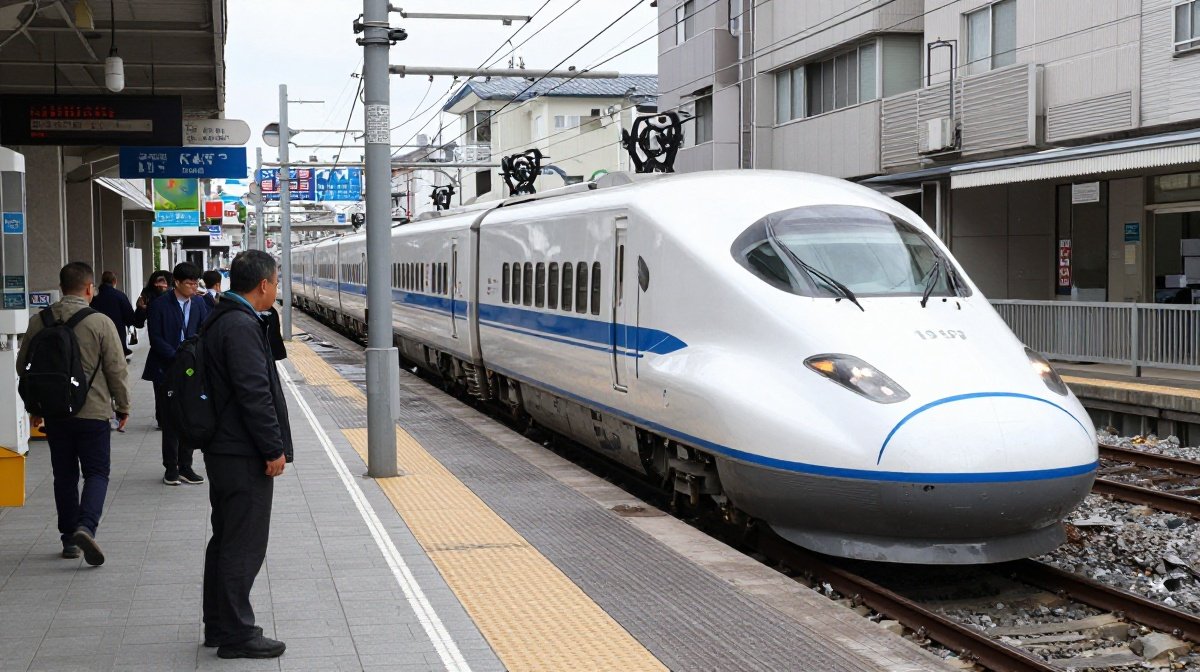
The Tokaido Shinkansen, one of the country’s most important high-speed railway routes, introduced precautionary speed restrictions in affected sections.
Trains operating through parts of central Japan were slowed while railway operators assessed conditions and carried out safety checks. Some regional train services also experienced temporary interruptions during the initial response.
The Tokaido Shinkansen connects major economic and tourism centres, including Tokyo, Nagoya, Kyoto and Osaka. Any interruption along the route can affect business travellers, commuters and international tourists.
Railway operators in Japan use earthquake detection systems and established emergency procedures to reduce risks to passengers. When significant seismic activity is detected, trains can automatically slow down or stop, depending on the location and strength of the shaking.
These procedures are designed to provide time for operators to evaluate track conditions and railway infrastructure before normal operations resume.
The disruption also demonstrated how an earthquake in one prefecture can affect transport services across a much wider region.
According to subsequent prefectural reporting, no railway service suspension remained in place in Aichi by the afternoon situation update. The initial slowdown and checks nevertheless caused inconvenience for passengers travelling during the morning.
No Tsunami Warning Issued
Despite the earthquake’s magnitude, there was no tsunami threat.
The Japan Meteorological Agency confirmed that the earthquake did not require a tsunami warning or advisory.
This was an important distinction because earthquakes occurring beneath or near the sea can sometimes generate dangerous waves, depending on their location, depth and movement along geological faults.
In this case, the earthquake occurred inland in western Shizuoka Prefecture, and authorities reported no tsunami concern.
Officials also monitored important infrastructure in the affected region. Chubu Electric Power reported no abnormality at the Hamaoka Nuclear Power Plant following the earthquake.
These initial assessments helped authorities focus on injuries, building damage and transport disruption rather than a wider coastal emergency.
Japan Warns Residents About the Possibility of Further Earthquakes
Following the earthquake, the Japan Meteorological Agency urged residents in affected areas to remain cautious about additional seismic activity.
The agency warned that further strong earthquakes could occur during the following days and advised people to remain prepared for potentially significant shaking.
Residents were encouraged to secure furniture, keep emergency supplies accessible and identify safe places where they could take shelter if another earthquake occurred.
The warning was particularly relevant for people living near steep slopes, mountain roads and areas vulnerable to landslides or falling rocks.
Even when an initial earthquake does not cause widespread structural destruction, subsequent tremors can create additional risks, especially where buildings or surrounding terrain have already been disturbed.
Authorities also encouraged residents to follow official announcements rather than relying on unverified information circulating on social media.
Understanding Japan’s Seismic Intensity Scale
The earthquake was measured at magnitude 5.7, but the strongest local shaking reached upper 5 on Japan’s seismic intensity scale.
These are two different measurements.
Magnitude describes the overall size of an earthquake and the energy released at its source. Japan’s seismic intensity scale, known as Shindo, describes how strongly the ground shakes at individual locations.
This distinction explains why an earthquake can have one magnitude reading but produce different levels of shaking in different cities.
The upper-5 intensity recorded in Chita indicated strong ground movement. At this level, people may struggle to walk without support, furniture can move significantly and unsecured objects can fall.
The difference between magnitude and local shaking is important when assessing earthquake reports because the effects experienced by residents depend not only on the earthquake’s overall size but also on distance, depth, ground conditions and local building characteristics.
Japan’s Location Along the Pacific Ring of Fire
Japan is located in one of the world’s most seismically active regions.
The country sits along the Pacific Ring of Fire, where several tectonic plates interact. Movements along these plate boundaries and within the plates themselves produce frequent earthquakes.
The November 8 earthquake was associated with activity within the Philippine Sea Plate, according to the JMA’s analysis.
Japan has developed extensive earthquake monitoring systems, building regulations, emergency alert networks and disaster-response procedures to manage the risks associated with frequent seismic activity.
Schools, workplaces, public transport operators and local governments regularly conduct earthquake preparedness activities.
However, even with advanced technology and strict construction standards, earthquakes can still cause injuries, property damage and interruptions to essential services.
The Memory of the 2011 Earthquake Remains Important
Japan’s approach to earthquake preparedness has been strongly influenced by the devastating March 11, 2011, earthquake and tsunami.
The magnitude 9.0 earthquake triggered a massive tsunami that devastated coastal communities in northeastern Japan and led to the Fukushima Daiichi nuclear disaster.
The disaster caused enormous loss of life, destroyed homes and infrastructure and affected communities for years.
Since then, Japan has continued strengthening its disaster management systems, coastal protection measures, public warning arrangements and emergency response capabilities.
The November 8 earthquake was far smaller in magnitude, but it reinforced the importance of maintaining these systems and ensuring that residents understand what to do when strong shaking occurs.
Possible Impact on Tourism and Business Activity
Central Japan is an important region for manufacturing, transport, tourism and commercial activity.
Cities across Aichi and Shizuoka are connected through major highways, railway lines and industrial supply networks. The region also attracts visitors travelling between Tokyo, Nagoya, Kyoto and Osaka.
Even temporary transport restrictions can affect hotel arrivals, business meetings, sightseeing schedules and deliveries.
For international visitors, an earthquake can create uncertainty about train departures, local transport and access to tourist attractions.
Travellers in Japan are generally advised to check official railway announcements, follow instructions from station staff and monitor local emergency information when seismic activity affects their area.
Businesses also need to consider the possibility of short-term disruption, particularly when operations depend on transport links or facilities located in affected areas.
What Residents and Travellers Should Do During an Earthquake
Japan’s emergency authorities regularly advise residents and visitors to take basic precautions during seismic events.
People indoors should protect their heads, move away from windows and avoid rushing toward exits while the ground is shaking. Once the movement stops, they should check for damage and follow instructions from local authorities.
Travellers should pay attention to announcements at railway stations, airports and hotels. They should avoid entering damaged buildings and should not use lifts when there is a risk of structural damage or a power interruption.
Keeping drinking water, essential medicines, a mobile phone and basic emergency supplies available can also help people respond more effectively if services are temporarily disrupted.
The most reliable information should come from the Japan Meteorological Agency, local governments, emergency services and transport operators.
A Reminder of Japan’s Continuing Earthquake Risks
The magnitude 5.7 earthquake that struck central Japan on November 8 injured 22 people, damaged buildings and temporarily disrupted railway operations.
There was no tsunami warning, and initial assessments reported no deaths. Railway operators used precautionary procedures while authorities examined the affected areas and monitored seismic activity.
The incident showed that even an earthquake that does not produce a major national disaster can have serious consequences for residents, businesses and transport services.
Japan’s experience demonstrates the importance of combining earthquake-resistant infrastructure with public awareness, reliable emergency communication and effective response planning.
As the country continues to manage the risks associated with its geological location, preparedness remains essential for communities, businesses and millions of people who travel through Japan every year.
New York Finance Think will continue covering major developments in Japan, including natural disasters, transport infrastructure, public safety and their effects on the regional economy.
