
Trump Signals Possible Kim Jong Un Meeting During Asia Tour: Xi Jinping, Putin and Economic Issues Dominate Diplomatic Agenda
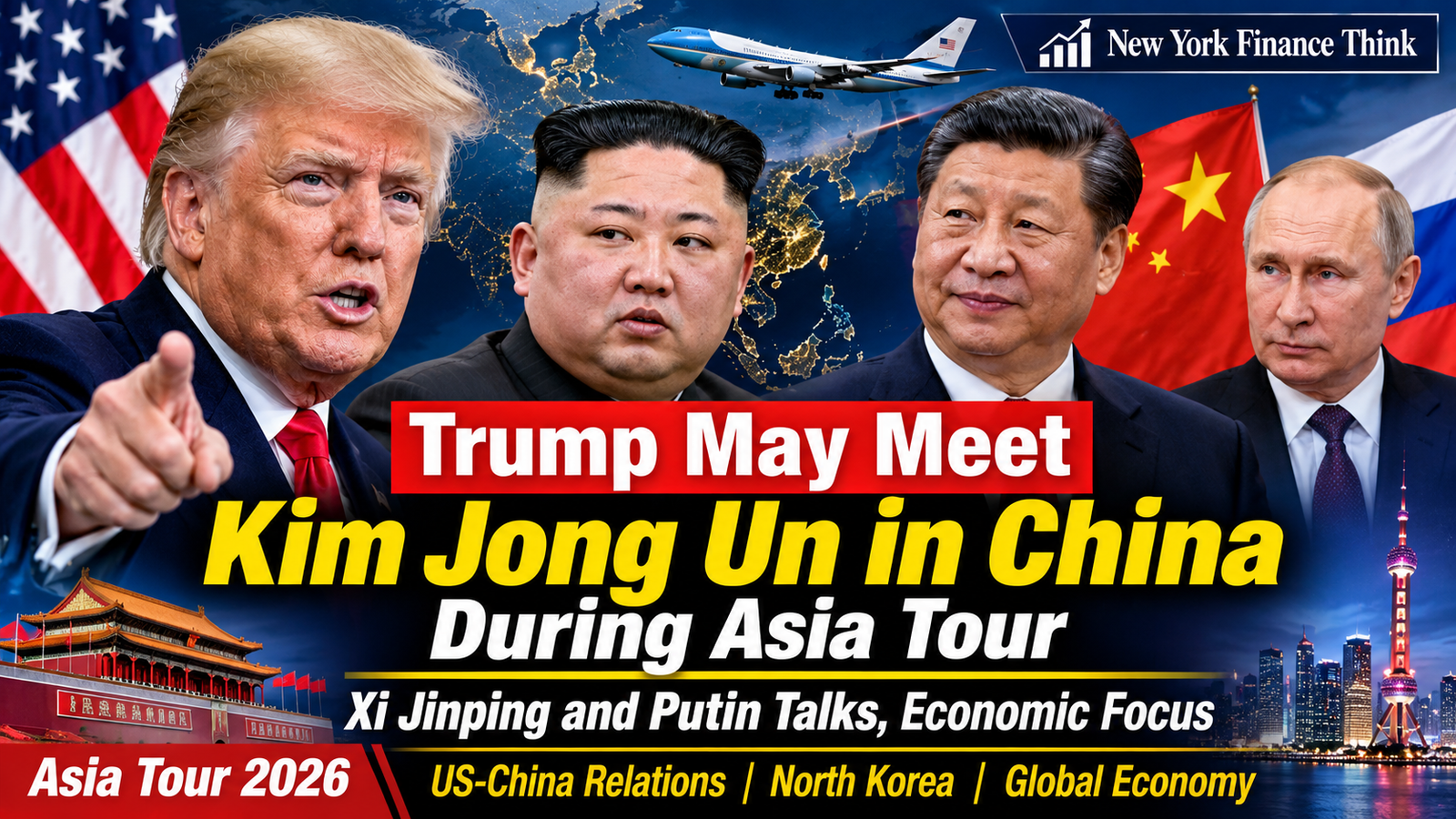
November 17, 2026 | International Politics | Asia-Pacific News
President Donald Trump has indicated that he may meet North Korean leader Kim Jong Un during his Asia tour, potentially creating another important diplomatic moment involving Washington, Beijing and Pyongyang. Speaking to reporters before departing Washington, Trump suggested that a meeting could take place in China, depending on the positions and availability of Chinese President Xi Jinping and North Korea’s leader.
The possibility has attracted international attention because relations between the United States and North Korea have remained complicated for years. A potential meeting between Trump and Kim would also bring China into the center of an important diplomatic discussion involving regional security, nuclear weapons and international economic relationships.
Alongside the possibility of meeting Kim, Trump indicated that his itinerary would largely focus on economic issues. His planned diplomatic engagements with Xi Jinping and Russian President Vladimir Putin could provide opportunities to discuss international trade, investment, energy, security and broader geopolitical developments.
Although no confirmed agreement for a Trump-Kim meeting has been announced in the remarks described, the president’s comments have renewed attention on the possibility of high-level diplomacy in Asia.
Contents
- 1. 1. Trump Raises Possibility of Meeting Kim Jong Un
- 2. 2. China Could Become the Center of Diplomatic Discussions
- 3. 3. Xi Jinping’s Role in the Asia Tour
- 4. 4. Economic Issues Expected to Dominate the Itinerary
- 5. 5. US-China Trade Relations Remain Important
- 6. 6. Potential Impact on American Businesses
- 7. 7. North Korea’s Nuclear Programme Remains a Major Challenge
- 8. 8. South Korea and Japan Will Be Watching Closely
- 9. 9. Putin Could Feature in Broader Diplomatic Discussions
- 10. 10. Russia-Ukraine Conflict Remains on the International Agenda
- 11. 11. Energy Markets Could Be Affected by Diplomatic Developments
- 12. 12. Financial Markets Will Monitor the Asia Tour
- 13. 13. Artificial Intelligence and Technology Could Become Economic Priorities
- 14. 14. China’s Diplomatic Influence in Asia
- 15. 15. What a Trump-Kim Meeting Could Achieve
- 16. 16. Challenges Facing Trump’s Diplomatic Strategy
- 17. 17. What Americans and Global Investors Should Watch
- 18. 18. Final Analysis: An Important Diplomatic Moment for the United States
1. Trump Raises Possibility of Meeting Kim Jong Un
Trump’s statement that he may meet Kim Jong Un during the Asia tour immediately attracted international attention.
The president did not present the meeting as a confirmed event. Instead, he indicated that it would depend on the circumstances and the willingness of the other leaders involved.
The distinction is important because diplomatic meetings involving North Korea require careful preparation, political coordination and agreement on the purpose of discussions.
A meeting could create an opportunity to reopen communication between Washington and Pyongyang, but its actual significance would depend on the issues discussed and any commitments made afterward.
2. China Could Become the Center of Diplomatic Discussions
China’s possible role in facilitating or hosting a meeting is particularly important.
Beijing maintains a longstanding relationship with North Korea and remains one of Pyongyang’s most influential international partners.
For Washington, communication with China is essential when addressing developments on the Korean Peninsula.
If a Trump-Kim meeting takes place in China, it could provide Beijing with an opportunity to demonstrate its diplomatic influence while participating in discussions involving regional stability.
However, China’s involvement should not be interpreted as confirmation that such a meeting has already been arranged.
3. Xi Jinping’s Role in the Asia Tour
Chinese President Xi Jinping is expected to be a central figure in Trump’s diplomatic engagements.
The relationship between Washington and Beijing affects almost every major international economic issue, including trade, technology, manufacturing, investment and global supply chains.
Both countries have substantial economic interests in maintaining stable commercial relationships, even when political disagreements create tensions.
Trump’s discussions with Xi could therefore attract attention from governments, international businesses and financial markets.
4. Economic Issues Expected to Dominate the Itinerary
Trump indicated that economic matters would occupy a major part of his Asia tour.
This is significant because economic cooperation remains one of the strongest areas of mutual interest between major international powers.
Trade agreements, tariffs, investment opportunities, industrial production and access to important markets could all influence discussions.
For American businesses, the outcome of negotiations involving China and other Asian economies could affect future commercial opportunities.
5. US-China Trade Relations Remain Important
The United States and China are deeply connected through international trade.
American companies depend on Chinese manufacturing and supply chains in several industries, while Chinese businesses rely on access to American consumers, technology and investment.
Despite political disagreements, both economies have reasons to avoid unnecessary disruption.
Any progress toward more predictable trade arrangements could help businesses plan investments and manage supply-chain risks.
However, investors will need to wait for official announcements before assuming that new trade agreements or tariff changes are forthcoming.
6. Potential Impact on American Businesses
Trump’s economic-focused diplomatic agenda could have implications for American companies operating internationally.
Manufacturers, technology businesses, agricultural exporters, financial institutions and transportation companies all have interests in stable international trade relationships.
A reduction in trade uncertainty could support business confidence.
On the other hand, disagreements over tariffs, technology restrictions or market access could create additional costs for companies.
The results of the Asia tour may therefore matter beyond traditional diplomatic circles.
7. North Korea’s Nuclear Programme Remains a Major Challenge
Any potential meeting between Trump and Kim Jong Un would inevitably attract attention to North Korea’s nuclear programme.
North Korea’s weapons development has been a longstanding concern for the United States and its regional partners.
Washington has consistently treated nuclear security and regional stability as important elements of its policy toward Pyongyang.
A diplomatic meeting could provide an opportunity to discuss nuclear restrictions, security guarantees and the possibility of reducing tensions.
However, meaningful progress would require more than a presidential meeting. It would depend on detailed negotiations and verifiable commitments.
8. South Korea and Japan Will Be Watching Closely
Developments involving Washington, Beijing and Pyongyang are also important for South Korea and Japan.
Both countries have significant security interests in maintaining stability across Northeast Asia.
Any change in North Korea’s relationship with the United States could influence regional security calculations.
South Korea would have particular interest in developments affecting the Korean Peninsula, while Japan would closely monitor any discussions involving North Korean military capabilities and regional security.
9. Putin Could Feature in Broader Diplomatic Discussions
Trump also referred to meetings involving Russian President Vladimir Putin.
Russia remains an important international actor in discussions involving energy markets, security, nuclear weapons and the ongoing war in Ukraine.
A conversation between Trump and Putin could provide an opportunity to address disagreements and explore diplomatic possibilities.
However, any proposed discussions would need to be evaluated through official statements and the actual outcomes of negotiations.
10. Russia-Ukraine Conflict Remains on the International Agenda
The Russia-Ukraine war continues to influence international diplomacy and economic expectations.
The conflict has affected energy markets, defense spending, international trade and food security.
For Washington, the challenge involves balancing diplomatic engagement with national security interests and support for international stability.
If Ukraine becomes part of discussions during Trump’s wider international engagements, governments and investors will watch for any concrete proposals.
A meeting or conversation alone would not establish that a peace settlement is approaching.
11. Energy Markets Could Be Affected by Diplomatic Developments
International diplomacy can have significant consequences for global energy markets.
Russia is an important energy producer, while developments involving China and other Asian economies can influence global oil and gas demand.
Trade restrictions, geopolitical tensions and changes in international relationships can affect energy prices.
American investors will therefore be watching developments that could influence crude oil, natural gas and international transportation costs.
12. Financial Markets Will Monitor the Asia Tour
Financial markets frequently respond to changes in international economic expectations.
Investors may pay particular attention to announcements involving US-China trade relations, semiconductor technology, international investment and energy cooperation.
Positive developments could improve confidence in certain industries, while unresolved disagreements could maintain uncertainty.
However, market reactions will depend on the details of any announcements rather than diplomatic headlines alone.
13. Artificial Intelligence and Technology Could Become Economic Priorities
Technology is another important part of the US-China relationship.
Artificial intelligence, advanced semiconductors, data centers and digital infrastructure have become central to economic competition.
American technology companies are particularly interested in maintaining their global competitiveness while complying with government restrictions.
Any discussion involving technology trade or investment could therefore attract attention from businesses and investors.
14. China’s Diplomatic Influence in Asia
China’s position gives it substantial influence in regional diplomacy.
Its relationships with neighboring countries, economic partnerships and role in international organizations make Beijing an important participant in discussions about Asian security.
A possible meeting involving Trump and Kim in China would highlight the importance of Chinese diplomatic involvement.
For Beijing, maintaining regional stability is important for economic development and international trade.
15. What a Trump-Kim Meeting Could Achieve
A potential meeting between Trump and Kim Jong Un could serve several diplomatic purposes.
It could reopen direct communication, establish a framework for further negotiations or create an opportunity to discuss nuclear security.
However, expectations would need to remain realistic.
Past diplomatic engagement between Washington and Pyongyang demonstrated that high-level meetings do not automatically produce lasting agreements.
Progress would depend on negotiations, implementation and trust between the parties.
16. Challenges Facing Trump’s Diplomatic Strategy
Trump’s Asia tour involves several complicated relationships and competing national interests.
The United States wants to protect its economic and security priorities, while China, Russia and North Korea have their own strategic objectives.
Trade disagreements, military concerns, nuclear security and regional political differences could complicate negotiations.
Diplomatic success will depend on whether the participating governments can identify areas of mutual interest without ignoring their fundamental disagreements.
17. What Americans and Global Investors Should Watch
Several developments deserve attention during and after the Asia tour:
- Whether a meeting with Kim Jong Un is officially confirmed.
- What Xi Jinping and Trump announce about economic cooperation.
- Whether new trade or investment commitments are reached.
- Whether technology and semiconductor restrictions are discussed.
- Whether Trump and Putin address the Russia-Ukraine conflict.
- Whether any developments affect international energy markets.
- Whether official statements indicate progress on regional security.
These issues could influence business confidence, international investment and the broader economic outlook.
18. Final Analysis: An Important Diplomatic Moment for the United States
President Trump’s comments about a possible meeting with Kim Jong Un have added another important dimension to his Asia tour.
The possibility of bringing together diplomatic discussions involving Washington, Beijing and Pyongyang is significant because the region remains central to international security and global economic activity.
At the same time, the president’s emphasis on economic issues suggests that trade, investment and commercial relationships will remain major priorities during the trip.
His planned engagement with Xi Jinping and Putin also highlights the administration’s interest in maintaining direct communication with influential international leaders.
For American businesses, international investors and policymakers, the most important question is whether these meetings produce practical outcomes.
A confirmed Trump-Kim meeting could create renewed diplomatic opportunities. Progress with China could influence international trade and technology markets. Discussions with Russia could affect wider security and economic expectations.
Nevertheless, diplomatic possibilities should not be confused with completed agreements.
The coming days will be important for understanding the direction of America’s international relationships and the administration’s broader economic strategy.
New York Finance Think will continue monitoring developments from the White House, Asia-Pacific region and international financial markets, providing readers with independent news coverage and analysis of the issues shaping the global economy.
Editorial note: The possible meeting with Kim Jong Un is presented as a possibility expressed by President Trump, not a confirmed diplomatic appointment. Any future meeting, agreement or policy announcement should be verified through official statements.
