
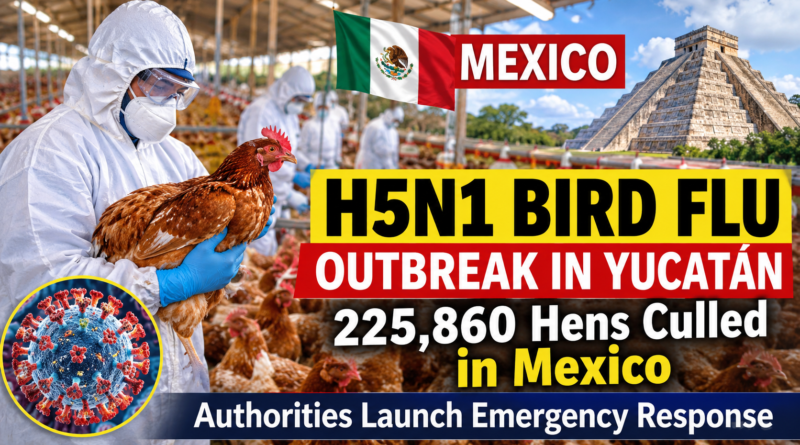
Mexico H5N1 Bird Flu Outbreak: 225,860 Hens Culled as Authorities Launch Emergency Response in Yucatán
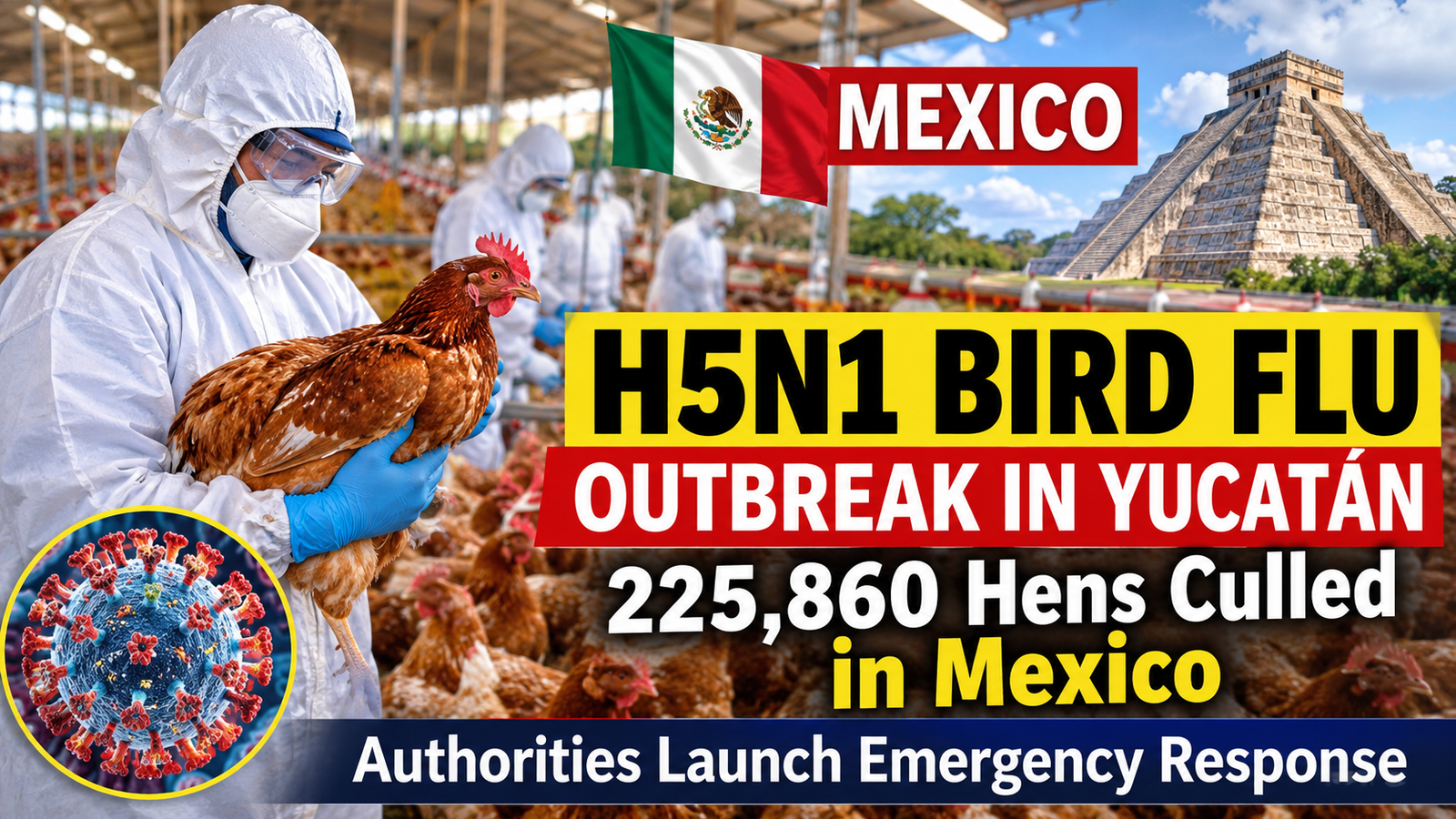
UMÁN, YUCATÁN, MEXICO — November 6, 2026: Mexico has reported an outbreak of highly pathogenic avian influenza, commonly known as H5N1 bird flu, at a commercial poultry farm in Umán, Yucatán. Authorities have ordered the removal of approximately 225,860 laying hens from the affected facility as part of emergency measures designed to prevent the virus from spreading to other poultry farms.
The incident has raised concerns across Mexico’s poultry industry because commercial egg production depends on maintaining healthy flocks, reliable supply chains and strict veterinary controls. Mexican animal-health authorities have begun containment operations, surveillance inspections and additional testing to determine whether the infection has spread beyond the affected property.
The outbreak is particularly significant because it places renewed attention on the risks associated with highly pathogenic avian influenza, a disease that can cause severe illness and high mortality among domestic poultry populations.
What Happened at the Poultry Farm in Umán?
The outbreak was identified at a commercial egg-production facility in Umán, a municipality near Mérida in the southeastern Mexican state of Yucatán.
According to the reported outbreak information, the farm housed approximately 225,860 laying hens. An unusual increase in bird deaths prompted veterinary investigations and laboratory testing.
Animal-health specialists collected samples from the affected facility and conducted diagnostic examinations to identify the cause of the illness. Testing detected highly pathogenic avian influenza of the H5 subtype, prompting authorities to activate emergency disease-control procedures.
The decision to remove the entire flock was intended to reduce the risk of further transmission and protect neighboring poultry operations.
The removal of 225,860 birds represents the total affected farm population targeted by the control operation. It should not be interpreted as meaning that all those birds died from the infection.
Why Were 225,860 Hens Culled?
The removal of infected or exposed poultry is an established disease-control measure used to contain highly pathogenic avian influenza.
The virus can spread rapidly in commercial poultry facilities, where large numbers of birds are kept in relatively concentrated environments. If infection is not controlled quickly, it can affect surrounding production units and create significant economic losses.
Authorities have implemented several containment measures, including the removal of birds, quarantine restrictions, cleaning and disinfection of the affected facility, and additional veterinary inspections.
The farm will need to complete the required sanitary procedures before authorities consider allowing normal production to resume.
These measures are designed to prevent contaminated materials, equipment and other possible sources of infection from carrying the virus into other poultry facilities.
Mexico Launches Surveillance Around the Infected Farm
Mexican animal-health authorities have expanded their investigation beyond the affected property.
A 10-kilometer surveillance perimeter has been established around the infected facility to monitor neighboring poultry operations and identify possible additional cases.
Veterinary specialists are expected to inspect farms, collect samples and review the health status of nearby bird populations.
The surveillance operation is important because avian influenza does not necessarily remain restricted to the first farm where infection is detected. Movement of workers, vehicles, equipment, poultry and contaminated materials can create opportunities for transmission.
Early detection is therefore essential to prevent a localized outbreak from developing into a larger agricultural emergency.
Could Migratory Birds Have Introduced H5N1?
One of the major questions surrounding the outbreak is how the virus entered the poultry facility.
Authorities are investigating the possible involvement of wild birds, including migratory species that travel through the Yucatán Peninsula.
The region is known for its wetlands, coastal ecosystems and wildlife habitats. Seasonal bird movements can bring different wild bird populations into contact with local environments.
Some wild birds can carry avian influenza viruses, potentially creating risks for domestic poultry when farms are exposed to contaminated water, waste or other environmental sources.
However, the precise origin of the infection has not yet been established. The possibility of transmission from migratory birds remains an investigative question rather than a confirmed explanation.
Additional laboratory testing, environmental surveillance and epidemiological investigations will help authorities understand how the virus reached the farm.
Will Mexico Face an Egg Shortage?
The outbreak has attracted attention because laying hens are directly connected to commercial egg production.
However, the Mexican government has indicated that the incident does not threaten the country’s overall poultry supply. The affected farm’s bird population represents approximately 0.09% of Mexico’s national poultry inventory, according to reported government information.
This relatively small national share suggests that the outbreak is unlikely to create a nationwide shortage by itself.
Nevertheless, the financial consequences for the affected farm could be considerable. Commercial laying hens represent an important productive asset, and replacing an entire flock requires time, investment and careful veterinary management.
The farm may also face additional costs associated with disinfection, quarantine, testing, replacement birds and temporary production interruptions.
The wider economic impact will depend on whether additional infections are detected and how quickly the affected facility can return to production.
Is It Safe to Eat Eggs and Chicken in Mexico?
Consumers may have questions about whether the outbreak creates a risk to the food supply.
Mexican authorities have indicated that the incident does not compromise the country’s general poultry supply.
Properly handled and thoroughly cooked poultry products remain safe to consume under established food-safety guidance.
Consumers should continue following basic precautions:
- Cook chicken and other poultry products thoroughly.
- Cook eggs until the white and yolk are firm.
- Avoid consuming raw or undercooked poultry.
- Wash hands after handling raw poultry products.
- Clean kitchen surfaces and utensils that come into contact with raw meat.
- Follow official food-safety announcements.
H5N1 is primarily an animal-health concern, although human infections can occur following exposure to infected birds or contaminated environments.
There is no reported evidence in the available outbreak information that this particular incident has resulted in human infections.
What Does the Outbreak Mean for Mexico’s Poultry Industry?
Mexico has a significant poultry industry that supports domestic food consumption, employment, agricultural businesses and distribution networks.
Eggs and chicken are important sources of protein for Mexican households. The sector also depends on farmers, feed suppliers, veterinary services, transport companies, wholesalers and retailers.
An outbreak of highly pathogenic avian influenza can therefore create consequences beyond the farm where the infection is detected.
The incident in Yucatán highlights the importance of strict biosecurity procedures, regular veterinary inspections and rapid reporting of unusual bird deaths.
For poultry producers, preventing infection is generally less costly than responding after a disease outbreak has been confirmed.
Farm operators may need to strengthen controlled access, disinfect vehicles and equipment, protect poultry houses from wild birds and maintain regular health monitoring.
The outbreak also demonstrates the importance of cooperation between farmers, veterinary specialists and government agencies.
What Happens Next?
The coming days will be important for determining whether the outbreak remains confined to the affected poultry facility.
Authorities are expected to focus on laboratory investigations, surveillance of nearby farms, wildlife monitoring and verification of the effectiveness of cleaning and disinfection measures.
The affected facility will need to satisfy sanitary requirements before authorities consider reopening it for poultry production.
The results of the surrounding surveillance operation will help determine whether additional containment measures are necessary.
For now, the main objective is to prevent the virus from reaching other commercial poultry farms and protect the stability of Mexico’s egg and poultry supply chains.
Conclusion
Mexico’s H5N1 bird flu outbreak in Umán, Yucatán, has triggered an emergency animal-health response involving the removal of approximately 225,860 laying hens and expanded surveillance around the affected poultry facility.
Although the outbreak represents a serious operational challenge for the affected farm, its relatively small share of Mexico’s national poultry inventory suggests that the incident does not automatically translate into a nationwide egg or chicken supply crisis.
The priority now is to prevent further transmission, identify the possible source of infection and ensure that neighboring poultry operations remain protected.
The effectiveness of Mexico’s surveillance and containment measures will determine whether this remains an isolated incident or develops into a broader challenge for the country’s poultry industry.
New York Finance Think — International News Desk
This report distinguishes the reported outbreak information from the still-unconfirmed source of infection. Further official updates and laboratory findings may change the assessment.
