

SBA 7(a) Loans: Competitive Rates, Requirements, and Funding Up to $5 Million
Written by: Michael Anderson
Reviewed by: Sarah Mitchell, Financial Content Reviewer
Website: [ newyorkfinancethink.com ]
Published: October 18, 2026
Last updated: October 18, 2026
newyorkfinancethink.com SBA 7(a) Loans: Business Financing for Eligible US Small Businesses
Growing a small business takes more than a good idea. Owners also need enough money to manage operating expenses, purchase equipment, hire employees, maintain inventory, and take advantage of new opportunities.
For some businesses, the challenge is finding financing with a repayment schedule and overall cost that fit their budget.
An SBA 7(a) loan may be worth considering if you own or plan to acquire an eligible small business in the United States. Backed in part by a guarantee from the U.S. Small Business Administration (SBA), the program helps participating lenders provide financing for a range of approved business purposes.
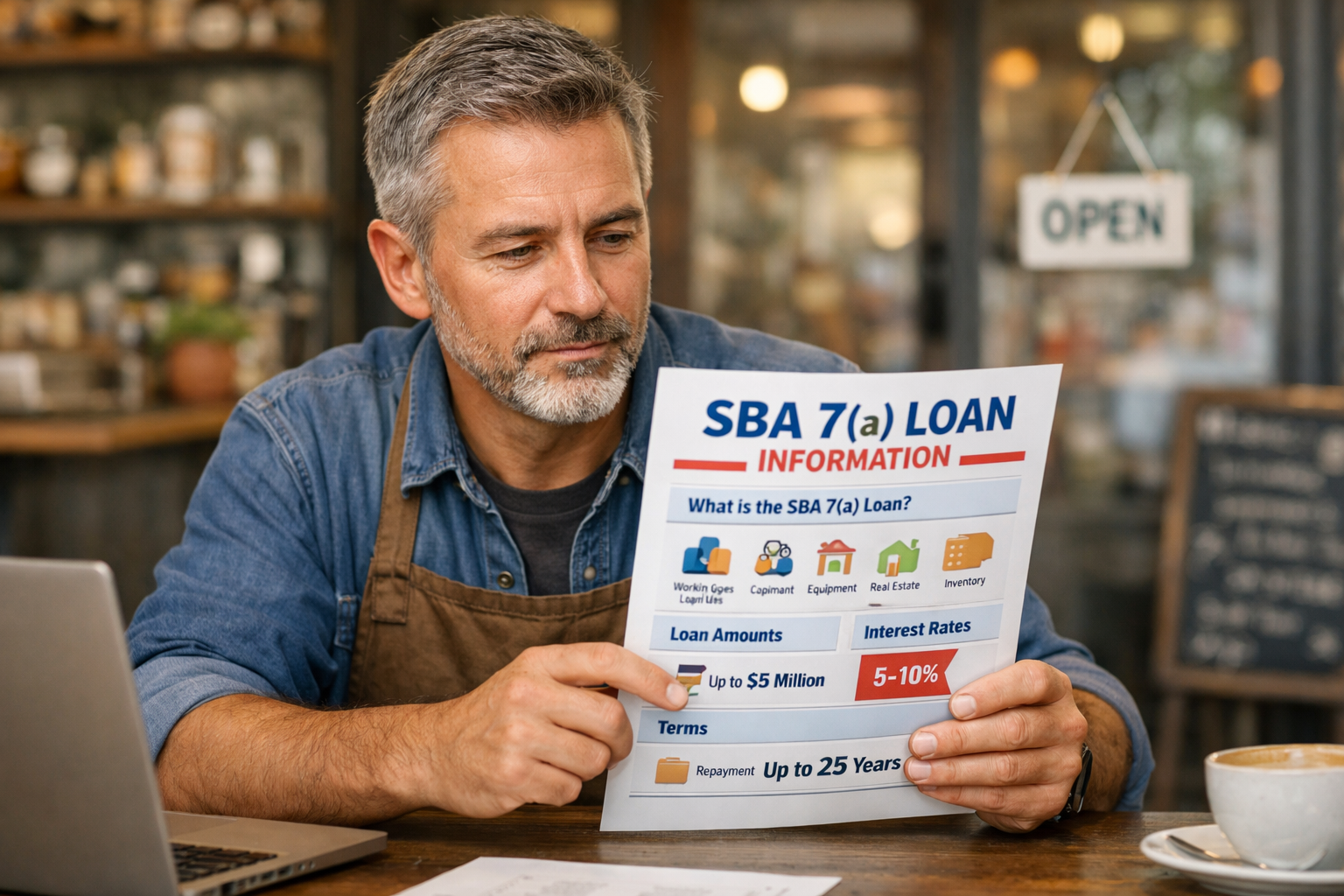
Most SBA 7(a) loans have a maximum loan amount of $5 million. Depending on the transaction, eligible businesses may use the financing for working capital, equipment, qualifying real estate expenses, certain debt refinancing, and business acquisitions.
However, the amount you can borrow, the interest rate you receive, and the repayment terms depend on your circumstances and the lender’s assessment. Approval is not guaranteed, and the SBA guarantee does not eliminate your obligation to repay the loan.
This guide explains how SBA 7(a) loans work, what they can be used for, who may qualify, and how to compare financing offers before making a decision
Run, don’t walk! 🚨❄️
The ultimate winter wardrobe upgrade just went on sale at Macy’s. Cozy, chic, and perfectly budget-friendly for a limited time. Quality is an absolute 10/10!Tap the link to shop the deal before it sells out! 👇
https://sovrn.co/2evscmz#MacysFinds #WinterFashion #FashionDeals #OOTD

The ultimate winter wardrobe upgrade just went on sale at Macy’s. Cozy, chic, and perfectly budget-friendly for a limited time. Quality is an absolute 10/10!
Tap the link to shop the deal before it sells out! 👇
https://sovrn.co/2evscmz
#MacysFinds #WinterFashion #FashionDeals #OOTD
What Is an SBA 7(a) Loan?
An SBA 7(a) loan is a business loan provided by a participating lender under a program supported by the U.S. Small Business Administration.
Unlike a direct government loan, a standard 7(a) loan is generally made by a bank or another participating lender. The SBA guarantees a portion of an eligible loan, subject to program requirements.
This guarantee can help participating lenders provide financing to qualifying small businesses.
The borrower remains responsible for the entire loan balance, including interest and applicable fees.
How Much Can You Borrow?
The maximum loan amount for most SBA 7(a) loans is $5 million. Certain loan delivery methods have lower limits.
The amount approved for your business depends on several factors, including:
- Your business’s financial condition and repayment ability.
- The amount needed for the proposed project.
- The eligibility of the intended use of funds.
- Your credit history and existing financial obligations.
- The lender’s underwriting assessment and applicable SBA rules.
For example, a contractor purchasing equipment may need a smaller loan than an established company acquiring another business. A manufacturer expanding production may require financing for equipment, inventory, and working capital.
The $5 million maximum is a program limit, not a promise that an applicant will qualify for that amount.
As of October 2026, eligible borrowers may also be able to combine SBA 7(a) and 504 financing for up to $10 million in total SBA-backed financing under the policy effective July 4, 2026. This combined limit does not increase the maximum amount of an individual 7(a) loan.
For current details, visit the official SBA 7(a) Loans page.
Run, don’t walk! Huge savings on Polo Ralph Lauren! 🚨🦅
Major style alert! Macy’s just dropped limited-time specials on premium Polo Ralph Lauren Men’s Apparel. Snag up to 30% to 40% off iconic hoodies, classic mesh polos, and comfy fall/winter essentials before sizing sells out! [1, 2, 3, 4]Click here to score the deals before they are gone! 👇
sovrn.co#MacysDeals #RalphLaurenSale #MensOOTD #StreetwearStyle #ShoppingSteals

You can never go wrong with a classic. Upgrade his wardrobe with premium essentials from the Polo Ralph Lauren Fall Collection at Macy’s. From iconic mesh polo shirts to tailored Oxfords, find clean lines and comfortable heritage layers that look sharp year-round. [1, 2]
Tap the link below to shop the collection now! 👇
https://www.macys.com
#PoloRalphLauren #MensFashion #MacysFinds #PreppyAesthetic #MensStyle
SBA 7(a) Loan Rates: What Should You Know?
Interest rates are an important part of any business financing decision. The rate affects the cost of borrowing, the monthly payment, and the total amount paid over the life of the loan.
SBA 7(a) interest rates are negotiated between the borrower and the lender, subject to applicable SBA maximums.
There is no single rate available to every borrower. Your actual rate depends on the loan amount, rate structure, applicable benchmark, lender’s offer, and other terms of the agreement.
Fixed Interest Rates
A fixed interest rate generally remains unchanged during the period specified in the loan agreement.
This can make budgeting easier because the rate does not fluctuate with a market benchmark during that period.
Business owners who prefer predictable borrowing costs may want to compare fixed-rate offers. However, the rate and the full cost of the loan still need to be evaluated.
Variable Interest Rates
A variable interest rate can change according to the benchmark and adjustment schedule specified in the loan agreement.
If the applicable benchmark increases, your interest rate or payment may increase, depending on the loan terms. If the benchmark decreases, your rate or payment may decrease.
Before accepting a variable-rate loan, ask the lender:
- Which benchmark determines the rate?
- How often can the rate change?
- How are payment adjustments calculated?
- What maximum rate applies under the agreement?
- How would a higher payment affect your business cash flow?
Understanding these details can help you prepare for changes in borrowing costs.
SBA Maximum Variable Interest Rates
For covered 7(a) loans, SBA rules generally limit variable interest rates according to the loan amount.
| Loan amount | Maximum variable rate |
|---|---|
| $50,000 or less | Applicable base rate + 6.5 percentage points |
| $50,001–$250,000 | Applicable base rate + 6.0 percentage points |
| $250,001–$350,000 | Applicable base rate + 4.5 percentage points |
| More than $350,000 | Applicable base rate + 3.0 percentage points |
These figures represent maximum allowable spreads under the applicable rules, not the actual rate you will receive. Fixed-rate loans follow their applicable SBA limits, which may be calculated differently.
Because rates and program requirements can change, confirm the current limits with a participating lender or through the SBA’s official lender resources.
Are SBA 7(a) Loans the Lowest-Cost Option?
Not necessarily.
An SBA 7(a) loan may offer suitable terms for an eligible business, but the lowest advertised interest rate does not always represent the least expensive financing option.
Other costs may include lender charges, applicable SBA fees, closing expenses, legal work, and third-party services. The repayment period also affects the total interest paid.
Compare the complete offer rather than choosing a loan based on its headline rate.
Benefits of SBA 7(a) Loans
SBA 7(a) financing can provide eligible small businesses with another way to fund important business needs.
The advantages depend on the business, the project, and the terms offered by the lender.
Flexible Uses of Funds
Eligible uses include working capital, equipment purchases, qualifying real estate expenses, certain debt refinancing, and business acquisitions.
This flexibility may be helpful when a business needs financing for several approved expenses rather than one specific purchase.
Funding for Larger Projects
With a maximum amount of $5 million for most 7(a) loans, the program can support certain substantial business investments.
The actual amount approved depends on eligibility, project costs, and the borrower’s ability to repay.
Rates Subject to SBA Limits
SBA rules limit the interest rates lenders can charge on covered 7(a) loans. Comparing offers can help borrowers understand which financing structure is appropriate for their business.
No particular interest rate is guaranteed.
Financing for Business Growth
Eligible borrowers may use the funds to purchase equipment, support working capital needs, acquire an existing company, or finance qualifying property expenses.
Before borrowing, consider the expected benefits of the project and whether the business can manage the additional debt without putting day-to-day operations under pressure.
Who Qualifies for an SBA 7(a) Loan?
SBA 7(a) eligibility depends on the business, the borrower, the intended use of funds, and the applicable program requirements.
In general, an eligible business must satisfy the following conditions.
The Business Must Operate for Profit
The 7(a) program is intended for eligible for-profit businesses.
The lender will review the business model and financial information to understand how the company earns revenue and whether it can reasonably repay the loan.
The Business Must Meet US Location Requirements
The business must satisfy the program’s applicable US location requirements.
Companies with international operations or complex ownership arrangements should discuss those circumstances with a participating lender.
The Business Must Meet SBA Size Standards
The SBA uses industry-specific size standards to determine whether a business qualifies as small.
Depending on the industry, the standard may be based on average annual receipts, employee count, or another applicable measure.
A company should check the standard for its industry rather than relying on a general definition of a small business.
The Business Must Be Creditworthy and Able to Repay
The lender evaluates whether the business can reasonably make the required payments.
The review may include:
- Business financial statements and tax returns.
- Existing debt and required monthly payments.
- Business and personal credit information, where applicable.
- Cash flow and financial projections.
- The purpose of the loan and the proposed project.
- Other relevant financial and underwriting information.
There is no single credit score that guarantees SBA 7(a) approval. The lender assesses the overall application under applicable SBA requirements and its lending procedures.
The Business Must Satisfy Other Eligibility Rules
Certain businesses and activities are ineligible for SBA financing. Applicants must also satisfy applicable requirements concerning credit availability and other program conditions.
Confirm eligibility with a participating lender before committing to a purchase or expansion.
For official details, see the SBA 7(a) Loans program page.
What Can You Use an SBA 7(a) Loan For?
The program covers several eligible business purposes. The lender must confirm that the proposed expenses meet applicable SBA requirements.
Working Capital
Working capital helps cover ordinary business expenses, such as eligible payroll costs, rent, utilities, inventory, and supplier payments.
A business may need additional cash when it must pay suppliers before customers pay their invoices. Seasonal businesses may also need money to cover expenses before revenue arrives.
Before borrowing, review your cash flow carefully. If the company consistently spends more than it earns, additional debt may not address the underlying problem.
Equipment Purchases
Eligible financing may help businesses purchase machinery, tools, and other equipment needed for operations.
For example, a manufacturing company might need production machinery, while an auto repair shop may need diagnostic equipment.
Consider the full cost of the purchase, including installation, maintenance, training, repairs, and downtime. The expected benefits should justify the investment and the additional repayment obligation.
Inventory and Supplies
Retailers, wholesalers, and manufacturers may need funds to purchase inventory before sales revenue arrives.
Financing may help cover eligible expenses, but inventory purchases also carry risks. Products may sell more slowly than expected, become outdated, or require discounts.
Review historical sales, customer demand, supplier terms, and inventory turnover before deciding how much financing is appropriate.
Eligible Commercial Real Estate
SBA 7(a) financing may be used for qualifying business real estate purposes, including eligible acquisitions, improvements, or refinancing.
A company may want to purchase a property for its operations or improve an existing facility.
Real estate transactions can involve appraisals, inspections, insurance, taxes, and closing expenses. Ask the lender which costs qualify and what documentation is required.
Buying an Existing Business
An eligible change in business ownership may qualify for SBA 7(a) financing.
Before buying a business, review its financial statements, tax returns, customer relationships, contracts, leases, equipment, and other important records.
The lender will evaluate the purchase price, the buyer’s financial position, the transaction structure, and the business’s ability to generate enough cash to repay the loan.
Not every acquisition qualifies. Confirm the transaction’s eligibility before making binding commitments.
Refinancing Eligible Business Debt
Certain existing business debts may qualify for refinancing under SBA rules.
Refinancing may be worth exploring when existing payments put pressure on business cash flow or a different financing structure better fits the company’s needs.
However, a lower monthly payment does not necessarily mean a lower total cost. Extending the repayment period may increase the amount of interest paid.
Ask the lender to confirm that the debt qualifies and compare the projected cost of the existing and proposed arrangements.
What Documents Do You Need to Apply?
Documentation varies by lender, loan amount, business structure, and intended use of the funds.
Preparing your records in advance can help reduce delays.
Business Financial Statements
Lenders may request balance sheets, income statements, cash flow information, and other financial records.
These documents help them assess profitability, liquidity, debt obligations, and repayment ability.
Make sure the records are accurate and consistent. Be prepared to explain major changes in revenue, unusual expenses, or recent financial difficulties.
Tax Returns
Business tax returns for relevant prior years may be required. Personal tax returns may also be requested, depending on the application.
If your business is new or has recently changed its structure, ask the lender which documents it needs.
Business Plan and Financial Projections
A business plan may be especially important for startups, acquisitions, and expansion projects.
It should explain what the business does, who its customers are, how it expects to generate revenue, and how the loan will be used.
Financial projections should be based on reasonable assumptions. For example, an equipment purchase plan should explain how the equipment is expected to support operations or revenue.
Ownership and Legal Documents
The lender may request business registration records, ownership information, licenses, leases, contracts, and other documents.
An acquisition may require a purchase agreement, valuation information, and financial records for the business being acquired.
A Clear Use-of-Funds Budget
Prepare a list of the expenses you want to finance.
For example, a business might estimate $75,000 for equipment, $30,000 for inventory, and $45,000 for eligible working capital.
These figures are illustrative only. The lender must determine which expenses qualify and whether the proposed amount is appropriate.
How to Apply for an SBA 7(a) Loan
The process varies by lender, but the following steps provide a practical starting point.
Step 1: Calculate Your Financing Needs
Determine how much money your project requires and identify the expenses that may qualify.
Avoid borrowing the maximum simply because it is available. The loan should reflect actual business needs and a realistic repayment plan.
Step 2: Review Your Finances
Review revenue, expenses, cash flow, current debt, and expected financial performance.
Consider whether the business could continue making payments during a slower sales period or an unexpected increase in operating costs.
Step 3: Find Participating Lenders
Contact your current bank or compare other participating lenders.
You can also use the SBA’s Lender Match service to connect with interested lenders.
Lender Match is not a loan application, an approval, or a guarantee of funding. You will still need to discuss your situation with lenders and complete their application requirements.
Step 4: Explain Your Business Plan
Tell the lender how much financing you need, how you plan to use the money, and how the business expects to repay the loan.
For an acquisition, provide information about the business being purchased. For an equipment purchase, explain the costs and expected benefits.
Step 5: Submit Your Application
Provide the requested financial records, tax returns, ownership information, and supporting documents.
Respond promptly to requests for clarification. Ensure the information is accurate and consistent across the application.
Step 6: Review the Loan Offer
If the lender offers financing, review the interest rate, repayment period, fees, collateral, personal guarantees, and other contractual requirements.
Ask questions about anything you do not understand before signing.
Step 7: Complete Closing Requirements
The lender may require additional documents, insurance, valuations, legal work, or other closing steps.
Confirm what remains outstanding and understand when the funds will be released and how they may be used.
SBA 7(a) Loan Repayment Terms
Repayment periods depend on the purpose and structure of the loan and applicable SBA requirements.
Many 7(a) loans have terms of 10 years or less, unless they finance or refinance qualifying real estate or equipment with a useful life exceeding 10 years. Eligible real estate financing may have a term of up to 25 years, subject to program requirements.
The lender should confirm the maximum repayment period for your particular transaction.
How the Repayment Period Affects Costs
A longer repayment period may reduce the monthly payment, but it can increase total interest paid over the life of the loan.
A shorter repayment period may reduce total interest while requiring higher monthly payments.
Choose a structure that fits your business cash flow without leaving too little money for regular operating expenses.
Collateral and Personal Guarantees
Collateral and personal guarantees are important parts of many business loan agreements.
Collateral consists of assets that secure the loan under the agreement. A personal guarantee is a commitment by an individual to be responsible for certain loan obligations if the borrowing business fails to pay, subject to the guarantee’s terms.
Requirements depend on the loan, applicable SBA rules, and lender procedures.
Before signing, ask which assets may secure the loan, who must provide a personal guarantee, and what could happen if the business cannot make its payments.
The SBA guarantee does not automatically eliminate the borrower’s debt or protect personal assets from every possible claim.
SBA 7(a) Loans Compared With Other Financing Options
An SBA 7(a) loan is not the only way to finance a business. Depending on your needs, another option may be more suitable.
SBA 7(a) Loan vs. Conventional Business Loan
A conventional business loan is provided under a lender’s commercial lending terms without the SBA 7(a) guarantee structure.
Some businesses may qualify for attractive conventional financing. Others may find SBA financing worth exploring because of the program’s eligible uses and guarantee arrangement.
Compare interest rates, fees, repayment periods, collateral, and the overall cost of each option.
SBA 7(a) Loan vs. SBA 504 Loan
The SBA 504 program focuses primarily on eligible long-term fixed-asset projects, including qualifying commercial real estate and major equipment purchases.
It uses a different financing structure from the 7(a) program and is generally not designed for broad working capital needs.
A business purchasing a commercial property may want to compare both programs with a qualified lender.
SBA 7(a) Loan vs. Business Line of Credit
A business line of credit lets an eligible borrower draw funds up to an approved limit, subject to the agreement.
It may be useful for recurring short-term cash needs, including seasonal expenses or gaps between paying suppliers and receiving customer payments.
A term loan generally provides a defined amount of financing that is repaid according to a schedule.
The right option depends on your operating cycle and funding requirements.
SBA 7(a) Loan vs. Equipment Financing
Equipment financing is designed specifically for equipment purchases and may use the equipment as collateral.
SBA 7(a) financing can also support eligible equipment purchases, but the loan structure and costs may differ.
Compare the options based on the amount needed, rate, repayment period, fees, and contractual requirements.
Common Mistakes to Avoid
Borrowing More Than You Need
A larger loan creates a larger repayment obligation. Base the amount on actual project costs and a reasonable operating budget.
Underestimating Expenses
Include ongoing costs such as insurance, maintenance, payroll, utilities, and other operating expenses when evaluating a project.
Using Unrealistic Financial Projections
Sales forecasts should reflect customer demand, operating capacity, market conditions, and reasonable assumptions.
Consider how the business would handle lower-than-expected revenue or higher costs.
Ignoring Existing Debt
The lender will consider current financial obligations. Prepare an accurate list of business debts and required payments.
Focusing Only on the Interest Rate
Review the full loan agreement, including fees, repayment terms, collateral, personal guarantees, and other conditions.
Trusting Guaranteed-Approval Claims
No legitimate adviser can guarantee that every SBA loan application will be approved. Be cautious of pressure tactics and requests to misrepresent financial information.
Frequently Asked Questions About SBA 7(a) Loans
What is the maximum SBA 7(a) loan amount?
The maximum amount for most SBA 7(a) loans is $5 million. Certain loan delivery methods have lower limits. Approval depends on the borrower, loan purpose, applicable program rules, and repayment ability.
Does the SBA lend directly to borrowers?
Under the standard 7(a) program, participating lenders generally make the loans. The SBA guarantees a portion of eligible loans to lenders under program requirements.
Are SBA 7(a) interest rates fixed or variable?
Both structures may be available, depending on the loan and lender. Rates are subject to applicable SBA limits and the terms of the agreement.
What is the lowest SBA 7(a) loan rate?
There is no single lowest rate for every borrower. Actual rates depend on the lender’s offer, loan structure, applicable benchmark, and SBA limits.
Can I use an SBA 7(a) loan for working capital?
Yes. Eligible working capital is a permitted use of 7(a) financing, subject to applicable requirements.
Can I use the loan to buy equipment?
Eligible equipment purchases may qualify. The lender will review the proposed expense and loan structure.
Can I use the loan to purchase an existing business?
An eligible business acquisition may qualify. The transaction must satisfy applicable program requirements and lender underwriting.
Can a startup qualify?
A startup may qualify if it meets the program’s eligibility rules and demonstrates a reasonable ability to repay. Limited operating history can make the application more challenging.
Do I need collateral?
Collateral requirements depend on the loan, applicable SBA rules, and lender procedures. Ask the lender which assets may be required.
Will I need a personal guarantee?
Personal guarantees may be required under applicable program rules and loan terms. Review the documents carefully before signing.
How long does repayment take?
Repayment terms depend on the loan purpose and structure. Many 7(a) loans have terms of 10 years or less, while eligible real estate financing may have a term of up to 25 years.
How long does approval take?
There is no universal processing time. The timeline depends on the lender, loan type, completeness of the application, and complexity of the transaction.
Can I refinance existing business debt?
Certain existing business debts may qualify for refinancing. The lender must confirm that the transaction satisfies applicable SBA requirements.
Where can I find official SBA information?
Visit the official SBA 7(a) Loans page for program information and eligibility requirements.
Final Thoughts: Explore Your SBA 7(a) Financing Options
SBA 7(a) loans may offer eligible US small businesses a way to finance working capital, equipment, inventory, qualifying real estate expenses, eligible debt refinancing, and business acquisitions.
With a maximum amount of up to $5 million for most 7(a) loans, the program can support a range of business needs. However, the amount approved, interest rate, repayment terms, fees, and collateral requirements depend on the individual transaction and lender.
Before applying, identify your funding needs, review your financial position, compare participating lenders, and make sure you understand the total cost of borrowing.
If you are planning an expansion, purchasing equipment, or considering a business acquisition, start by reviewing the official SBA requirements and speaking with a participating lender.
Explore your financing options carefully and choose a loan that supports your business goals without putting unnecessary pressure on cash flow.
Important Information for Borrowers
This article is for general educational purposes only. It is not a loan offer, a guarantee of approval, or financial, legal, or tax advice. SBA program requirements, fees, interest rate limits, and eligibility rules may change. Actual loan terms depend on applicable program rules, the participating lender, and the borrower’s circumstances.
Official Resources
- SBA 7(a) Loans
- SBA Lender Resources
- SBA Lender Match
- Google Search Central: Helpful, Reliable, People-First Content
- Google Search Essentials
