
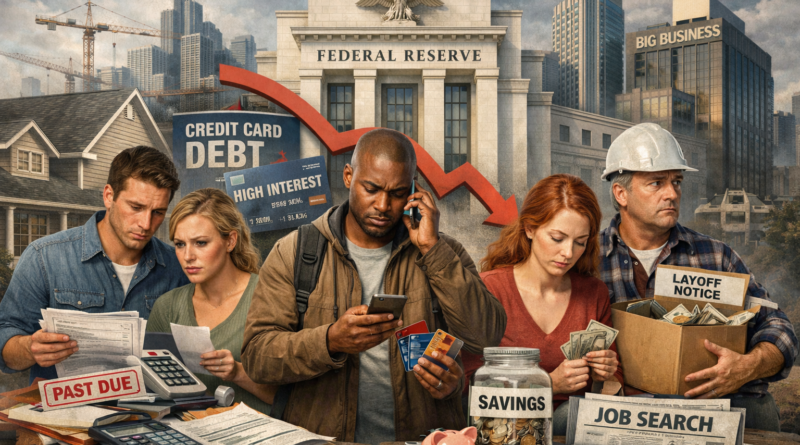
What Federal Reserve Policy Means for Americans in 2026: Mortgages, Credit Cards, Savings, Jobs, Businesses and the U.S. Economy
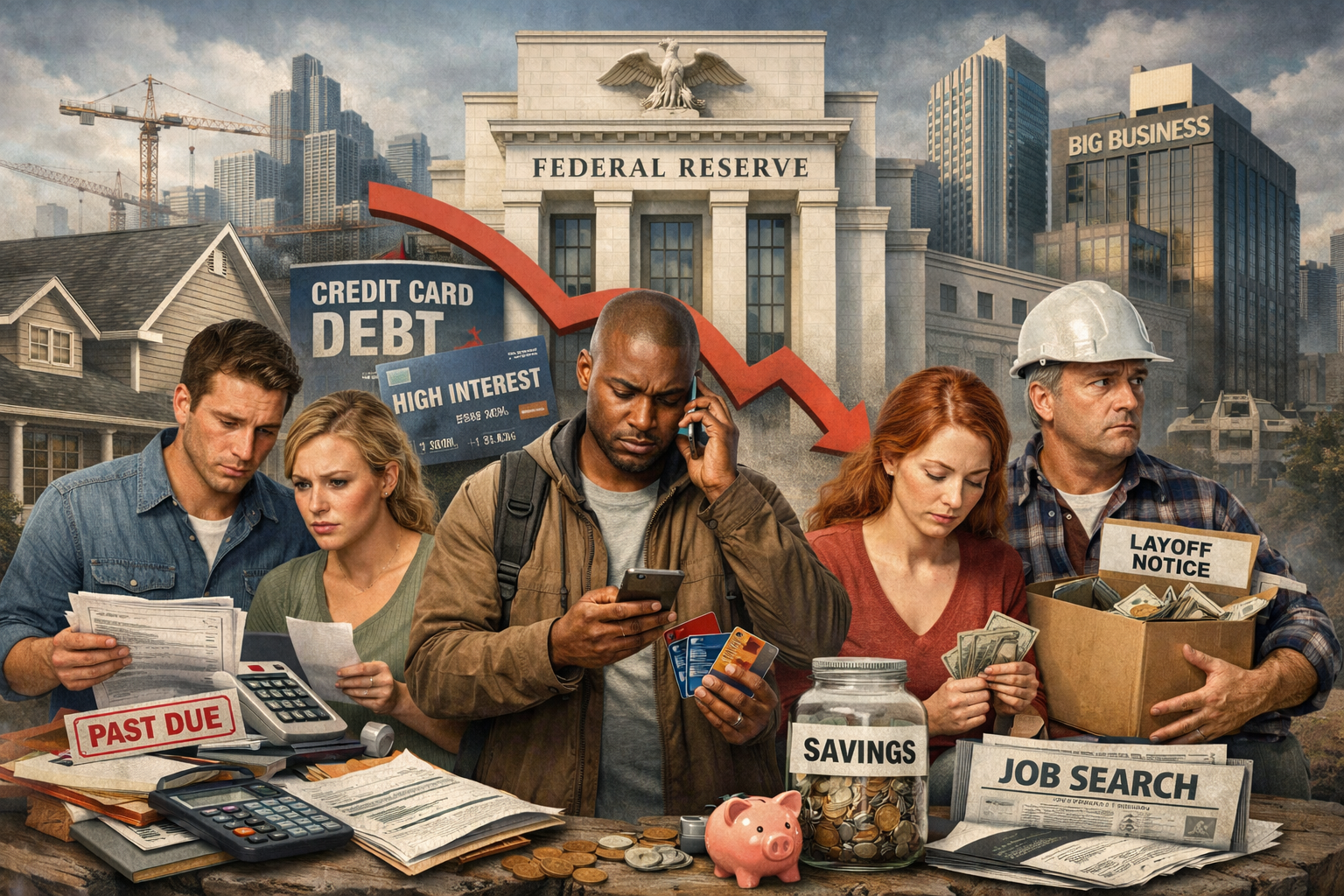
Part 6 of 6 — Fed & Interest Rates Series
Updated: October 8, 2026
By: NYFT News Desk
When the Federal Reserve changes interest rates, most Americans do not sit down and read the FOMC statement.
They are busy paying the mortgage.
Paying rent.
Buying groceries.
Using a credit card.
Financing a car.
Saving for retirement.
Running a small business.
Looking for a job.
Trying to decide whether to buy a home.
Yet Federal Reserve policy can affect almost all of those decisions.
The Fed does not directly set the price of groceries, the mortgage rate offered by a particular bank, the interest rate on every credit card, or the salary offered by an employer.
But monetary policy influences the financial environment in which those decisions happen.
That is why understanding the Federal Reserve is not only for Wall Street investors.
It matters to ordinary American households.
As of October 2026, the Federal Reserve’s target range for the federal funds rate is 3.75% to 4.00%, following the September 15–16, 2026 FOMC decision to raise the target range by 25 basis points. The September meeting minutes were released October 7. The next scheduled FOMC meeting is October 27–28.
At the same time, inflation remains above the Fed’s 2% longer-run goal. The August 2026 PCE price index increased 3.4% from a year earlier, while core PCE increased 3.0%.
That combination creates an important question for Americans:
What does the Federal Reserve’s policy actually mean for everyday life?
Key Takeaways
- The Federal Reserve affects the U.S. economy primarily through monetary policy and financial conditions.
- The federal funds rate is an overnight interest rate, but its effects spread through the financial system.
- Higher rates generally make borrowing more expensive.
- Lower rates generally make borrowing conditions easier, although the effect depends on the type of loan.
- Credit-card borrowers can feel changes in short-term interest rates relatively quickly.
- Mortgage rates are more closely connected to longer-term bond-market conditions than directly to the Fed’s overnight rate.
- Savers can benefit from higher interest rates on certain deposits and short-term investments.
- Higher rates can eventually reduce demand for homes, cars and other interest-sensitive purchases.
- Lower rates can encourage borrowing, housing activity and business investment.
- Fed policy can influence hiring and labor-market conditions, but it does not directly determine individual wages.
- Businesses must consider borrowing costs, consumer demand and investment conditions when rates change.
- Stock and bond markets react to both actual Fed decisions and expectations about future policy.
- Inflation remains central to Fed decisions.
- Americans should focus on their own financial situation rather than trying to predict every Fed move.
What Does the Federal Reserve Actually Do?
The Federal Reserve is the central bank of the United States.
Its responsibilities include conducting monetary policy and supporting a stable financial and banking system.
One of the most visible parts of its job is setting the target range for the federal funds rate.
The Federal Open Market Committee, or FOMC, makes monetary-policy decisions.
The federal funds rate influences short-term borrowing conditions throughout the financial system.
But the Fed’s job is larger than one interest rate.
The central bank also monitors:
- Inflation
- Employment
- Economic growth
- Financial conditions
- Banking conditions
- Credit markets
- Consumer spending
- Business investment
The goal is to keep the economy from overheating while also avoiding unnecessarily weak economic conditions.
The Federal Reserve’s Dual Mandate
The Fed’s monetary policy is commonly described through two major goals:
Maximum employment
and
Stable prices.
This is known as the Fed’s dual mandate.
That creates a difficult balancing act.
If inflation is too high, the Fed may need tighter monetary policy.
But if rates stay too high for too long, economic activity can weaken.
Businesses may reduce investment.
Households may delay large purchases.
Hiring may slow.
Unemployment can eventually rise.
Therefore, monetary policy is about managing trade-offs.
Why the Fed Raises Interest Rates
The Fed may raise interest rates when policymakers believe demand is too strong relative to the economy’s productive capacity or inflation is too persistent.
Higher interest rates can reduce borrowing and spending.
That can eventually reduce price pressure.
The basic chain is:
Higher Fed rate → higher financial costs → less borrowing → less demand → lower inflation pressure.
But this process takes time.
The Fed cannot press a button and immediately reduce the price of every product in America.
Monetary policy works gradually.
Why the Fed Cuts Interest Rates
The opposite process can happen when the economy becomes weaker or inflation moves sufficiently toward target.
The basic chain becomes:
Lower Fed rate → lower financial costs → more borrowing and spending → stronger demand → potentially stronger economic activity.
But rate cuts do not automatically make the economy stronger.
If businesses and households are worried about the future, they may not borrow even when rates decline.
That is why financial conditions depend on confidence as well as interest rates.
What the September 2026 Fed Decision Means
At its September 15–16 meeting, the FOMC raised the target range to 3.75%–4.00%.
The decision was unanimous.
The Fed’s September minutes state that the Committee agreed to the increase and scheduled its next meeting for October 27–28.
For American households, the important point is not simply:
“Rates went up.”
The more useful question is:
Which rates are affected, how quickly, and by how much?
Different financial products react differently.
How Fed Policy Reaches American Families
Think of the financial system as a series of connected roads.
The federal funds rate is one major road.
From there, monetary policy can influence:
- Bank lending
- Credit-card rates
- Auto financing
- Mortgage markets
- Business loans
- Bond yields
- Savings rates
- Stock valuations
- Housing demand
- Employment
But the effect is not identical on every road.
Some rates respond immediately.
Others respond slowly.
Some are determined largely by market forces rather than directly by the Fed.
Credit Cards: One of the Fastest Household Effects
Credit cards are one of the areas where interest-rate changes can matter quickly.
Many credit cards use variable interest rates.
That means the rate charged to the borrower can change as benchmark rates change.
For someone carrying a balance from month to month, a higher interest rate can significantly increase the cost of debt.
This creates a simple financial lesson:
The Fed matters much more to a person carrying a credit-card balance than to someone who pays the balance in full every month.
Why Credit-Card Debt Is So Expensive
Credit cards are unsecured loans.
Unlike a mortgage, the lender generally does not have a house that can be repossessed as collateral.
Unlike an auto loan, there is no vehicle securing the debt.
Because lenders take greater risk, credit-card rates can be substantially higher than Treasury yields or mortgage rates.
That is why even a relatively small increase in the benchmark environment can matter to a household with a large revolving balance.
Example: A Credit-Card Balance
Suppose someone carries a $10,000 balance.
At a hypothetical annual interest rate of 20%, the simple annual interest equivalent would be roughly:
$2,000
At 25%, it would be roughly:
$2,500
Actual credit-card interest calculations depend on daily balances, compounding, payments and the card’s terms.
But the example demonstrates why high-rate debt deserves attention.
What Americans Can Do About Credit-Card Rates
When rates are elevated, households can consider:
- Paying down high-interest debt
- Avoiding unnecessary new balances
- Paying more than the minimum
- Comparing balance-transfer offers carefully
- Asking lenders about available lower-rate options
- Building an emergency fund
- Avoiding using credit cards for expenses that cannot be repaid
The most important step is understanding the interest rate and payment terms.
Mortgages and the Federal Reserve
Mortgage rates are often misunderstood.
The Federal Reserve does not simply announce:
“Today’s 30-year mortgage rate is X%.”
Mortgage rates are influenced by longer-term interest rates, mortgage-backed securities, inflation expectations, financial-market conditions and lender spreads.
That means a Fed rate cut does not guarantee an immediate one-for-one decline in mortgage rates.
The same is true in reverse.
A Fed hike can contribute to higher borrowing costs without automatically moving every mortgage rate by exactly 25 basis points.
Why Mortgage Borrowers Should Watch the 10-Year Treasury
Long-term Treasury yields are an important benchmark for the broader interest-rate environment.
Mortgage rates often move in the same general direction as longer-term bond yields, although the relationship is not exact.
This means a homeowner should pay attention to:
- 10-year Treasury yield
- Inflation
- Mortgage-backed securities
- Fed expectations
- Economic growth
rather than watching only the federal funds rate.
Existing Fixed-Rate Mortgage vs. New Mortgage
This distinction is critical.
If someone already has a fixed-rate mortgage, a Fed rate increase does not automatically change that mortgage payment.
The rate is fixed under the loan contract.
But someone shopping for a new mortgage may face different borrowing conditions.
This creates two very different experiences during a high-rate environment.
Existing homeowner
May have a fixed monthly payment.
Prospective homeowner
May face higher financing costs.
That can affect housing demand.
Adjustable-Rate Mortgages
Adjustable-rate mortgages can respond differently.
Depending on the loan’s terms, the interest rate can reset based on a specified benchmark.
Therefore, borrowers with adjustable-rate debt need to understand:
- Reset dates
- Index
- Margin
- Rate caps
- Payment changes
- Maximum possible rate
Never assume an adjustable-rate mortgage will remain at its initial rate.
Home Prices and Interest Rates
Interest rates can affect housing demand.
Suppose mortgage rates rise sharply.
The monthly payment for a given home price becomes more expensive.
Some buyers may:
- Delay purchasing
- Choose a less expensive home
- Make a larger down payment
- Wait for rates to decline
That can reduce demand at the margin.
But housing prices are also influenced by:
- Housing supply
- Local employment
- Population growth
- Construction
- Household formation
- Regional demand
Therefore, higher rates do not automatically mean home prices must fall.
The “Lock-In” Effect
Existing homeowners with very low fixed mortgage rates may be reluctant to sell and take a new mortgage at a much higher rate.
This can reduce the supply of existing homes available for sale.
That creates an unusual situation:
Higher mortgage rates can reduce demand while also discouraging some homeowners from selling.
The result can be a complicated housing market.
Renters Are Affected Too
People who do not own homes are not insulated from interest rates.
Higher mortgage rates can affect:
- Housing construction
- Investor demand
- Apartment development
- Landlord financing
- Real-estate investment
Those changes can influence rental markets over time.
The effect varies by city and region.
Auto Loans
Cars are another major household purchase affected by interest rates.
A car buyer usually looks at:
Vehicle price + financing cost + insurance + taxes + maintenance.
When loan rates rise, the financing component becomes more expensive.
A buyer may respond by:
- Buying a cheaper vehicle
- Making a larger down payment
- Choosing a longer loan term
- Delaying the purchase
Longer loan terms can reduce monthly payments while increasing total interest costs.
Why Monthly Payment Can Be Misleading
Suppose a dealer offers:
“Only $450 per month.”
That sounds affordable.
But the borrower should also ask:
- How much is the down payment?
- What is the interest rate?
- How many months is the loan?
- What is the total amount financed?
- What is the total amount paid?
A lower monthly payment does not necessarily mean a cheaper loan.
Student Loans and Fed Policy
Federal student loans operate differently from many private loans.
Some federal student-loan rates are fixed under federal programs.
Therefore, a Fed rate change does not automatically change the rate on every federal student loan.
Private student loans can have variable-rate structures.
Those borrowers should carefully review the terms of their loans.
Savings Accounts: The Other Side of Higher Rates
Higher interest rates are not bad for everyone.
Savers can benefit.
When market rates rise, banks and financial institutions may offer higher rates on:
- Savings accounts
- Money-market accounts
- Certificates of deposit
- Treasury bills
But banks do not all increase deposit rates equally.
A consumer may therefore need to compare rates.
Why Cash Can Become More Attractive
When interest rates are extremely low, investors may feel pressure to seek higher returns elsewhere.
When short-term government securities offer attractive yields, cash and cash-like investments can become more competitive.
That can change investor behavior.
For example:
A person may decide that earning a reasonable return on short-term government securities is preferable to taking additional risk in the stock market.
But Inflation Still Matters
Suppose a savings account pays 4%.
If inflation is also 4%, the account may not significantly increase purchasing power before taxes.
This is why savers should consider:
Nominal interest rate − inflation
rather than looking only at the advertised interest rate.
The same concept applies to Treasury securities.
Certificates of Deposit
CDs can provide a fixed rate for a specific period.
They can be useful for people who:
- Know they will not need the money immediately
- Want predictable returns
- Prefer lower volatility
- Want to lock in a rate
But CDs can have early-withdrawal penalties.
The investor should understand the terms before committing money.
Treasury Bills for Savers
Treasury bills can also be part of a short-term savings strategy for some investors.
They have short maturities and are backed by the U.S. government.
But they are investments rather than ordinary bank deposits.
Investors should understand:
- Maturity
- Yield
- Settlement
- Liquidity
- Tax treatment
- Account structure
Jobs and the Federal Reserve
One of the biggest questions Americans ask is:
Can the Fed cause or prevent job losses?
The answer is complicated.
The Fed does not hire workers.
It does not set salaries.
It does not control individual companies.
But monetary policy can influence overall demand.
If borrowing becomes expensive and consumers spend less, businesses may eventually reduce expansion.
That can slow hiring.
If financial conditions become easier and demand strengthens, businesses may have more incentive to invest and hire.
Why Monetary Policy Works With a Lag
This is one of the most important concepts in economics.
A Fed rate change does not instantly affect every household.
Consider the chain:
Fed decision
↓
Financial markets
↓
Bank and lending conditions
↓
Consumer and business decisions
↓
Economic activity
↓
Employment and inflation
Each stage takes time.
That is why policymakers cannot simply look at today’s economy and immediately know the full impact of yesterday’s rate decision.
Higher Rates and Business Investment
Businesses often borrow money to:
- Build factories
- Purchase equipment
- Open stores
- Hire workers
- Develop technology
- Acquire other companies
Higher borrowing costs can cause companies to delay projects.
A company may ask:
“Will the expected return on this investment be high enough to justify today’s financing cost?”
If the answer is no, the project may be postponed.
Lower Rates and Business Investment
When financing becomes cheaper, some projects become more attractive.
Businesses may be more willing to:
- Expand
- Hire
- Build
- Invest in technology
- Refinance debt
- Increase inventory
But lower rates do not guarantee higher investment.
Companies still need confidence in future demand.
Small Businesses Can Feel Rates Differently
Small businesses often depend on bank financing.
For example:
A restaurant may borrow to renovate.
A trucking company may finance vehicles.
A manufacturer may finance equipment.
A local retailer may use a credit line for inventory.
If interest rates rise, those businesses can face higher financing expenses.
That can affect hiring, expansion and prices.
Businesses and Refinancing Risk
Imagine a company borrowed $100 million five years ago at a relatively low rate.
The debt matures.
The company must refinance.
If market interest rates are now significantly higher, the company’s interest expense could rise sharply.
That is called refinancing risk.
Investors therefore watch corporate debt maturities carefully.
Federal Reserve Policy and Corporate Earnings
Higher rates can affect companies through two major channels.
Cost channel
Borrowing becomes more expensive.
Demand channel
Consumers may spend less.
Both can pressure profits.
However, companies with strong pricing power may be able to pass some costs to customers.
Companies with weak pricing power may have less flexibility.
Which Businesses Are More Interest-Rate Sensitive?
Interest-rate sensitivity varies.
Potentially more sensitive areas can include:
- Real estate
- Homebuilders
- Mortgage finance
- Banks
- Financial companies
- Highly leveraged businesses
- Certain consumer-discretionary companies
Technology companies can also be sensitive because valuation depends heavily on future cash flows.
But every sector has its own business model.
The Stock Market and Fed Policy
The stock market reacts to expectations.
This means stocks can rise before the Fed actually cuts rates.
Why?
Because investors may anticipate future policy.
Similarly, stocks can fall before a Fed hike if investors believe the hike is coming.
Markets attempt to price the future.
“Buy the Rumor, Sell the News”
Sometimes stocks rally ahead of an expected Fed decision.
When the decision arrives exactly as expected, stocks may not rally further.
Why?
Because the information was already reflected in prices.
This is why investors should focus on:
Expected vs. actual.
The market often reacts more strongly to surprises than to predictable decisions.
What Is a Hawkish Fed?
A hawkish Fed generally means policymakers are emphasizing inflation risks and are more willing to maintain tighter monetary policy.
A hawkish message can include:
- Higher-for-longer language
- Concern about inflation
- Fewer expected cuts
- Greater willingness to raise rates
This can push Treasury yields higher and place pressure on some risk assets.
What Is a Dovish Fed?
A dovish Fed generally places more emphasis on economic weakness or declining inflation and may signal greater openness to lower rates.
A dovish message can include:
- More rate cuts
- Concern about employment
- Lower inflation expectations
- Greater willingness to ease policy
But again, markets react to surprises relative to expectations.
What Fed Policy Means for Retirement Accounts
Federal Reserve policy can affect retirement portfolios through:
- Stock prices
- Bond prices
- Treasury yields
- Corporate bond spreads
- Economic growth
- Inflation
A younger worker may have decades before retirement and may tolerate more volatility.
A retiree may have a greater need for stable income and capital preservation.
Therefore, there is no single “Fed portfolio.”
Why Bonds Matter During Retirement
Bonds can provide:
- Income
- Diversification
- Lower volatility than stocks in some environments
- Capital-preservation characteristics
But bonds are not automatically risk-free from a market-price perspective.
Long-duration bond funds can decline when yields rise.
This is why retirees should understand duration.
Inflation Is a Retirement Risk
Even if a retiree receives a fixed income, rising prices can reduce purchasing power.
Imagine someone needs:
$50,000 per year today.
If living costs rise significantly over many years, that same $50,000 may not provide the same lifestyle.
Therefore, retirement planning needs to consider inflation.
Why the Fed Watches PCE Inflation
The Federal Reserve closely watches the Personal Consumption Expenditures price index.
The latest August 2026 data showed:
Headline PCE: 3.4% year over year
Core PCE: 3.0% year over year
The monthly PCE price index increased 0.3%, while core PCE increased 0.2%.
The Fed’s longer-run inflation goal is 2%.
That gap helps explain why inflation remains central to monetary-policy discussions.
Why Core Inflation Matters
Food and energy prices can move sharply.
A hurricane can affect gasoline.
A geopolitical event can affect oil.
Weather can affect food prices.
Core inflation removes food and energy from the measure to provide another view of underlying price pressure.
It does not mean food and energy are unimportant to families.
They are extremely important.
Core inflation is simply a tool for analyzing underlying trends.
Inflation and Household Budgets
Inflation affects households through:
- Rent
- Food
- Healthcare
- Transportation
- Insurance
- Utilities
- Education
- Childcare
- Entertainment
Even if inflation slows, prices generally do not return to their previous level.
That is an important distinction.
Inflation vs. Lower Inflation
Suppose prices rise:
5% in Year 1
3% in Year 2
2% in Year 3
Inflation is falling.
But prices are still higher than they were at the beginning.
This is called disinflation.
It does not mean prices have fallen.
For prices to broadly fall, the economy would need deflation.
That is a different and potentially more dangerous situation.
Why the Fed Does Not Want Zero Inflation
The Fed targets 2% inflation over the longer run rather than zero.
A modest positive inflation rate can provide room for the economy to adjust to shocks and avoid some problems associated with persistent deflation.
But excessively high inflation damages purchasing power.
The challenge is maintaining price stability without unnecessarily weakening employment.
Housing and Fed Policy
Housing is one of the areas where monetary policy becomes visible.
Higher rates can:
- Increase mortgage payments
- Reduce affordability
- Reduce transaction volume
- Slow construction
- Change investor behavior
Lower rates can:
- Improve affordability
- Increase refinancing activity
- Encourage purchases
- Increase housing demand
But housing supply remains crucial.
If supply is limited, lower mortgage rates can sometimes increase demand faster than new homes are built.
That can push prices higher.
Why Lower Rates Do Not Always Make Housing Affordable
Suppose mortgage rates fall significantly.
More people may suddenly qualify for mortgages.
Demand increases.
But if there are not enough homes for sale, sellers may receive more offers.
Home prices can rise.
Therefore:
Lower interest rates can improve financing conditions without necessarily making homes cheaper.
The Consumer and Interest Rates
Consumers drive a major part of the U.S. economy.
When rates rise, consumers may reduce spending on large purchases.
When rates fall, they may increase borrowing.
But consumer behavior depends on:
- Income
- Employment
- Savings
- Debt
- Confidence
- Wealth
- Inflation
A household with substantial savings may behave differently from a heavily indebted household.
Wealth Effects
Interest-rate changes can affect asset prices.
For example:
- Stocks
- Bonds
- Real estate
When asset prices rise, some households may feel wealthier and spend more.
When asset prices fall, spending can weaken.
This is called a wealth effect.
It is another channel through which monetary policy can influence the economy.
The Dollar and American Consumers
Fed policy can also influence the U.S. dollar.
A stronger dollar can make imported goods relatively cheaper, all else equal.
A weaker dollar can make imported goods relatively more expensive.
But exchange rates are determined by global markets.
Other central banks and international economic conditions matter too.
Travel and the Dollar
Currency movements can affect Americans traveling abroad.
A stronger dollar can increase purchasing power overseas.
A weaker dollar can make foreign travel more expensive.
This is another indirect way monetary and financial conditions can affect everyday life.
Oil Prices and the Fed
Oil prices can influence inflation.
If gasoline becomes more expensive, households may have less money available for other spending.
Businesses may also face higher transportation and production costs.
But the Fed does not directly control oil prices.
Instead, policymakers assess whether energy-price changes are likely to create broader and persistent inflation.
What Happens When the Fed Keeps Rates High for Too Long?
There is a risk of overtightening.
If monetary policy remains restrictive after inflation has sufficiently cooled, economic activity can weaken unnecessarily.
Possible consequences include:
- Slower hiring
- Lower business investment
- Weaker housing activity
- Lower consumer spending
- Higher unemployment
This is one reason Fed officials closely monitor incoming economic data.
What Happens If the Fed Cuts Too Soon?
There is an opposite risk.
If inflation remains persistent and the Fed eases policy too quickly, demand could strengthen before inflation is fully under control.
That could create renewed inflation pressure.
The Fed therefore faces a difficult timing problem.
The Soft Landing Question
A soft landing means reducing inflation without causing a severe recession or major increase in unemployment.
This is one of the most difficult outcomes for a central bank to achieve.
The ideal scenario is:
Inflation falls + employment remains strong + economic growth continues.
The problem is that the effects of monetary policy are uncertain and delayed.
The Hard Landing Scenario
A hard landing occurs when restrictive policy contributes to a significant economic slowdown.
Possible consequences include:
- Recession
- Rising unemployment
- Falling business investment
- Housing weakness
- Credit stress
The Fed wants to avoid this outcome while controlling inflation.
Why 2026 Is Important
The Fed’s September 2026 projections showed a median unemployment rate of 4.1% for 2026, with 2026 real GDP growth projected at 2.3%.
The median PCE inflation projection was 3.7% for 2026, declining to 2.3% in 2027 and 2.1% in 2028.
Those projections illustrate the challenge.
Growth is not projected to collapse.
Unemployment is not projected to surge.
But inflation remains above target.
That leaves policymakers balancing competing risks.
What the October 2026 Fed Meeting Could Mean
The next scheduled FOMC meeting is October 27–28.
The Fed’s official calendar lists the two-day meeting and press conference on October 28.
Americans should watch more than the rate decision.
Important signals include:
- Inflation language
- Employment language
- Economic-growth assessment
- Future policy expectations
- Press-conference comments
The market reaction can also be informative.
Why the Fed Minutes Matter
FOMC minutes provide additional information about the discussion behind the decision.
They can reveal:
- Areas of disagreement
- Inflation concerns
- Employment risks
- Financial conditions
- Risks to the outlook
The September meeting minutes were released October 7, 2026.
For serious investors, minutes can provide more context than the headline rate decision.
What Americans Should Watch Each Month
You do not need to follow every economic report.
A simple dashboard can include:
1. Inflation
Watch CPI and PCE.
2. Employment
Watch payrolls, unemployment and wage growth.
3. Fed policy
Watch FOMC decisions.
4. Treasury yields
Especially the 2-year and 10-year.
5. Mortgage rates
Important for homebuyers and refinancers.
6. Consumer credit
Important for household debt.
7. Retail spending
Shows consumer demand.
8. GDP
Shows overall economic activity.
A Simple Fed Decision Framework for Families
Before making a major financial decision, ask:
Is my debt fixed or variable?
Is my income stable?
How much emergency savings do I have?
What happens if rates stay high for another year?
What happens if rates fall?
Can I afford the payment without assuming rates will fall?
This approach is more useful than trying to predict the exact next Fed decision.
Should You Wait for a Fed Rate Cut Before Buying a House?
There is no universal answer.
Waiting may produce:
- Lower mortgage rates
But it may also produce:
- Higher home prices
- More competition
- Fewer available homes
Buying now could provide:
- Earlier homeownership
- Predictability if using a fixed-rate mortgage
- Potential refinancing later if rates decline
But refinancing is never guaranteed.
A household should make a housing decision based on affordability rather than assuming a future rate cut will rescue an unaffordable purchase.
Should You Pay Off Debt When Rates Are High?
High-interest debt deserves special attention.
If a household has credit-card debt carrying a very high interest rate, paying it down can provide a predictable financial benefit by reducing future interest expenses.
But households should also maintain appropriate emergency savings.
A person who uses every dollar to eliminate debt and then has no cash reserve may need to borrow again when an emergency occurs.
Should Savers Lock In High Rates?
It depends on the maturity and personal needs.
If an investor believes rates may decline, locking in a competitive fixed rate may be attractive.
If rates rise further, however, the investor may regret locking in too early.
This is why a strategy called laddering can sometimes be useful.
What Is a CD Ladder?
Instead of putting all money into one CD maturity, an investor can spread deposits across different maturities.
For example:
- 3-month CD
- 6-month CD
- 9-month CD
- 12-month CD
As each matures, the money can be reinvested.
This can provide flexibility if interest rates change.
The exact structure depends on the investor’s goals.
What About Treasury Ladders?
The same general concept can be used with Treasury securities.
An investor might stagger maturities rather than investing everything at one point on the yield curve.
This can reduce the risk of having all money mature at an unfavorable time.
But Treasury strategies should still account for taxes, liquidity and investment objectives.
What Does Fed Policy Mean for Small Investors?
You do not need millions of dollars to understand monetary policy.
A basic investor should know:
- What the Fed rate is
- Whether policy is tightening or easing
- What inflation is doing
- What Treasury yields are doing
- What the yield curve looks like
- How those changes affect their own portfolio
This knowledge can help investors avoid emotional decisions.
Do Not Chase Every Fed Headline
Financial television can make every Fed comment sound like a major market signal.
But not every speech changes monetary policy.
Investors should distinguish between:
- Official FOMC decisions
- Economic projections
- Minutes
- Speeches
- Interviews
- Market expectations
The hierarchy matters.
Fed Policy Is Not a Stock-Market Prediction
This is perhaps the most important investing lesson.
A rate cut does not automatically mean:
Stocks will rise.
A rate hike does not automatically mean:
Stocks will fall.
Markets care about the reason.
For example:
A rate cut because inflation is falling and growth remains strong can be positive.
A rate cut because the economy is entering a severe recession can be negative.
The same policy action can therefore produce completely different market outcomes.
The Difference Between “Good News” and “Bad News”
Suppose employment is very strong.
That sounds positive.
But if the market believes strong employment will keep inflation high and force the Fed to maintain high rates, stocks may react negatively.
Now suppose employment weakens.
That sounds negative.
But if investors believe the Fed will cut rates, Treasury yields may decline and some stocks may rally.
This is why markets are complicated.
They react to expectations, not simply to whether a statistic is “good” or “bad.”
How the Fed Affects Different Americans
The impact is not equal.
Homeowner with a fixed-rate mortgage
Usually less directly affected by a Fed rate change.
Homebuyer
Highly sensitive to mortgage rates and housing conditions.
Credit-card borrower
Can be highly sensitive to short-term rates.
Saver
May benefit from higher deposit and short-term Treasury rates.
Retiree
May benefit from higher income on new bonds but face bond-price risk.
Small-business owner
May face higher financing costs.
Renter
May be affected indirectly through housing supply and financing conditions.
Investor
May experience changes in stock valuations, bond prices and market expectations.
A Real-Life Household Example
Imagine an American household with:
- Mortgage
- Credit card
- Car loan
- Savings account
- 401(k)
The Fed raises rates.
The household may experience:
Credit card: potentially higher interest cost.
Fixed mortgage: generally unchanged.
New mortgage: potentially higher rate.
Savings: potentially higher yield.
Car loan: potentially higher financing cost.
401(k): stocks and bonds may react to changing market expectations.
One Fed decision can therefore have opposite effects on the same household.
Why Personal Finance Matters More Than Fed Forecasts
The Fed can change rates.
You cannot control that.
You can control:
- Spending
- Saving
- Debt
- Emergency funds
- Investment diversification
- Loan terms
- Credit utilization
- Financial planning
This is why households should build plans that remain workable under multiple interest-rate scenarios.
Build a “Higher-for-Longer” Budget
A household can stress-test its finances.
Ask:
What if rates remain high for another 12 months?
Can you still:
- Make mortgage payments?
- Pay credit-card bills?
- Handle car expenses?
- Save for retirement?
- Cover emergencies?
If the answer is no, the household may need to reduce financial risk.
Build a “Lower-Rate” Scenario Too
Also ask:
What if rates fall significantly?
Would you:
- Refinance?
- Increase investments?
- Buy a home?
- Pay down debt?
- Lock in a long-term rate?
Thinking about both scenarios prevents financial decisions from being based on one forecast.
What Investors Should Watch in the Final Months of 2026
The major themes include:
Inflation
The Fed wants inflation moving sustainably toward 2%.
Employment
The labor market remains critical to policy decisions.
Economic growth
Strong growth can support corporate earnings but potentially maintain inflation pressure.
Treasury yields
Long-term yields influence valuations and borrowing costs.
Credit conditions
Tighter credit can slow business and consumer activity.
Housing
Mortgage affordability remains important.
Consumer spending
Consumer resilience can influence economic growth.
The Fed’s Communication Matters
Monetary policy is not only about rates.
It is also about communication.
Investors study:
- Statements
- Projections
- Press conferences
- Minutes
- Speeches
Why?
Because markets are forward-looking.
A single sentence suggesting a change in future policy can move:
- Treasury yields
- Dollar
- Stocks
- Credit markets
The Importance of Expectations
Suppose markets expect a 25-basis-point rate hike.
The Fed hikes 25 basis points.
There may be little reaction.
Now suppose markets expected no change, but the Fed hikes 25 basis points.
The reaction can be much larger.
Therefore:
The surprise matters.
This principle applies to both financial markets and household borrowing decisions.
Why Investors Should Not Try to Predict Every FOMC Meeting
There are many variables.
Between meetings:
- Inflation can change.
- Employment can change.
- Oil prices can change.
- Financial conditions can change.
- Global events can change.
- Consumer spending can change.
The Fed itself receives new data.
Trying to predict every decision can lead investors to overtrade.
A better strategy is often to build a diversified portfolio that can withstand different outcomes.
What a Beginner Should Know About Interest Rates
If you remember only a few things from this six-part series, remember these:
1. The Fed controls short-term monetary policy.
2. Treasury yields are market determined.
3. Higher rates generally make borrowing more expensive.
4. Lower rates generally make borrowing easier.
5. Inflation is a major reason rates move.
6. Bond prices generally move opposite to yields.
7. Long-term rates do not always follow the Fed one-for-one.
8. Markets react to expectations.
9. The same Fed decision can help one household and hurt another.
10. Personal financial decisions should not depend on perfectly predicting the Fed.
The Bigger Economic Picture
The Federal Reserve is one part of a much larger system.
The U.S. economy also depends on:
- Congress
- Fiscal policy
- Treasury borrowing
- Businesses
- Consumers
- Banks
- Global trade
- Energy markets
- Technology
- Productivity
- Labor markets
- International capital flows
The Fed cannot solve every economic problem.
For example, monetary policy cannot directly create more housing supply.
It cannot directly produce oil.
It cannot directly determine tariffs.
It cannot directly control global commodity prices.
It can influence financial conditions.
That distinction is important.
Monetary Policy vs. Fiscal Policy
These are often confused.
Monetary policy
Conducted by the Federal Reserve.
It involves interest rates and other tools used to influence financial and economic conditions.
Fiscal policy
Determined by elected government institutions.
It involves:
- Government spending
- Taxes
- Borrowing
The two can interact.
For example, large government borrowing can influence Treasury markets while the Fed is simultaneously conducting monetary policy.
Why Government Borrowing Matters to Interest Rates
The U.S. Treasury issues debt to finance government borrowing and refinance existing obligations.
Large borrowing needs can increase Treasury supply.
But the impact on yields depends on demand and broader market conditions.
Investors therefore watch:
- Treasury auction results
- Borrowing estimates
- Budget policy
- Foreign demand
- Domestic demand
- Economic growth
- Inflation
Why Foreign Investors Matter
The U.S. Treasury market is global.
Foreign investors, governments and institutions hold Treasury securities.
Changes in global interest rates can affect demand for U.S. debt.
For example, if another major economy offers significantly higher real yields, some global investors may reconsider allocations.
This is another reason Treasury yields cannot be analyzed only through U.S. domestic policy.
Why the Federal Reserve Matters to the World
The dollar is the world’s most important reserve currency.
U.S. financial markets are deeply connected to global markets.
Therefore, Fed decisions can influence:
- Global bond yields
- Currency markets
- Emerging markets
- Commodity prices
- International capital flows
A Fed hike can create financial pressure outside the United States.
A Fed easing cycle can have the opposite effect.
What Americans Should Not Assume
Do not assume:
“Fed cut = mortgage rates immediately fall.”
Do not assume:
“Fed hike = my fixed mortgage payment rises.”
Do not assume:
“Treasury yield rises = stocks must fall.”
Do not assume:
“Inflation falls = prices fall.”
Do not assume:
“Higher savings rate = higher real return.”
Do not assume:
“One Fed speech tells us exactly what will happen next.”
Understanding these distinctions makes financial news much easier to follow.
A Beginner’s Weekly Fed Checklist
Once a week, check:
Federal funds rate
Where is the Fed’s target range?
Inflation
Where are CPI and PCE?
Jobs
How is unemployment and hiring behaving?
Treasury yields
What are the 2-year and 10-year yields doing?
Mortgage rates
Are financing conditions improving or worsening?
Credit
Are lenders becoming more cautious?
Stocks
Are markets reacting to rates or earnings?
Dollar
Is the dollar strengthening or weakening?
This takes only a few minutes and provides a much better economic picture.
A Beginner’s Monthly Fed Checklist
At the beginning of each month, review:
- Latest FOMC decision
- Latest FOMC minutes
- CPI
- PCE
- Employment report
- GDP
- Retail sales
- Treasury yields
- Mortgage rates
- Consumer credit
- Business investment
You do not need to become an economist.
You simply need to understand the direction.
How NYFT Readers Can Interpret Fed Headlines
If the headline says:
“Fed keeps rates higher for longer.”
Think:
→ Borrowing may remain expensive.
If the headline says:
“Fed signals rate cuts.”
Think:
→ Future borrowing conditions could become easier, but long-term rates may not immediately fall.
If the headline says:
“Treasury yields surge.”
Think:
→ Bond prices are falling and financial conditions may be tightening.
If the headline says:
“Inflation falls.”
Think:
→ Price increases are slowing; prices themselves may still be rising.
If the headline says:
“Yield curve steepens.”
Think:
→ Ask why. Short rates may be falling, long rates may be rising, or both.
The Most Important Question for Americans
Instead of asking:
“What will the Fed do?”
Ask:
“What happens to my finances under different Fed outcomes?”
That is a much stronger financial-planning question.
If rates remain high:
- Can I afford my debt?
If rates fall:
- Should I refinance?
If inflation stays high:
- Is my savings strategy protecting purchasing power?
If unemployment rises:
- Do I have enough emergency savings?
If markets fall:
- Is my portfolio diversified?
These questions are within a household’s control.
Frequently Asked Questions
What does the Federal Reserve do?
The Federal Reserve is the U.S. central bank. It conducts monetary policy and works to promote maximum employment and stable prices.
What is the federal funds rate?
It is the interest rate for overnight lending between banks and is the Fed’s primary monetary-policy rate.
Does the Fed set mortgage rates?
No. Mortgage rates are determined by broader market conditions, including long-term interest rates, mortgage-backed securities, inflation expectations and lender factors.
Why can mortgage rates stay high after a Fed cut?
Because long-term Treasury yields, mortgage spreads and inflation expectations may remain elevated.
Does a Fed rate hike increase my fixed mortgage payment?
Generally, no. A fixed-rate mortgage has a contractual interest rate that does not automatically change when the Fed changes its policy rate.
Are credit cards affected by Fed policy?
Many variable-rate credit cards can be affected by changes in short-term benchmark rates.
Are savings accounts affected?
They can be. Banks may change deposit rates as market conditions change, although the timing and size of changes vary by institution.
Does the Fed control inflation?
The Fed can influence inflation through monetary policy, but it does not directly control every price in the economy.
Why does the Fed care about jobs?
Employment is part of the Federal Reserve’s dual mandate.
What happens when rates are too high?
Borrowing and spending can weaken, potentially slowing economic growth and employment.
What happens when rates are too low for too long?
Excessively easy financial conditions can contribute to excessive demand, asset-price imbalances or renewed inflation pressure.
What is a soft landing?
A situation in which inflation declines toward target without a severe recession or major deterioration in employment.
What is a hard landing?
A significant economic slowdown or recession associated with tightening financial conditions.
Should investors follow the Fed?
Yes, but investors should not make every investment decision based on one Fed announcement.
What Treasury yields should beginners watch?
The 2-year and 10-year Treasury yields are useful starting points, along with the broader yield curve.
Is a Fed rate cut always good for stocks?
No. The reason for the rate cut matters.
Is a Fed rate hike always bad for stocks?
No. Strong economic growth can sometimes support stocks even while rates rise.
What is the most important inflation measure for the Fed?
The Federal Reserve closely watches the PCE price index, including core PCE.
Final Conclusion: What the Fed Means for Your Life
The Federal Reserve may seem like an institution far away from everyday American life.
It is not.
Its decisions can eventually reach:
Your credit card.
Your mortgage.
Your car loan.
Your savings account.
Your retirement account.
Your employer.
Your local housing market.
Your business.
And the broader economy.
But the connection is not always immediate.
A Fed decision moves through the financial system.
Short-term interest rates respond first.
Bond markets react.
Banks adjust lending conditions.
Businesses and households change behavior.
Those decisions eventually influence spending, investment, employment and inflation.
That is why the Federal Reserve is so important.
The 2026 Fed Picture
As of October 8, 2026, the Federal Reserve’s policy rate stands at 3.75%–4.00% following the September 2026 rate increase. The latest August PCE report showed headline inflation at 3.4% and core PCE inflation at 3.0% year over year.
The Fed’s September projections showed inflation gradually declining toward its 2% longer-run goal while the projected federal funds rate eventually moves lower.
But projections are not promises.
The economic outlook can change.
That means Americans should not build their entire financial plan around one forecast.
The Best Personal-Finance Strategy in a Changing Rate Environment
For most households, the goal should be resilience.
That means:
- Maintain an emergency fund.
- Avoid unnecessary high-interest debt.
- Understand loan terms.
- Compare savings rates.
- Be careful with adjustable-rate borrowing.
- Diversify investments.
- Match bond duration to financial goals.
- Consider inflation.
- Avoid excessive leverage.
- Do not make major decisions solely because of one Fed headline.
The Fed will change policy over time.
Your financial plan should be strong enough to survive those changes.
The Six-Part Fed & Interest Rates Series — Complete
This six-part series has now covered:
Part 1
Federal Reserve Rate Decisions
Understanding what the Fed decides and why.
Part 2
Federal Reserve Meeting Analysis
How to read FOMC statements, projections, minutes and press conferences.
Part 3
Federal Reserve Interest-Rate Cuts and Hikes
How rate increases and decreases affect markets, borrowers, savers and businesses.
Part 4
Inflation and Interest Rates
Why inflation matters and how monetary policy attempts to control price pressure.
Part 5
U.S. Treasury Yields
How Treasury rates, the yield curve, inflation expectations and bond markets affect the economy.
Part 6
What Federal Reserve Policy Means for Americans
How Fed policy reaches mortgages, credit cards, savings, jobs, businesses, housing and investments.
Together, these topics provide a foundation for understanding one of the most important forces in the U.S. economy.
NYFT Editorial Data Policy
New York Finance Think uses official government sources whenever possible for Federal Reserve, inflation, Treasury and economic data.
Federal Reserve decisions and economic conditions can change quickly. Readers should check the latest official Federal Reserve, U.S. Treasury and Bureau of Economic Analysis releases before making financial decisions.
Economic projections are estimates and can change as new information becomes available.
Market data can change throughout the trading session.
Financial Disclaimer
This article is provided for general educational and informational purposes only.
It is not investment, financial, tax, accounting or legal advice.
Interest rates, inflation, stocks, bonds, mortgages, credit products and other financial instruments involve risks.
Past performance does not guarantee future results.
Readers should consider their individual financial circumstances and consult a qualified financial professional when appropriate.
New York Finance Think does not guarantee investment results.
Official Sources
Federal Reserve
Federal Reserve Monetary Policy
Federal Reserve FOMC Calendar
Federal Reserve H.15 Interest Rates
Federal Reserve H.15 Selected Interest Rates
U.S. Bureau of Economic Analysis
BEA Personal Income and Outlays
PCE Price Index
Core PCE Price Index
Final NYFT Takeaway
The Federal Reserve does not control your personal finances.
But its decisions can change the environment in which your financial decisions are made.
The smartest response is not to predict every Fed move.
It is to understand how rates work, reduce unnecessary financial risk, maintain flexibility and make decisions based on your own financial situation.
For investors, the same lesson applies:
Watch the Fed, but do not let the Fed become your entire investment strategy.
The U.S. economy is much larger than one interest rate.
Inflation, employment, productivity, government borrowing, consumer spending, business investment, technology and global markets all matter.
Understanding those connections is what turns a Federal Reserve headline into useful financial information.
This completes the NYFT six-part “Fed & Interest Rates” educational series.
