
Iraq, Kuwait and Oil: How the 1990 Gulf War Changed Global Energy Security
By New York Finance Think | September 16, 2026
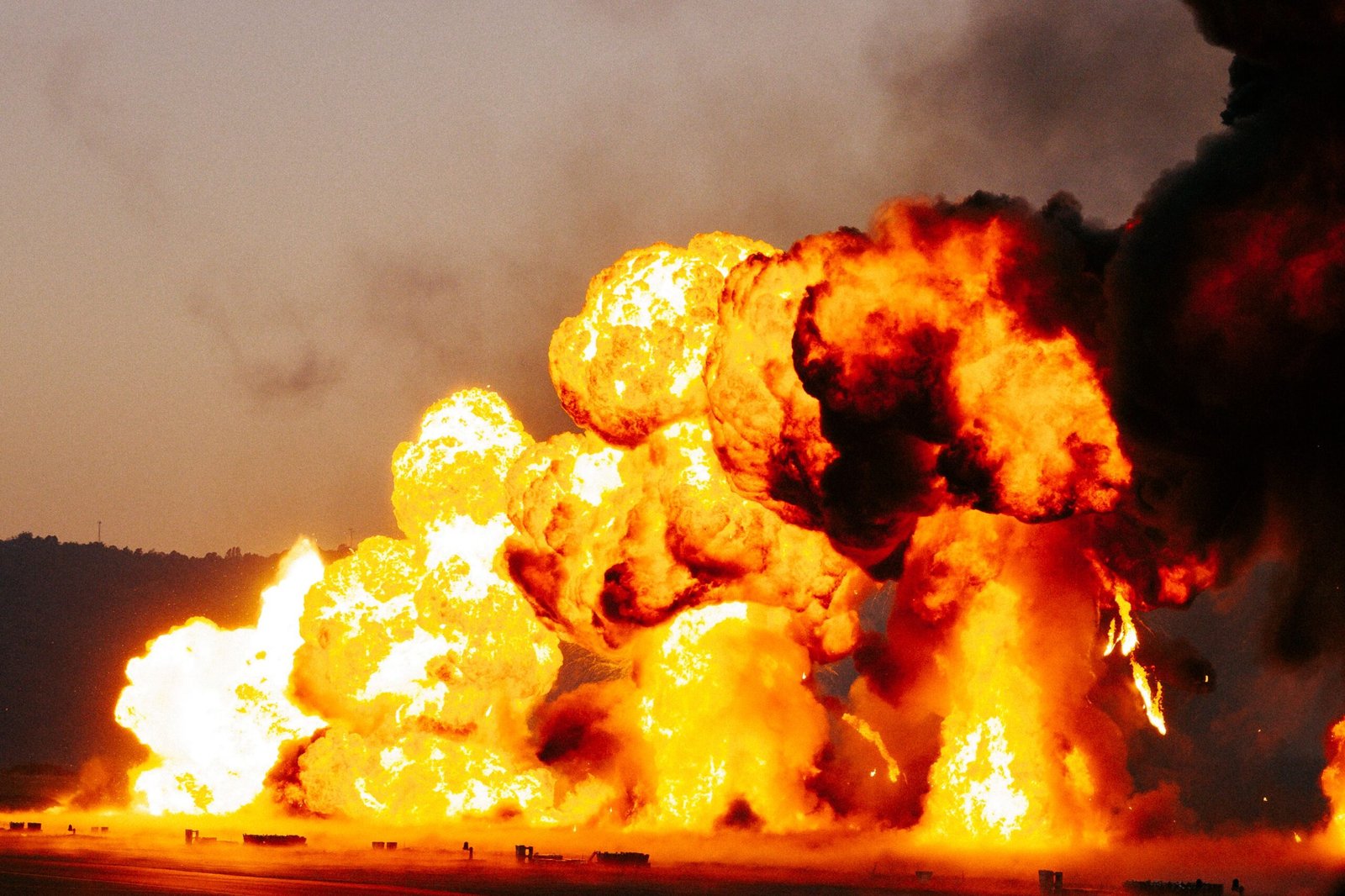
When people remember the 1990–91 Gulf War, they often remember tanks crossing the desert, U.S. fighter jets over Iraq, and the dramatic images of burning oil wells in Kuwait.
But the story was much bigger.
It was a story about a small oil-rich country being invaded by a much larger neighbor, a royal family forced to leave its country, a small army trying to resist a much larger military force, Saudi Arabia facing a new security threat at its border, and the global oil market suddenly worrying about where its next barrels would come from.
The war also demonstrated something that remains important in today’s oil market:
Having oil underground is not enough. The oil must be produced, moved through pipelines, stored, loaded onto ships and delivered safely to buyers.
That lesson from 1990–91 remains relevant whenever war threatens oil fields, pipelines, ports, tankers or major shipping routes.
What Happened on August 2, 1990?
On August 2, 1990, Iraqi forces under President Saddam Hussein invaded Kuwait.
The U.S. State Department’s historical record says roughly 100,000 Iraqi troops entered Kuwait and quickly overran the country. Iraqi Republican Guard units moved toward Kuwait City while Iraqi special forces secured important locations, including airfields, strategic islands and the palaces of Kuwait’s Emir and Crown Prince.
Kuwait’s military resisted in several locations, but the country’s forces were much smaller than Iraq’s military.
The Iraqi military had just come through the long Iran-Iraq War of 1980–1988. Kuwait, by comparison, had a much smaller military establishment.
The result was rapid.
Iraq entered Kuwait → Iraqi forces advanced toward Kuwait City → Kuwaiti defenses were overwhelmed → Iraq took control of most of the country.
What Happened to Kuwait’s Ruling Family?
At the time of the invasion, Kuwait was ruled by Emir Sheikh Jaber al-Ahmad Al-Sabah.
Members of Kuwait’s ruling family escaped to Saudi Arabia after Iraqi forces took control of the country. From Saudi Arabia, Kuwait’s leadership appealed for international support.
This was an important moment because Kuwait’s government was no longer operating normally from inside Kuwait.
The country’s leadership was outside the country while Iraqi forces controlled the territory.
In simple terms:
Kuwait’s government survived outside Kuwait, while Iraq controlled Kuwait inside Kuwait.
That created an international crisis.
Iraq Declared Kuwait Part of Iraq
The situation became even more serious on August 28, 1990.
Iraq declared Kuwait its 19th province.
The international community rejected this move.
The United Nations Security Council demanded Iraq’s immediate and unconditional withdrawal and imposed economic sanctions. The UN also declared the annexation invalid.
For the global community, this was no longer simply a border dispute.
It was an international military occupation.
Why Was Saudi Arabia Suddenly So Important?
This is where the oil story becomes much more important.
After taking Kuwait, Iraqi forces were close to Saudi Arabia’s border.
Saudi Arabia had something Iraq had just demonstrated it could threaten:
a huge and strategically important oil industry.
Saudi Arabia’s oil fields, pipelines, export terminals and shipping infrastructure were central to international petroleum supply.
The United States and Saudi Arabia therefore agreed to deploy U.S. forces in Saudi Arabia to help protect the peninsula. This buildup became known as Operation Desert Shield.
The simple security calculation was:
↓
Iraqi forces are near Saudi Arabia.
↓
Saudi Arabia worries about further military expansion.
↓
Saudi Arabia allows coalition forces to deploy on its territory.
↓
Coalition forces prepare to defend Saudi Arabia and eventually liberate Kuwait.
This is why saying that the Gulf War was simply “a war for oil” is too simplistic.
There were several interconnected issues: Iraq’s invasion and annexation of Kuwait, Kuwait’s sovereignty, Saudi security, regional military balance and the importance of Gulf oil supplies.
Why Was Oil Such a Big Issue?
Kuwait was an oil-rich country.
Iraq was also a major oil producer.
After the invasion, nearly all oil production from Iraq and Kuwait was taken offline. According to the U.S. Energy Information Administration, the combined peak production loss was about 4.3 million barrels per day.
That was a major shock for the global oil market.
Think about it like a simple household problem.
If you normally have 10 units of something every day and suddenly 4 units disappear, you immediately start asking:
“Where will the missing supply come from?”
Oil markets reacted in a similar way.
Oil Prices Jumped
The invasion created immediate fear about global oil supplies.
EIA historical data shows that the world crude oil price rose from about $16 per barrel at the end of July 1990 to more than $28 per barrel by August 24.
The important point is not just the exact price.
The bigger lesson is:
War can move oil prices even before physical supply completely disappears.
Why?
Because oil buyers, traders, refiners and companies start pricing in the possibility of future shortages.
In simple language:
War risk → supply fear → higher risk premium → higher crude prices.
Saudi Arabia Became More Important to the Oil Market
With Iraqi and Kuwaiti oil largely unavailable, Saudi Arabia became even more important.
An EIA analysis from the period noted that the global oil market was able to cope with the absence of Iraqi oil for several years largely because Saudi Arabia increased production, along with relatively weak global oil demand.
This is an important part of Saudi Arabia’s role in global energy security.
Saudi Arabia was not simply another oil producer.
Its ability to increase production gave the global market another source of supply when Iraq and Kuwait were disrupted.
That is why Saudi production capacity has historically been closely watched during major Middle East crises.
What Happened Inside Kuwait?
Iraqi occupation did not only affect Kuwait’s government and military.
Kuwait’s infrastructure was also damaged.
The U.S. State Department records that Iraqi forces looted Kuwait and destroyed infrastructure during the occupation and retreat.
And the damage became particularly dramatic in Kuwait’s oil fields.
The Kuwait Oil-Well Fires
As Iraqi forces retreated from Kuwait in 1991, large numbers of oil wells and other petroleum facilities were damaged and set on fire.
The U.S. Environmental Protection Agency reported that more than 700 oil wells, storage tanks, refineries and other facilities were damaged, with hundreds of wells ignited. Another EPA report documented 749 facilities that were either set on fire, turned into oil gushers or otherwise damaged, with 610 wells ignited in the reported assessment.
The fires created enormous black smoke plumes.
This was not just an oil-market problem.
It became an environmental emergency.
Why Were the Fires So Difficult to Stop?
An oil-well fire is very different from an ordinary fire.
A damaged oil well can continue feeding oil and gas to the surface.
So firefighters cannot simply spray water on the flames and walk away.
They have to:
- control the well,
- stop the flow,
- deal with damaged equipment,
- remove explosives and hazards,
- bring specialized firefighting equipment,
- and eventually cap the well.
The scale of the Kuwait fires made the operation extraordinarily difficult.
EPA records describe firefighting teams from the United States, Canada, Kuwait and other countries working to control the fires.
Black Smoke Covered Parts of Kuwait
The burning wells produced huge quantities of smoke and pollutants.
A 1991 EPA report documented hundreds of oil-related fires and significant smoke and pollutant emissions in Kuwait.
The environmental impact was visible from far away.
The fires became one of the defining images of the Gulf War.
But the environmental damage was only one part of the problem.
The burning wells also meant that Kuwait was losing valuable production capacity.
Oil Was Being Lost in More Than One Way
During the crisis, Kuwait faced several different oil problems.
Problem 1: Production was disrupted.
Oil fields could not operate normally.
Problem 2: Wells were damaged.
Some wells were burning, damaged or producing uncontrolled flows.
Problem 3: Storage and export infrastructure was damaged.
Even if crude could be produced, it still needed to move through the petroleum system.
Problem 4: Shipping and export routes were affected by war.
Oil ultimately needs to reach a refinery or buyer.
This is an important lesson for today’s oil market.
The Oil Supply Chain
Oil does not simply move directly from a well to a gasoline station.
A typical international oil journey looks like this:
Oil field
↓
Production
↓
Gathering system
↓
Pipeline
↓
Storage
↓
Export terminal
↓
Tanker
↓
Shipping route
↓
Refinery
↓
Gasoline, diesel, jet fuel and other products
↓
Consumer
The EIA describes petroleum as a large transportation and storage network involving pipelines, tankers, terminals, storage facilities and refineries.
That means a war can affect oil supplies even if the oil field itself is still underground and physically contains huge reserves.
This Is Why Saudi Arabia Was So Important
Saudi Arabia had something Kuwait desperately needed during the crisis:
oil production capacity that could continue supporting the international market.
Saudi Arabia also had strategic geography and infrastructure.
Its oil system was connected to pipelines, storage facilities, export terminals and tanker routes.
That made Saudi Arabia important not only as a country with large reserves but as a country capable of moving very large volumes of crude into international markets.
The Coalition Builds Up
As the crisis continued, the United States and other countries built a large multinational force in the region.
The international coalition eventually included 34 countries, according to the U.S. State Department historical record.
The mission developed from protecting Saudi Arabia into forcing Iraq to leave Kuwait.
The UN Security Council adopted resolutions demanding Iraqi withdrawal and imposing sanctions.
When Iraq refused to withdraw, the coalition moved toward military action.
Air War Begins
On January 16, 1991, the coalition began its major air campaign.
Targets included Iraqi command-and-control facilities, military installations, missile sites, power facilities, refineries and other strategic targets.
The objective was to weaken Iraq’s military capability and its ability to operate forces in Kuwait.
Saddam Hussein Also Attacked Saudi Arabia and Israel
During the conflict, Iraq launched missile attacks against Israel and coalition bases in Saudi Arabia.
Israel did not retaliate militarily, helping prevent the conflict from becoming even broader.
For Saudi Arabia, this demonstrated that the country was not merely a rear base.
Its territory and military facilities were themselves part of the conflict environment.
The Ground War
On February 24, 1991, coalition ground forces began their major ground offensive.
The ground campaign lasted about 100 hours.
Coalition forces pushed Iraqi troops out of Kuwait and drove them back toward Iraq. Kuwait City was liberated, and Iraqi forces retreated.
On February 28, 1991, President George H.W. Bush announced the end of major combat operations.
Kuwait had been liberated.
But the Oil Fires Continued
The war itself ended faster than the oil-field recovery.
The oil fires continued for months.
EPA records indicate that firefighting operations continued through much of 1991, with teams gradually bringing the fires under control.
This shows an important difference between:
ending a war
and
repairing an economy.
A military campaign can end in days.
Repairing oil fields, pipelines, storage tanks, refineries and export facilities can take months or years.
Kuwait’s Oil Production Eventually Recovered
Despite the enormous damage, Kuwait’s oil industry recovered.
The EIA reports that, despite significant field damage, Kuwait’s average annual oil production exceeded its pre-disruption level in less than four years.
That recovery was important for Kuwait’s economy and for the global oil market.
It also demonstrated the resilience of a modern petroleum industry.
What Did the Gulf War Teach the Oil Market?
The most important lesson is simple:
Oil security is not only about oil reserves.
It is about the entire system.
A country can have millions or billions of barrels underground.
But if:
- wells are damaged,
- pipelines are destroyed,
- ports are closed,
- storage tanks are damaged,
- tankers cannot operate,
- shipping routes become dangerous,
- or buyers cannot receive cargoes,
then that oil may not be available to the market when it is needed.
This is why the Gulf War remains important to understanding today’s oil market.
The 1990–91 Oil Chain in One Table
| Event | What It Meant for Oil |
|---|---|
| Iraq invaded Kuwait | Major geopolitical shock |
| Kuwait’s oil production disrupted | Global supply fell |
| Iraqi oil also became unavailable | Supply loss became larger |
| About 4.3 million bpd combined production lost at peak | Major market disruption |
| Oil prices rose sharply | Buyers priced in shortage risk |
| Saudi Arabia increased production | Helped compensate for missing Iraqi supply |
| Kuwait oil infrastructure was damaged | Recovery became more difficult |
| Hundreds of wells caught fire | Production and environment suffered |
| Oil smoke spread across the region | Major environmental crisis |
| Coalition protected Saudi Arabia | Saudi oil infrastructure remained strategically important |
| Kuwait was liberated | Oil recovery could begin |
| Firefighting and reconstruction continued | Energy recovery took much longer than the military campaign |
What Does This Have to Do With Today’s Oil Market?
The Gulf War happened more than three decades ago.
But the basic oil-market problem has not disappeared.
Modern oil markets still depend on:
fields + pipelines + storage + terminals + tankers + shipping routes + refineries.
When a major conflict threatens one part of that chain, traders immediately begin asking:
How much oil is actually available?
How much can producers replace?
Can tankers move safely?
Are pipelines operating?
Can refineries receive crude?
How much extra transportation cost will buyers face?
Those questions can influence oil prices before physical shortages become obvious to consumers.
The Saudi Arabia Connection
The history also explains why Saudi Arabia has such a central role in global oil security.
Saudi Arabia is not important only because it has enormous oil resources.
It has built a large system around those resources:
Oil fields → pipelines → storage → export terminals → tankers → international customers.
That system has evolved for decades.
The story began with Saudi Arabia’s early oil exports and grew into a modern network involving pipelines, ports and very large crude carriers.
The Gulf War showed why protecting that network matters.
The Simple Lesson for an American Consumer
An American driver does not need to know what happens inside a Kuwaiti oil field to feel the effects of a Middle East oil shock.
The chain can eventually reach:
↓
↓
↓
Trucking
↓
Airlines
↓
Shipping
↓
Manufacturing
↓
Food transportation
↓
Consumer prices
That does not mean every Middle East conflict automatically causes the same economic outcome.
The size and duration of the disruption matter.
So do inventories, spare production capacity, alternative supply, refinery capacity and shipping costs.
But the Gulf War demonstrated clearly that geopolitical events can produce major oil-market consequences.
Why This History Matters in 2026
The biggest lesson from 1990–91 is not simply that Kuwait’s oil wells burned.
The deeper lesson is that oil infrastructure can become a strategic part of a conflict.
In 1990–91, the major questions included:
Can Kuwait’s oil production continue?
Can Saudi Arabia remain secure?
Can the global market replace Iraqi and Kuwaiti barrels?
Can tankers and terminals continue operating?
Today, similar questions can appear whenever conflict threatens major oil-producing regions, pipelines or maritime chokepoints.
The technology is different.
The ships are larger.
The pipelines are more sophisticated.
The global market is more interconnected.
But the basic question remains the same:
Can crude oil safely travel from the producer to the consumer?
From Kuwait’s Oil Fires to Modern Supertankers
There is another connection worth understanding.
Saudi Arabia’s oil story began with the development of its early oil fields and export infrastructure.
Over decades, that system grew from relatively small early shipments into a massive international crude-export network.
Modern VLCCs can carry millions of barrels of crude in a single voyage.
That is a dramatic change from the early days of Saudi oil exports.
But the underlying principle is unchanged:
Produce the oil.
Move the oil.
Protect the route.
Deliver the oil.
The Gulf War demonstrated what happens when one or more parts of that chain are attacked.
Final Analysis
The 1990 invasion of Kuwait was not simply a military event.
It became a global energy crisis.
Iraq invaded Kuwait on August 2, 1990. Kuwait’s military was quickly overwhelmed, members of the ruling family escaped to Saudi Arabia, and Iraq declared Kuwait part of Iraq.
Saudi Arabia then faced a direct security concern because Iraqi forces were near its border.
The United States and other countries deployed forces to Saudi Arabia, first to help protect the peninsula and later to participate in the liberation of Kuwait.
At the same time, the loss of Iraqi and Kuwaiti oil production shocked global markets.
Oil prices rose sharply.
Then came another disaster.
As Iraqi forces retreated, hundreds of Kuwaiti oil wells and petroleum facilities were damaged or set on fire. Massive smoke clouds covered parts of the region, and international firefighting teams spent months controlling the fires.
Kuwait eventually rebuilt its oil industry and restored production.
The biggest lesson is simple:
Oil security is transportation security.
A country can have enormous oil reserves, but the oil has to move through a working system of wells, pipelines, storage facilities, export terminals, tankers, shipping routes and refineries.
That is why the story of Kuwait in 1990–91 remains important for understanding Saudi Arabia, global oil markets and energy security today.
The history can be reduced to one simple sentence:
The world does not only need oil underground; it needs oil to move safely from the oil field to the customer.
And that is the connection between the Gulf War of 1990–91 and the modern global oil market.
From oil wells to pipelines.
From pipelines to ports.
From ports to tankers.
From tankers to refineries.
And from refineries to consumers.
Every step matters.
Sources
- U.S. State Department — The Gulf War
https://history.state.gov/milestones/1989-1992/gulf-war - U.S. Energy Information Administration — Effects of Crude Oil Supply Disruptions
https://www.eia.gov/todayinenergy/detail.php?id=730 - U.S. State Department — The First Gulf War
https://history.state.gov/departmenthistory/short-history/firstgulf - U.S. State Department — Kuwait History
https://history.state.gov/countries/kuwait - U.S. Department of Defense — Gulf War Chronology
Gulf War Chronology PDF - U.S. Government Publishing Office — Gulf War History
Gulf War Historical Report - U.S. EIA — Oil and Petroleum Products Prices
https://www.eia.gov/energyexplained/oil-and-petroleum-products/prices-and-outlook.php - U.S. EIA — Oil History Timeline
https://www.eia.gov/kids/history-of-energy/timelines/oil-petroleum.php - United Nations Security Council
https://www.un.org/securitycouncil/ - U.S. Department of Defense — GulfLink
https://gulflink.osd.mil/
