
Japan and India Deepen Defense Partnership: Japanese Troops to Get Live-Fire Training Access at Indian Military Ranges
TOKYO, November 21, 2026 — Japan and India have agreed to significantly expand their defense and military cooperation, opening a new chapter in their strategic partnership as both countries seek to strengthen security ties across the Indo-Pacific region.
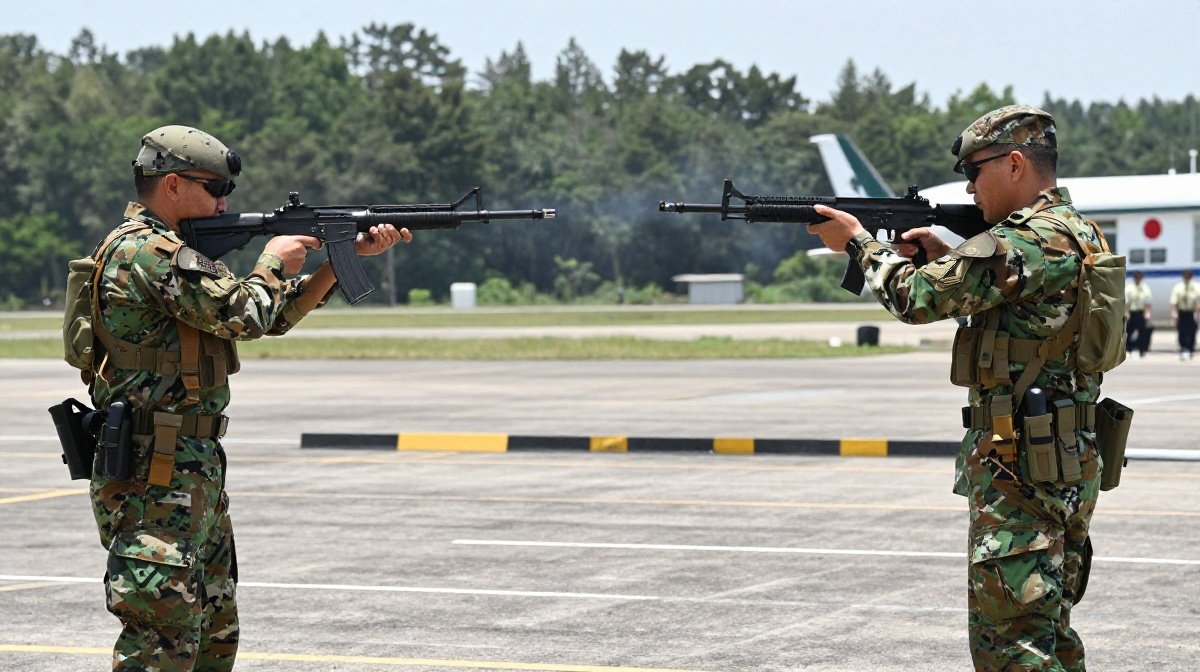
One of the most important developments is an agreement to move forward with arrangements allowing Japan’s Self-Defense Forces to conduct live-fire training at military firing ranges in India. The proposed training will include exercises involving surface-to-ship missiles, marking a new area of practical military cooperation between the two countries.
The development follows high-level discussions in Tokyo on November 19, involving India’s Defence Minister Rajnath Singh, External Affairs Minister S. Jaishankar, Japan’s Defence Minister Shinjiro Koizumi and Foreign Minister Toshimitsu Motegi.
The discussions took place during the fourth India-Japan 2+2 Foreign and Defence Ministerial Meeting, which brought together the diplomatic and defense leadership of both countries.
India Opens a New Opportunity for Japanese Military Training
Under a newly signed Letter of Intent (LOI), India and Japan will work toward allowing Japanese Self-Defense Forces to use selected Indian firing ranges for live-fire training.
For Japan, the arrangement could provide access to additional training facilities outside its own territory. Japan faces geographical limitations when conducting certain military exercises, particularly those involving advanced missile systems.
The proposed arrangement is therefore an important development for Japan’s military training capabilities.
The two governments have agreed to accelerate coordination between their defense authorities to move toward implementation.
However, the Letter of Intent represents a framework for further cooperation and coordination. It should not be interpreted as evidence that all operational arrangements or training schedules have already been finalized.
Defense Industry Cooperation Gets Fresh Momentum
Beyond military exercises, India and Japan are also looking to strengthen cooperation in defense manufacturing, equipment development and advanced military technology.
The two countries are advancing discussions on Japan’s UNICORN naval communication antenna system, which could be transferred to India following the completion of the required arrangements and Indian approval processes.
The project reflects a broader industrial vision described by the two sides as “Design with Japan, Make in India.”
This approach could create opportunities for Japanese technology companies and Indian defense manufacturers to work together on advanced equipment, production and technical development.
Both governments also confirmed plans to strengthen research and development cooperation between India’s Defence Research and Development Organisation (DRDO) and Japan’s Acquisition, Technology and Logistics Agency (ATLA).
The proposed collaboration will focus on advanced missile and defense technologies.
Maritime Security Becomes a Major Priority
Maritime security is another important area of the expanding partnership.
India and Japan have agreed to deepen cooperation between the Indian Navy and Japan Maritime Self-Defense Force, including information sharing, maritime awareness, search and rescue operations and mine-countermeasure capabilities.
The two sides are also exploring opportunities for joint development in naval shipbuilding and design.
Such cooperation could strengthen the industrial relationship between the countries while supporting their respective maritime security requirements.
The ministers also welcomed the progress made through recent military exercises, including Malabar 2026, involving India, Japan, the United States and Australia, and the Japan-India Maritime Exercise JAIMEX 26.
Both governments expressed support for more advanced joint exercises and increased cooperation between their special operations forces.
Indo-Pacific Security Remains at the Centre
The growing defense partnership comes at a time when the Indo-Pacific region is facing significant strategic and security challenges.
China’s expanding military capabilities, tensions in the East China Sea and South China Sea, and concerns surrounding regional maritime routes have increased the importance of security cooperation among regional powers.
India and Japan are both members of the Quad, alongside the United States and Australia.
Although the bilateral defense arrangements are separate from the Quad framework, closer military coordination between New Delhi and Tokyo could contribute to broader regional cooperation.
Both governments have emphasized the importance of maintaining peace, stability and a free and open Indo-Pacific.
What This Means for India and Japan
For India, stronger defense cooperation with Japan offers opportunities to access advanced technologies, expand defense research partnerships and strengthen domestic manufacturing capabilities.
For Japan, cooperation with India provides access to additional military training opportunities and a partner with significant defense infrastructure and industrial capabilities.
The relationship is also moving beyond traditional diplomatic engagement toward more practical cooperation involving military exercises, technology development, naval security and defense manufacturing.
What Happens Next?
The next phase will focus on implementing the commitments made during the November 19 meetings.
Key priorities include advancing arrangements for Japanese forces to use Indian firing ranges, completing discussions concerning the UNICORN naval antenna project, expanding DRDO-ATLA research cooperation and strengthening maritime security coordination.
India and Japan have also expressed interest in developing more complex military exercises and improving cooperation between their respective armed forces.
The Bigger Picture
The latest developments show how India-Japan relations are evolving into a broader strategic and industrial partnership.
The proposed live-fire training arrangement is particularly significant because it introduces a new practical dimension to their defense relationship.
As both countries continue to develop their military capabilities and defense industries, their cooperation could become an increasingly important element of the Indo-Pacific security environment.
