
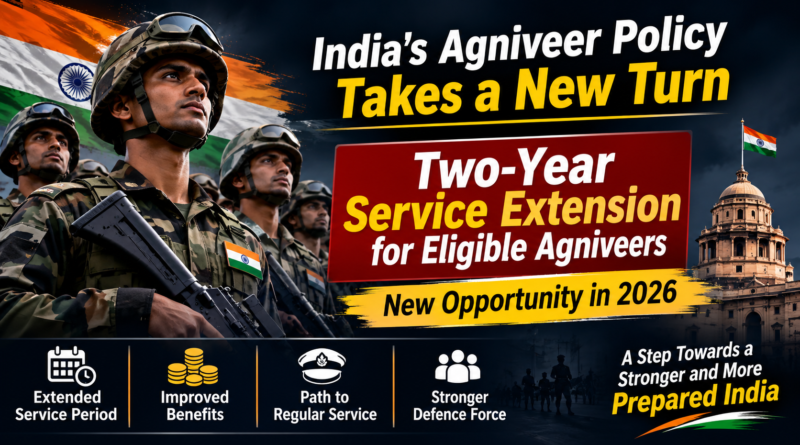
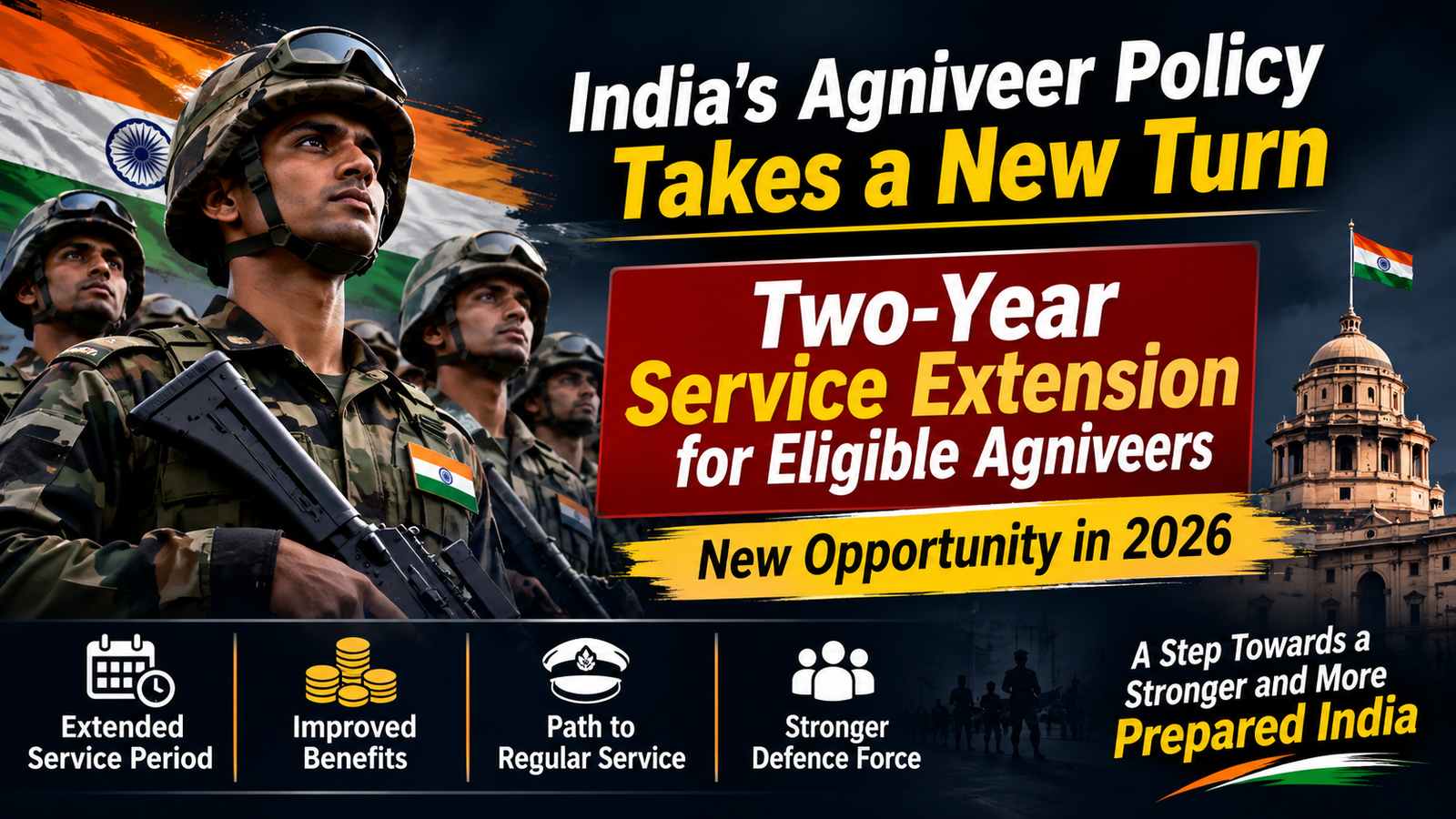
Centre Approves Two-Year Service Extension for Agniveers: A Major Change in India’s Military Recruitment Policy
India News | Defence | National Security
Publication Date: November 5, 2026
Last Updated: November 5, 2026
Author: NewYorkFinanceThink Editorial Team
The Union Cabinet’s decision to introduce an additional two-year service opportunity for Agniveers who are not initially selected for regular military service marks an important development in India’s defence recruitment policy. The decision could change the career prospects of thousands of young Indians who joined the Armed Forces under the Agnipath scheme with the ambition of serving the country. Under the revised arrangement, eligible and willing Agniveers who are not absorbed during the initial selection process will have an opportunity to continue their military service for another two years, subject to the prescribed conditions and selection requirements. The move comes at a significant time for the programme, as the first generation of Agniveers approaches the completion of its original four-year engagement period.
The Agnipath scheme, introduced in June 2022, brought a major change to the traditional recruitment structure of the Indian Army, Navy and Air Force. Under the original framework, young men and women were recruited as Agniveers for four years, during which they received military training, professional experience and a structured salary package. At the end of the engagement period, up to 25 per cent of each batch could be selected for regular military service based on merit and organisational requirements. The remaining 75 per cent were expected to return to civilian life with their Seva Nidhi package and the experience gained during their military service.
Although the scheme was introduced with the objective of creating a younger, more adaptable and technologically capable military workforce, its four-year service structure generated considerable public discussion. Many young candidates and their families questioned what would happen to those who were not selected for permanent military service. For many applicants, joining the Armed Forces is not simply about obtaining employment. It is a long-term ambition involving years of preparation, physical training, personal sacrifice and family expectations. The possibility of leaving military service after only four years created uncertainty about long-term career security.
The latest decision introduces an additional opportunity into this arrangement. Instead of leaving the Armed Forces immediately after completing the original four-year tenure, eligible Agniveers who are not initially selected for regular enrolment may receive another two years of service. This could increase their total engagement period to six years before the subsequent regular enrolment assessment. The change gives personnel additional time to gain military experience, improve their professional capabilities and prepare for future selection opportunities.
One of the most important aspects of the revised policy is that it creates another opportunity for Agniveers to pursue a regular military career. Under the earlier structure, the initial selection of up to 25 per cent was the principal route towards continued regular service. The revised arrangement provides an additional pathway for those who were not selected during that first assessment. However, the extension should not be interpreted as an automatic guarantee of permanent employment. Personnel will need to meet the applicable eligibility conditions and selection standards, and the final decision will depend on the requirements of the Armed Forces.
From the perspective of young recruits, two additional years can make a considerable difference. Military experience develops more than physical strength and discipline. It also builds teamwork, responsibility, technical knowledge, leadership qualities and the ability to perform under difficult circumstances. These capabilities can be valuable in both military and civilian careers. Additional service could also give personnel more time to improve their financial position and make informed decisions about their professional future.
The financial provisions announced alongside the revised arrangement are another important consideration. The government has indicated improved remuneration, an enhanced Seva Nidhi package and seniority-related benefits for the additional engagement period. These measures are intended to improve the overall service experience and provide better financial recognition to personnel who continue beyond their original tenure. For families that depend on the income of young service members, improved compensation could provide meaningful support. However, the precise financial implications will depend on the detailed implementation of the revised service conditions.
The decision also has implications for the Indian Armed Forces. Modern military operations increasingly depend on technical expertise, advanced equipment, communication systems, surveillance capabilities and personnel who understand complex operational procedures. Training a soldier requires time, resources and institutional investment. Retaining trained individuals for an additional two years could help the services preserve valuable experience and reduce the loss of personnel who have already developed familiarity with military systems and responsibilities.
India’s security environment also makes the quality of military manpower particularly important. The country must maintain preparedness across its land borders, maritime areas and emerging technological domains. Military modernisation requires not only advanced weapons and equipment but also trained personnel capable of operating and maintaining those systems effectively. A longer engagement period could provide more continuity in the development of military skills and operational experience.
At the same time, the government must ensure that the revised arrangement does not create uncertainty about future career progression. Agniveers need clear information about the selection process, performance requirements, medical standards, salary structure and conditions governing their additional service. Transparent procedures will be essential to maintaining confidence in the recruitment system. Young people entering the Armed Forces should understand the opportunities available to them and the conditions attached to each stage of their service.
The employment question will also remain important for those who eventually leave military service. Even with an additional two years, not every Agniveer will necessarily enter regular military service. Some may choose civilian careers, while others may not meet the requirements for further enrolment. Their military experience should therefore be recognised by government departments, state administrations and private employers. Skills developed during military service, including discipline, teamwork, technical training and leadership, can be valuable across several industries.
The revised policy also provides an opportunity to strengthen the relationship between military recruitment and India’s wider employment system. The country has a large young population, and government employment continues to attract strong interest. Defence service carries particular respect because it combines professional responsibility with national service. Any major reform in this area must therefore consider not only the operational needs of the military but also the expectations of the individuals who dedicate important years of their lives to serving the country.
For the first batches of Agniveers approaching the end of their four-year tenure, the announcement could have immediate importance. It gives eligible personnel another opportunity to remain in uniform rather than moving directly into civilian life. For future batches, it establishes a potentially longer service pathway and may influence how candidates evaluate the Agnipath programme before applying.
However, the success of the decision will depend on implementation rather than the announcement alone. The government and the Armed Forces will need to establish clear procedures, communicate the revised benefits and ensure that selection decisions are fair and understandable. The additional service period should provide meaningful professional development rather than simply extending the duration of uncertainty for young recruits.
The broader significance of this decision is that it reflects an adjustment in India’s approach to military recruitment. The original Agnipath framework was designed to create a younger workforce and improve the long-term structure of the Armed Forces. The experience of its first four years has highlighted the importance of balancing these institutional objectives with the career expectations of young personnel. The new arrangement attempts to address some of those concerns while preserving the larger objective of military modernisation.
Ultimately, the two-year extension could become an important opportunity for Agniveers, but its real value will be determined by the opportunities it creates. Better remuneration, transparent selection, meaningful training and credible pathways towards regular service will be essential. Those who do not enter permanent military service must also receive effective support in transitioning to civilian employment.
India’s defence strength depends on more than modern weapons, military infrastructure and strategic planning. It also depends on the confidence, training and professional commitment of the people who serve in uniform. The revised Agniveer arrangement provides an opportunity to strengthen that foundation. If implemented effectively, it could improve career prospects for young recruits while helping the Armed Forces retain trained and experienced personnel.
The government’s decision is therefore more than an extension of service tenure. It is an important policy adjustment that will influence the future of defence recruitment, military manpower planning and the professional expectations of a new generation of Indian soldiers. The coming years will determine whether this change delivers lasting benefits for both the Armed Forces and the young Indians who choose to serve their country.
Editorial conclusion: The two-year extension offers Agniveers additional time, improved service benefits and another opportunity to pursue regular military enrolment. Its long-term success will depend on transparent selection, effective implementation and meaningful career opportunities for every individual completing military service.
About the Author – NewYorkFinanceThink Editorial Team
This report has been prepared by the NewYorkFinanceThink Editorial Team, covering India’s national affairs, defence policy, military developments and international security. Our editorial approach focuses on independent analysis, factual reporting and a deeper understanding of policy decisions affecting citizens and the nation. NewYorkFinanceThink.com aims to provide readers with informative, responsible and accessible journalism on important developments in India and around the world.
