

WTI Crude Oil Near $101.25 as Oil Prices Fall About 2%
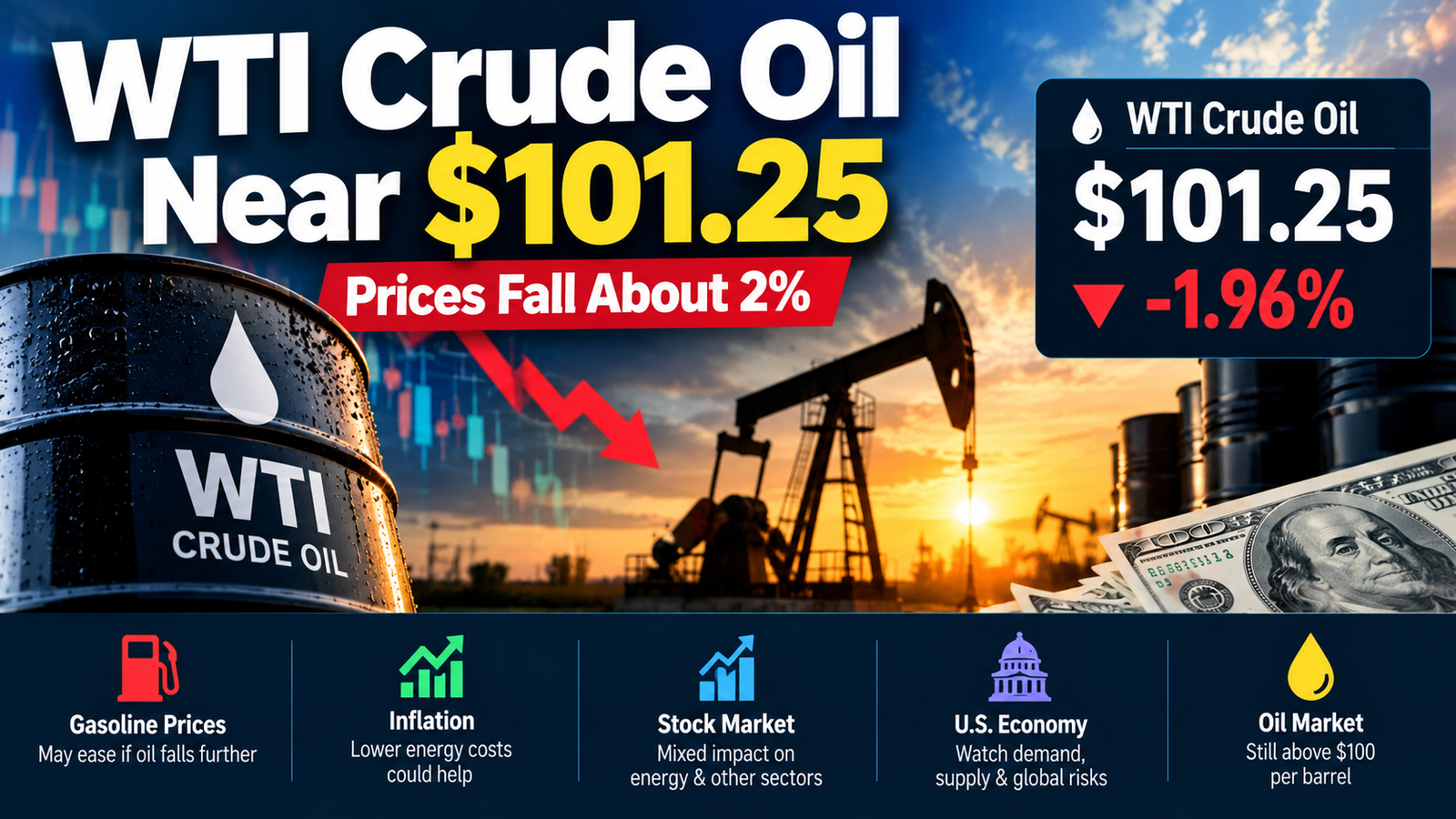
WTI crude oil came under pressure as prices moved down toward $101.25 a barrel, with the benchmark falling nearly 2% in the latest trading session.
The move puts oil prices back in focus for investors who are watching inflation, consumer costs and the outlook for the U.S. economy. WTI, or West Texas Intermediate, is one of the most closely followed U.S. crude oil benchmarks.
Market data showed WTI futures around $101.25, down approximately 1.96% in the latest session.
Why the Oil Price Move Matters
A move of around 2% in crude oil may look small compared with some of the larger swings seen in energy markets, but oil prices can have a wider impact on the economy.
When crude becomes more expensive, businesses that rely heavily on fuel and transportation can face higher costs. Airlines, shipping companies, manufacturers and trucking businesses can all feel the pressure.
Consumers can also notice the effect through gasoline and other energy-related expenses.
When oil prices move lower, some of that pressure can ease. However, the effect on consumers is not immediate because retail fuel prices also depend on refining costs, taxes, transportation and local market conditions.
WTI Remains Above $100
Even after the latest decline, WTI remains around the psychologically important $100-a-barrel level.
Recent trading has been volatile. WTI rose strongly earlier in October before pulling back, with market data showing prices moving from below $100 to above $103 in recent sessions.
That tells investors that the oil market is still sensitive to changes in supply expectations and geopolitical developments.
For markets, the important question is whether the latest decline is simply a short-term pullback or the beginning of a broader cooling trend.
Geopolitical Risks Remain Important
Oil prices continue to respond quickly to developments in the Middle East.
Reuters reported on October 27 that investors were weighing diplomatic efforts to reduce tensions against renewed security risks, including attacks affecting Saudi Arabia and concerns around shipping near the Strait of Hormuz. U.S. WTI was trading around $102.16 during the morning session in that report.
The Strait of Hormuz is particularly important because a disruption to shipping through the region can create concerns about global oil supplies.
Even when actual supply losses are limited, the possibility of disruption can push traders to price in a larger risk premium.
What Lower Oil Prices Could Mean for Inflation
Oil is closely watched by economists because energy prices can influence headline inflation.
A sustained decline in crude prices can reduce some energy costs and eventually ease pressure on consumers and businesses.
That could be helpful for the Federal Reserve if inflation is moving closer to its target.
But one daily move is not enough to change the broader inflation outlook.
For investors, the trend over several weeks or months is much more important than one trading session.
What It Means for U.S. Consumers
Drivers may eventually benefit if lower crude prices translate into cheaper gasoline.
However, there is normally a delay between movements in crude oil futures and changes at the pump.
Retail gasoline prices also depend on refinery margins, seasonal fuel demand, taxes and distribution costs.
So a 2% decline in WTI does not necessarily mean Americans will immediately see a similar decline in gasoline prices.
Oil and the Stock Market
Crude oil prices can affect different parts of the stock market in very different ways.
Energy producers generally benefit from higher oil prices because their potential revenue can increase.
On the other hand, companies with high fuel costs can face margin pressure when crude rises.
A decline toward $101.25 can therefore create both winners and losers across the market.
For broader stock indexes, the impact depends on what is driving the oil move.
If oil falls because supply concerns are easing, investors may view the decline positively.
If oil falls because traders are becoming worried about economic growth, the market reaction can be much more complicated.
Oil and Treasury Yields
The relationship between crude oil and Treasury yields is another factor worth watching.
Higher oil prices can increase inflation expectations, which may put pressure on longer-term Treasury yields.
Lower oil prices can have the opposite effect if investors believe weaker energy costs will help bring inflation down.
This becomes especially important when the 10-Year Treasury yield is already near 5%.
Investors are therefore watching both markets together rather than treating oil as an isolated commodity.
What Could Happen Next?
The next direction for WTI will likely depend on a combination of supply, demand and geopolitical developments.
If diplomatic efforts reduce concerns about supply disruptions, oil prices could remain under pressure.
However, renewed attacks, shipping disruptions or additional restrictions on regional oil flows could quickly change the picture.
Demand is another important factor.
If the U.S. and global economy remain strong, fuel demand could support crude prices.
If economic growth slows significantly, weaker demand could put additional pressure on oil.
The $100 Level Is Still Important
The $100 level has become an important psychological reference point for traders.
WTI remaining above $100 keeps energy prices elevated compared with much of the recent period.
A sustained move below $100 could attract additional attention from investors looking for signs that the oil market is cooling.
Conversely, a move back above recent highs could signal that supply concerns are returning.
For now, traders appear to be balancing these competing forces.
Bottom Line
WTI crude oil is trading near $101.25 a barrel after falling roughly 2%, keeping the energy market firmly on investors’ radar.
The decline could provide some relief for inflation and energy costs if it continues, but geopolitical risks remain capable of quickly pushing prices higher.
For U.S. investors, the key areas to watch are crude oil, inflation expectations, Treasury yields, gasoline prices and the broader economic outlook.
The next few trading sessions should help show whether the latest decline is simply a pullback or the start of a larger move in the oil market.
