
Iran Claims Four Oil Tankers Destroyed Near Strait of Hormuz: What Is Confirmed and What It Means for Global Shipping
Date: November 4, 2026
related topics : World News | Energy Markets | International Trade
Focus topics : Strait of Hormuz oil shipping
Iran Claims Four Tankers Destroyed as Maritime Security Concerns Grow
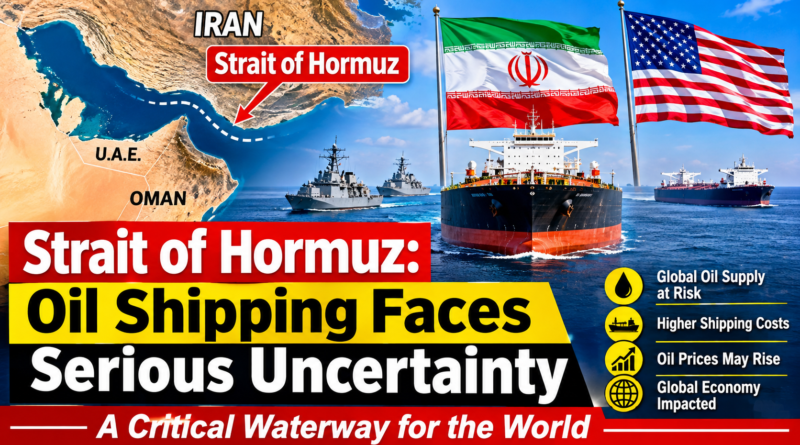
International shipping is facing renewed uncertainty after Iran’s Islamic Revolutionary Guard Corps (IRGC) claimed that four oil tankers were destroyed by naval mines while attempting to cross a restricted passage south of the Strait of Hormuz.
The statement, reported by Iranian state media on November 4, said the vessels caught fire after striking mines. Iranian forces also claimed that two additional vessels had been detained for violating maritime restrictions.
However, the most important detail is that the reported destruction of the four tankers has not been independently confirmed. The Iranian statement did not identify the ships, their flags, owners or crews. Independent maritime confirmation of the alleged mine incidents was not available in the reporting reviewed for this article.
The claims come at a particularly sensitive time for the global energy industry. The Strait of Hormuz is a major route for international oil shipments, and uncertainty over access to the waterway can affect shipping decisions, energy prices and business confidence.
For oil-importing countries, including India, China, Japan and several European economies, the situation deserves close attention.
What Happened Near the Strait of Hormuz?
According to Reuters, Iran’s Revolutionary Guard said four oil tankers had been destroyed after hitting naval mines while attempting to use a route that Iranian authorities described as prohibited.
The IRGC also claimed that two other vessels had been seized or detained.
The announcement did not provide enough information to independently identify the vessels or establish exactly where the alleged incidents occurred.
This leaves several important questions unanswered:
- Which vessels were allegedly involved?
- What countries were their ships registered in?
- Were any crew members injured or killed?
- Were the tankers carrying crude oil or refined petroleum products?
- Have international maritime authorities confirmed the reported mine incidents?
Until more evidence becomes available, the four-tanker destruction claim must remain attributed to Iran’s Revolutionary Guard rather than presented as an independently established event.
A Separate Tanker Attack Near Oman Was Reported
There is another maritime incident that should not be confused with Iran’s claim.
The United Kingdom Maritime Trade Operations (UKMTO) reported that a tanker was struck by two unidentified projectiles on November 3, approximately 14 nautical miles northeast of Limah, Oman.
According to the maritime security reporting, the projectiles struck the vessel’s engine room. No casualties or environmental impact were reported in the initial advisory.
Shipping reports identified the vessel as the Barbados-flagged tanker Grit.
The identity of those responsible for the projectile attack has not been independently established.
This incident is important because it represents a separately reported threat to commercial shipping in the same wider maritime region. It does not prove that the four tankers mentioned in Iran’s statement were destroyed by mines.
Why the Strait of Hormuz Matters to the World
The Strait of Hormuz connects the Persian Gulf with the Gulf of Oman and the Arabian Sea. It is one of the world’s most strategically important maritime passages.
Large volumes of crude oil, petroleum products and liquefied natural gas move through the region.
For oil-producing countries around the Persian Gulf, the waterway is an essential export route. For importing nations, it is an important link in the energy supply chain.
A prolonged disruption could affect several areas of the global economy.
1. Global Oil Supply
Oil markets depend on the movement of physical supplies, not simply production figures.
Even when oil-producing countries continue pumping crude, transportation problems can prevent those supplies from reaching customers on time.
If shipping through the Strait of Hormuz becomes more difficult, traders may reassess the amount of oil available to international buyers.
That uncertainty can influence crude oil prices before a confirmed supply shortage develops.
2. Shipping Costs and Insurance
Commercial shipping companies consider several factors when deciding whether to enter a high-risk maritime area.
These include:
- Security threats to vessels and crews.
- Availability of safe navigation routes.
- War-risk insurance premiums.
- Port access and possible delays.
- The cost of alternative routes.
If insurers classify the region as increasingly dangerous, shipping costs could rise.
Those additional expenses may eventually be passed through supply chains to energy companies, manufacturers and consumers.
3. Energy Prices and Inflation
Higher oil transportation costs can affect the wider economy.
Oil is an important input for transportation, manufacturing, agriculture and several industrial activities.
When crude oil prices and freight costs rise together, businesses may face additional operating expenses.
Depending on how long the disruption lasts, some of those costs could reach consumers through higher prices for fuel, transportation and goods.
However, a reported security threat does not automatically translate into a lasting increase in oil prices. Markets also respond to production levels, inventories, demand, alternative routes and diplomatic developments.
Why India Is Closely Watching the Situation
India is one of the world’s major energy-importing economies. Its dependence on international crude oil supplies makes maritime security in the Persian Gulf particularly important.
A serious disruption around the Strait of Hormuz could create several challenges for India.
Crude oil imports: Indian refiners need reliable access to international oil supplies. Shipping delays can complicate procurement and delivery schedules.
Petroleum prices: Higher international crude prices can put pressure on domestic fuel costs, depending on currency movements, taxes and government pricing decisions.
Trade and transportation: Increased shipping costs can affect a wide range of imported goods.
Inflation: A prolonged increase in energy and transportation expenses can add pressure to household budgets and business costs.
India also has a broader interest in protecting the safety of Indian seafarers and maintaining freedom of navigation through international waters.
The impact on India would depend on the duration and scale of any actual disruption, not simply on the existence of an unverified claim.
Could Oil Prices Rise Further?
The Strait of Hormuz is important enough that security developments can influence oil-market expectations.
But traders generally need to distinguish between three different situations.
First: A security warning. A threat or military announcement can increase market uncertainty without stopping the movement of oil.
Second: A shipping disruption. Vessels may delay transit, change routes or face higher insurance and freight costs. This can create pressure on physical oil markets.
Third: A confirmed supply interruption. If a significant volume of oil cannot reach international buyers, the impact on supply and prices could become more substantial.
The latest Iranian statement should not automatically be treated as proof of a major supply interruption.
Investors should follow independently confirmed vessel incidents, shipping advisories, oil export data and actual tanker movements before drawing conclusions.
The United States and Iran: Why Diplomacy Matters
The maritime developments are taking place against the background of continuing tensions between Iran and the United States.
Reuters has reported that the two countries remain far apart on the conditions required to reach an agreement. Qatar has continued to play a mediation role, while disagreements remain over sanctions, maritime access, the US naval blockade and other security issues.
President Donald Trump has indicated that further military action remains possible, while diplomatic discussions have not been abandoned.
The Strait of Hormuz has consequently become more than a shipping issue. It is also part of the wider negotiations over regional security and the future relationship between Washington and Tehran.
A diplomatic agreement could help reduce uncertainty for commercial shipping. A renewed military confrontation could create further risks for vessels, crews and energy infrastructure.
What Happens If Shipping Companies Avoid the Strait?
If commercial operators consider the waterway too dangerous, they may delay voyages or explore alternative arrangements where available.
However, there is no simple substitute for the Strait of Hormuz.
Alternative pipelines and export routes can move some oil around the region, but their capacity and availability are limited compared with the full volume of seaborne trade normally passing through the strait.
Longer routes can also mean additional fuel consumption, crew costs, insurance expenses and delivery time.
For international buyers, the central concern is not only the price of crude oil. It is whether supplies can reach refineries and customers reliably.
What Should Investors Watch?
The latest developments require careful monitoring by investors, energy companies and financial analysts.
The following indicators may provide a clearer picture of the situation:
- Brent crude oil: Changes in international benchmark prices.
- WTI crude oil: The response of the US oil market to supply concerns.
- Tanker movements: Whether commercial vessels continue transiting the Strait of Hormuz.
- UKMTO advisories: Official maritime security warnings and incident reports.
- Oil insurance costs: Changes in war-risk premiums for vessels operating in the region.
- Saudi and UAE export activity: Whether alternative export routes are being used more heavily.
- US–Iran negotiations: Any progress towards an agreement on maritime security and sanctions.
Investors should avoid treating every military statement as a confirmed change in physical oil supply.
Three Possible Outcomes for Global Shipping
The future remains uncertain. Three broad scenarios deserve attention.
Scenario One: The Claims Remain Unconfirmed and Shipping Continues
Further investigations may fail to establish that the four tankers were destroyed. Commercial shipping may continue, although operators could maintain additional security precautions.
In this situation, market attention could gradually return to oil production, inventories and broader economic demand.
Scenario Two: Shipping Risks Increase
Additional confirmed attacks or restrictions could lead companies to delay voyages, reassess routes and pay higher insurance premiums.
Even without a complete closure of the Strait of Hormuz, increased uncertainty could affect transportation costs and energy-market sentiment.
Scenario Three: A Wider Regional Escalation
If military confrontation expands, commercial shipping could face more serious restrictions and security threats.
The economic consequences could extend to crude oil prices, inflation, international trade and financial markets.
These scenarios are analytical possibilities, not predictions of what will happen.
The Bigger Picture: A Shipping Story With Global Economic Consequences
The latest developments around the Strait of Hormuz demonstrate how quickly regional security concerns can become international economic issues.
The Iranian Revolutionary Guard has claimed that four tankers were destroyed by naval mines, but the claim has not been independently verified. A separate tanker incident involving unidentified projectiles near Oman was reported by maritime authorities.
These events should be reported separately because the distinction between a confirmed incident and an unverified military claim matters for readers, businesses and investors.
For the global energy industry, the most important question is whether commercial shipping can continue operating safely and reliably through the region.
For governments, the priority is protecting civilian crews and maintaining freedom of navigation.
For investors, the next important signals will come from verified maritime incidents, oil supply data and diplomatic developments.
The Strait of Hormuz remains a critical route for the global energy system. Its security will continue to matter to oil markets, international trade and the economic outlook of countries around the world.
Editorial Disclaimer
This report distinguishes between statements made by Iran’s Revolutionary Guard, independently reported maritime incidents and information that remains unverified. The claim that four tankers were destroyed by naval mines has not been independently confirmed in the reporting reviewed for this article. Details may change as new information becomes available.
Sources
- Reuters — Iran’s IRGC says four tankers ablaze after hitting mines near Strait of Hormuz.
- Associated Press — US strikes in the Strait of Hormuz create more questions about what is ahead.
- Safety4SEA — Tanker struck near Oman as Iran claims four vessels destroyed by naval mines.
- Anadolu Agency — Iran claims four oil tankers destroyed by naval mines near Strait of Hormuz.
Last reviewed: November 4, 2026.
