
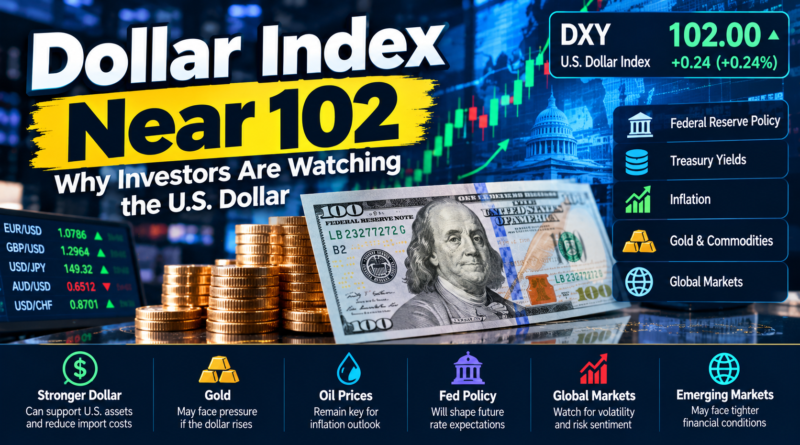
Dollar Index Near 102: Why the U.S. Dollar Matters for Markets and the Economy
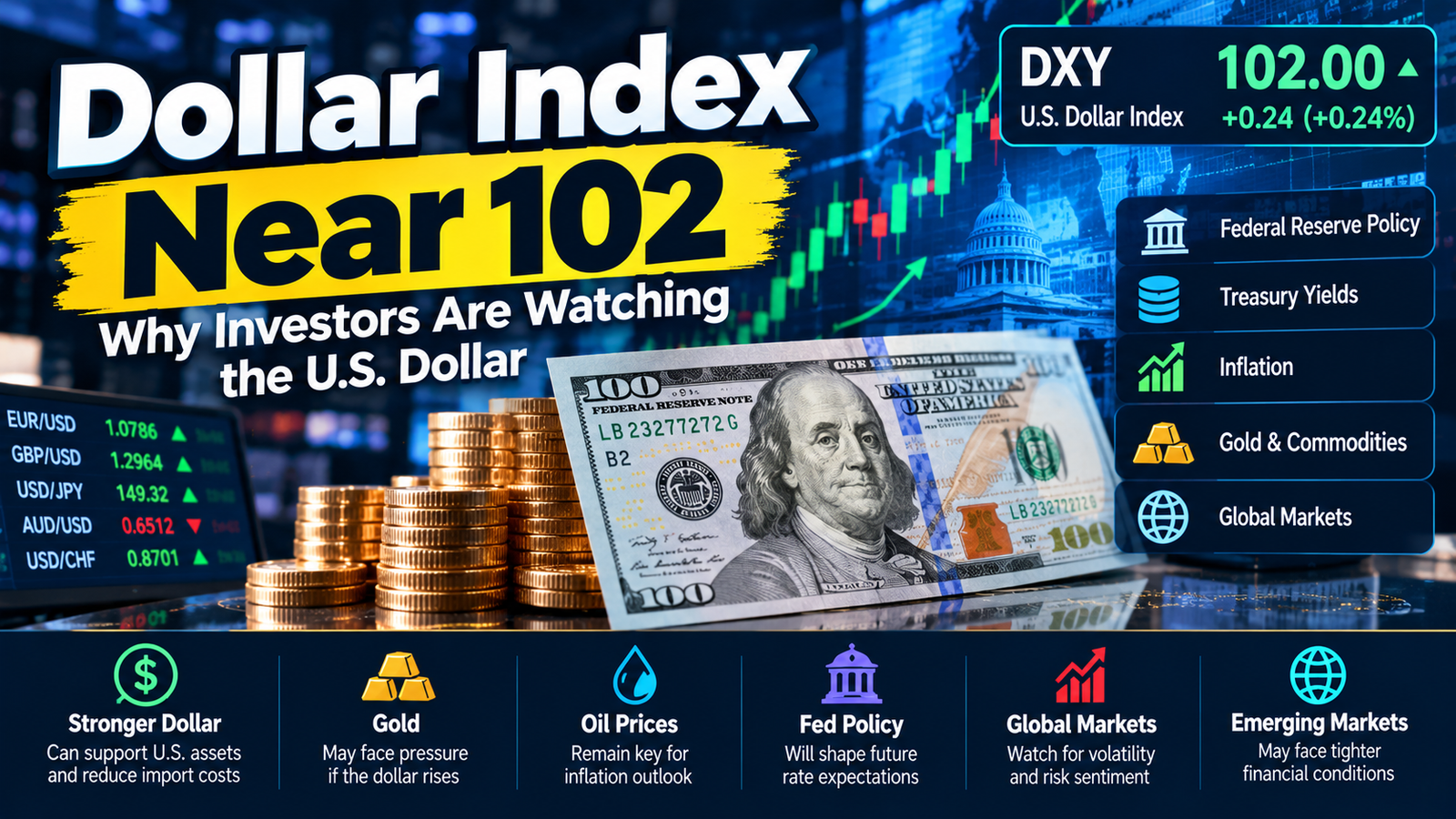
The U.S. dollar is back in focus as the Dollar Index trades near 102, putting the currency market at an important point for investors.
The Dollar Index, commonly known as DXY, measures the value of the U.S. dollar against a basket of major foreign currencies. It is one of the most closely followed indicators in the global foreign-exchange market because the dollar plays a central role in international trade, commodities, financial markets and investment flows.
On October 27, the Dollar Index was trading around the 102 area, with live market data showing levels near 102.2 and a modest daily gain.
At first glance, a move of only a few tenths of a point may not look especially important. But currency markets can have a much wider effect.
A stronger dollar can influence gold, crude oil, emerging-market currencies, international company earnings and inflation. It can also affect the financial conditions faced by companies and governments outside the United States.
That is why investors are watching the dollar closely right now.
The Federal Reserve is preparing for its next policy decision, Treasury yields remain elevated, oil prices are creating inflation concerns and global markets are dealing with a complicated economic backdrop.
All of these factors are connected.
What Is the Dollar Index?
The Dollar Index is a benchmark that tracks the U.S. dollar against a basket of major currencies.
The basket includes the euro, Japanese yen, British pound, Canadian dollar, Swedish krona and Swiss franc.
The euro has the largest weighting in the index, which means movements in the euro-dollar exchange rate can have a significant influence on DXY.
When the Dollar Index rises, it generally means the U.S. dollar is strengthening against the currencies in the basket.
When DXY falls, the dollar is generally weakening.
The index is not the same thing as the exchange rate between the dollar and one specific currency.
It is a broader measure of dollar strength.
That makes it particularly useful for investors who want to understand the overall direction of the U.S. currency.
Why the 102 Level Matters
The 102 area has become an important reference point for the current market.
Recent market data shows DXY moving between roughly 101 and 103 during October. The index reached an October high around 102.94 and has remained relatively close to the upper end of that range.
This suggests that the dollar has been relatively firm compared with its recent trading range.
The important question now is whether the index can continue moving higher or whether sellers will push it back toward the lower part of the range.
For technical traders, levels around 102 can act as a psychological reference.
For fundamental investors, however, the more important issue is why the dollar is moving.
Currency prices are driven by expectations.
If investors expect U.S. interest rates to remain higher than rates in other major economies, demand for dollars can increase.
If expectations shift toward lower U.S. rates, the dollar can lose some of that support.
Federal Reserve Policy Is at the Center of the Story
The Federal Reserve remains one of the most important drivers of the U.S. dollar.
Interest rates affect the return investors can potentially earn from dollar-denominated assets.
When U.S. interest rates are relatively high, global investors may have more incentive to hold dollars and buy U.S. Treasury securities.
When expectations for U.S. rates fall, some of that demand can weaken.
That relationship is especially important now because investors are waiting for the Fed’s upcoming policy decision.
Recent market reports indicate that the Fed is widely expected to keep rates steady at the October meeting, but investors are watching the tone of policymakers and the possibility of future tightening.
That uncertainty is helping keep the dollar supported.
Higher Treasury Yields Can Support the Dollar
The bond market is another major piece of the puzzle.
The 10-Year Treasury yield is around the 5% area, making U.S. government debt relatively attractive to investors seeking income.
Higher Treasury yields can support the dollar because international investors often need dollars to purchase U.S. financial assets.
This does not mean higher yields automatically produce a stronger dollar.
The reason behind the yield increase matters.
If yields rise because investors expect stronger economic growth, the dollar can benefit.
If yields rise because investors are worried about inflation or government debt, the reaction can be more complicated.
For now, the combination of elevated Treasury yields and expectations surrounding Federal Reserve policy is helping keep the dollar on investors’ radar.
The Dollar and Gold Have an Important Relationship
Gold is one of the markets most closely connected to the U.S. dollar.
Gold is generally priced in dollars around the world.
When the dollar becomes stronger, gold can become more expensive for investors using other currencies.
That can reduce demand at the margin.
When the dollar weakens, gold can become relatively cheaper for international buyers.
That can support demand.
The relationship is not perfect, but it is strong enough that gold traders watch DXY closely.
On October 27, Reuters reported that gold was under pressure from a stronger dollar and elevated Treasury yields. Spot gold was around $4,000.52 at the time of the report.
That is a useful example of how currency and bond markets can affect precious metals.
Gold Near $4,000 and Dollar Near 102
The current relationship between gold and the dollar is particularly interesting.
Gold has recently traded around the $4,000 area, while DXY has moved back toward 102.
This creates a tug-of-war.
Gold benefits from safe-haven demand, inflation concerns and geopolitical uncertainty.
The dollar benefits from higher yields, relatively strong U.S. financial conditions and expectations surrounding Fed policy.
Investors are therefore watching both markets for clues about the next major move.
If the dollar continues higher, gold could face additional pressure.
If the dollar turns lower, gold could receive another boost.
The Dollar and Crude Oil
Crude oil is another major market affected by the dollar.
Oil is generally priced internationally in U.S. dollars.
When the dollar strengthens, oil becomes more expensive for buyers using other currencies.
That can sometimes put pressure on demand.
But oil prices are also heavily influenced by supply, geopolitical developments and global economic growth.
That means the dollar is only one part of the oil story.
The current market is particularly complicated because oil prices remain elevated while investors are also concerned about inflation and potential supply disruptions.
Higher oil prices can increase inflation expectations.
Those inflation concerns can influence central-bank policy.
Central-bank expectations can then affect the dollar.
The markets are connected in a continuous cycle.
A Stronger Dollar Can Help Fight Inflation
A stronger dollar can have a positive effect on U.S. inflation.
When the dollar rises, imported goods and commodities can become relatively cheaper for American consumers and businesses.
That can reduce some inflationary pressure.
For example, companies purchasing products, components or raw materials from overseas may benefit from a stronger dollar because their purchasing power increases.
Consumers can also benefit from lower prices on some imported goods.
This is one reason policymakers sometimes pay attention to currency movements when assessing inflation.
However, the effect is not immediate.
Currency changes can take time to pass through supply chains and consumer prices.
But a Strong Dollar Can Hurt U.S. Exporters
There is another side to the story.
A stronger dollar can make American products more expensive for foreign buyers.
Imagine a U.S. company selling products in Europe.
If the dollar strengthens against the euro, those products may become more expensive when converted into euros.
That can make it harder for American exporters to compete internationally.
Large multinational companies can also see their overseas revenue translated into fewer U.S. dollars when the dollar strengthens.
This can affect reported earnings.
For stock-market investors, that matters.
Why Multinational Companies Watch the Dollar
Many major U.S. corporations generate a substantial share of their revenue outside the United States.
Technology companies, consumer brands, pharmaceutical companies and industrial businesses can all have significant international operations.
When the dollar strengthens, foreign revenue can become less valuable when converted back into dollars.
That can create a headwind for earnings growth.
The effect varies from company to company.
Some businesses naturally hedge their currency exposure.
Others may have production facilities and costs in the same foreign markets where they generate revenue.
Still, currency movements are an important factor in corporate financial planning.
What a Strong Dollar Means for Emerging Markets
The U.S. dollar is especially important for emerging markets.
Many emerging-market countries have debt denominated in dollars.
When the dollar strengthens, servicing that debt can become more expensive in local-currency terms.
Companies that borrowed in dollars can face higher financial costs.
Governments can also experience additional pressure.
A strong dollar can therefore tighten global financial conditions even if the Federal Reserve does not change interest rates.
This is one reason international investors monitor DXY closely.
Currency Pressure in Asia
Asian currencies can be particularly sensitive to movements in the dollar.
The Japanese yen, Chinese yuan, South Korean won and other regional currencies can react to changes in U.S. yields and dollar demand.
Japan is especially important because the yen is one of the largest components of the Dollar Index.
When the yen weakens significantly against the dollar, DXY can receive upward pressure.
This means the Dollar Index can sometimes rise partly because of weakness in one major component rather than broad strength across every currency.
Investors should therefore look beyond DXY and examine individual exchange rates as well.
Europe and the Euro
The euro has the largest weighting in the Dollar Index.
That makes European economic conditions particularly important.
If European growth weakens, investors may expect the European Central Bank to maintain easier monetary policy.
That can weaken the euro relative to the dollar.
Conversely, stronger European economic data can support the euro and put downward pressure on DXY.
Recent concerns surrounding European fiscal conditions have also influenced currency markets.
Reuters reported earlier this month that concerns about French fiscal conditions and a bond-market selloff helped push the euro to a 17-month low against the dollar.
Currency markets often respond to relative economic conditions rather than absolute economic strength.
Dollar Strength and Global Trade
The dollar is the world’s dominant reserve currency and plays a major role in global trade.
Many commodities are priced in dollars.
International companies use dollars for transactions.
Banks and financial institutions hold dollar assets.
Governments maintain dollar reserves.
This gives movements in the U.S. currency a global impact.
When the dollar strengthens significantly, financial conditions can tighten for borrowers outside the United States.
When the dollar weakens, global liquidity conditions can sometimes become easier.
This is one reason DXY is watched far beyond the United States.
What Could Push DXY Higher?
Several factors could support the Dollar Index from current levels.
Higher U.S. interest rates
If markets expect U.S. rates to remain higher for longer, demand for dollar assets could increase.
Stronger U.S. economic growth
A resilient U.S. economy can make American assets more attractive.
Higher Treasury yields
Higher yields can increase the return available from U.S. government debt.
European weakness
A weaker euro can lift the Dollar Index because of the euro’s large index weighting.
Global risk aversion
During periods of financial stress, investors often seek highly liquid dollar assets.
Persistent inflation
If inflation keeps the Fed cautious about easing policy, U.S. rates may remain relatively high.
These forces could keep DXY above the 102 area.
What Could Push DXY Lower?
The dollar also faces several potential risks.
Federal Reserve easing
Expectations for lower U.S. interest rates could reduce demand for dollar assets.
Falling Treasury yields
Lower yields can reduce the income advantage available from U.S. bonds.
Stronger foreign economies
If growth outside the United States improves, international currencies could strengthen.
Lower inflation
Cooling inflation could give the Federal Reserve more room to reduce rates.
Reduced geopolitical risk
If investors become less defensive, some demand for dollar safe-haven assets could decline.
U.S. fiscal concerns
Concerns about government debt and long-term fiscal sustainability can also influence investor confidence.
The dollar’s direction will depend on which forces become dominant.
Why the Dollar Matters for the Stock Market
The relationship between the dollar and stocks is complicated.
A stronger dollar can hurt multinational companies because foreign earnings translate into fewer dollars.
It can also create pressure on commodities and emerging-market assets.
But a stronger dollar can also signal confidence in the U.S. economy.
If the dollar rises because economic growth is strong and interest rates are attractive, stocks can still perform well.
This is why investors should not automatically assume that a rising DXY is bearish for equities.
The reason for the dollar’s strength matters.
Technology Stocks and the Dollar
Technology companies are particularly interesting because many have significant international revenue.
A stronger dollar can create currency headwinds for global technology companies.
At the same time, higher Treasury yields can affect technology-stock valuations because investors discount future earnings at higher rates.
That means technology stocks can sometimes face pressure from two directions:
- Higher bond yields
- A stronger dollar
However, strong earnings growth can offset both effects.
This is why investors need to look at company-specific results rather than relying only on macroeconomic signals.
Dollar and Cryptocurrency Markets
The U.S. dollar also matters for cryptocurrency markets.
Bitcoin and other cryptocurrencies are generally priced in dollars on major exchanges.
Changes in dollar liquidity and interest-rate expectations can influence investor appetite for riskier assets.
When the dollar strengthens and financial conditions tighten, speculative assets can sometimes face pressure.
When the dollar weakens and liquidity improves, risk appetite can increase.
Again, the relationship is not automatic.
Crypto markets have their own supply, demand and regulatory drivers.
But DXY remains a useful macro indicator for cryptocurrency investors.
Dollar and Commodities
Gold and oil are the most famous examples, but many other commodities are also priced in dollars.
A stronger dollar can create headwinds for commodity prices because buyers using other currencies effectively pay more.
A weaker dollar can provide support.
This relationship is particularly important for countries that rely heavily on commodity imports.
A stronger dollar combined with high commodity prices can create a difficult environment for those economies.
What Consumers Should Know
For everyday Americans, DXY may seem like a Wall Street statistic.
But the dollar affects everyday prices.
Currency movements can influence imported electronics, clothing, vehicles, food ingredients and industrial materials.
A stronger dollar can make imports cheaper.
It can also make international travel more affordable for Americans because their dollars buy more foreign currency.
On the other hand, U.S. exporters may face more competition from overseas companies.
Currency markets therefore affect both consumers and businesses.
What Investors Should Watch Next
Investors watching DXY near 102 should focus on several upcoming developments.
Federal Reserve decision: The Fed’s policy statement and press conference can change rate expectations.
Inflation data: Future CPI and PCE readings will influence expectations for monetary policy.
Employment data: Labor-market strength can affect expectations for interest rates.
Treasury yields: The 10-year yield remains one of the most important dollar drivers.
Oil prices: Energy costs can affect inflation expectations.
European data: Euro-area growth and ECB policy can influence the euro.
Japanese policy: Bank of Japan decisions can affect the yen and therefore DXY.
Global risk sentiment: Financial-market stress can increase demand for dollar assets.
These factors will help determine whether DXY remains near 102 or begins a larger move.
Is 102 a Ceiling or a New Support Level?
This is one of the most interesting technical questions for traders.
If the Dollar Index repeatedly fails near 102, traders may interpret the level as resistance.
If DXY breaks above 102 and holds there, the same level could eventually become support.
The next move therefore matters more than the exact intraday price.
Technical traders may also watch the recent October high near 102.94.
A break above that area could change the short-term market picture.
On the other hand, a move back below the 101 area would suggest that the recent dollar strength is losing momentum.
The Dollar’s Relationship With Real Yields
One of the most important concepts for serious market watchers is the relationship between the dollar and real yields.
Real yields represent interest rates after accounting for inflation.
When real U.S. yields are attractive compared with those available elsewhere, international investors may have a stronger incentive to hold dollar assets.
That can support the currency.
Gold investors also pay close attention to real yields because gold does not pay interest.
This helps explain why the dollar, Treasury market and gold often appear together in daily market analysis.
Why the Current Setup Is Important
The current market has several unusual features appearing at the same time.
The Dollar Index is near 102.
The 10-Year Treasury yield is around 5%.
Gold is around the $4,000 area.
Oil prices remain elevated.
The Federal Reserve is preparing for a policy decision.
Inflation remains a major concern.
That creates a market where small changes in expectations can produce large moves across multiple asset classes.
For example, a hawkish Fed message could push Treasury yields higher.
Higher yields could strengthen the dollar.
A stronger dollar could pressure gold.
Higher oil prices could complicate the inflation outlook.
The entire chain can happen quickly.
What a Dollar Rally Could Mean for Gold
If DXY breaks decisively higher, gold could face additional pressure.
The combination of a stronger dollar and higher yields would be particularly challenging.
Investors may become more willing to hold interest-bearing assets.
Gold could then require stronger safe-haven demand to maintain its price.
However, a dollar rally caused by global uncertainty could produce a different outcome.
In a financial crisis, investors can buy both dollars and gold.
That means the two assets can sometimes rise together.
The reason behind the dollar’s move is therefore critical.
What a Dollar Decline Could Mean for Gold
A weaker dollar could provide a favorable environment for gold.
International buyers would effectively have greater purchasing power.
Lower yields could add another source of support.
If inflation or geopolitical concerns remain elevated at the same time, gold could benefit from several tailwinds simultaneously.
This is why gold traders monitor DXY so closely.
The Bigger Economic Picture
The Dollar Index near 102 is not simply a currency story.
It is a reflection of the relative attractiveness of U.S. assets and the expectations surrounding the U.S. economy.
If investors believe U.S. growth will remain stronger than growth elsewhere, the dollar can attract capital.
If they expect the Federal Reserve to keep rates high, the dollar can receive additional support.
If foreign economies improve while U.S. growth slows, the balance can change.
Currency markets are ultimately about relative conditions.
The U.S. does not need to have a perfect economy for the dollar to rise.
It simply needs to look more attractive relative to alternatives.
Should Investors Worry About a Strong Dollar?
Not necessarily.
A moderately stronger dollar can be a sign of confidence in the U.S. economy.
It can also help contain imported inflation.
The problem arises when the currency becomes extremely strong or moves rapidly.
A sharp appreciation can create financial stress for emerging markets, pressure exporters and tighten global liquidity.
The current DXY level should therefore be viewed in context.
The direction and speed of the move matter.
A Balanced View for Investors
Investors should avoid treating DXY as a simple buy-or-sell signal.
A stronger dollar does not automatically mean stocks will fall.
A weaker dollar does not automatically mean gold will rise.
Markets are more complicated than that.
The most useful approach is to understand the relationships.
Watch DXY alongside:
- 10-Year Treasury yields
- Gold
- Crude oil
- S&P 500
- Nasdaq
- Inflation expectations
- Federal Reserve policy
- Major foreign currencies
When several indicators point in the same direction, the signal becomes more meaningful.
Dollar Index Outlook
The Dollar Index is entering an important period around the 102 area.
A continued move above 102 could open the door toward the recent October high near 102.94.
A failure to hold the current area could send the index back toward support around the low-101s.
The fundamental outlook will depend heavily on Federal Reserve policy, Treasury yields and inflation.
The technical outlook will depend on whether buyers can maintain the recent momentum.
Both sides of the market therefore have reasons to remain cautious.
Final Takeaway
The Dollar Index near 102 is an important market signal because the U.S. dollar sits at the center of global finance.
Current market data puts DXY around 102.2, close to the upper end of its recent October trading range.
The dollar is being supported by elevated U.S. yields and expectations surrounding Federal Reserve policy, while investors are also watching geopolitical risks and energy prices.
For gold investors, a stronger dollar can create pressure.
For U.S. exporters, it can create currency headwinds.
For American consumers, it can reduce the cost of some imports.
For emerging markets, it can tighten dollar-based financial conditions.
And for global investors, it remains one of the most important indicators of financial-market sentiment.
The next major test will be whether DXY can move decisively above its recent highs or whether the 102 area becomes a point where sellers return.
For now, the message from the currency market is clear: the U.S. dollar is strong enough to matter, and its next move could influence markets well beyond foreign exchange.
